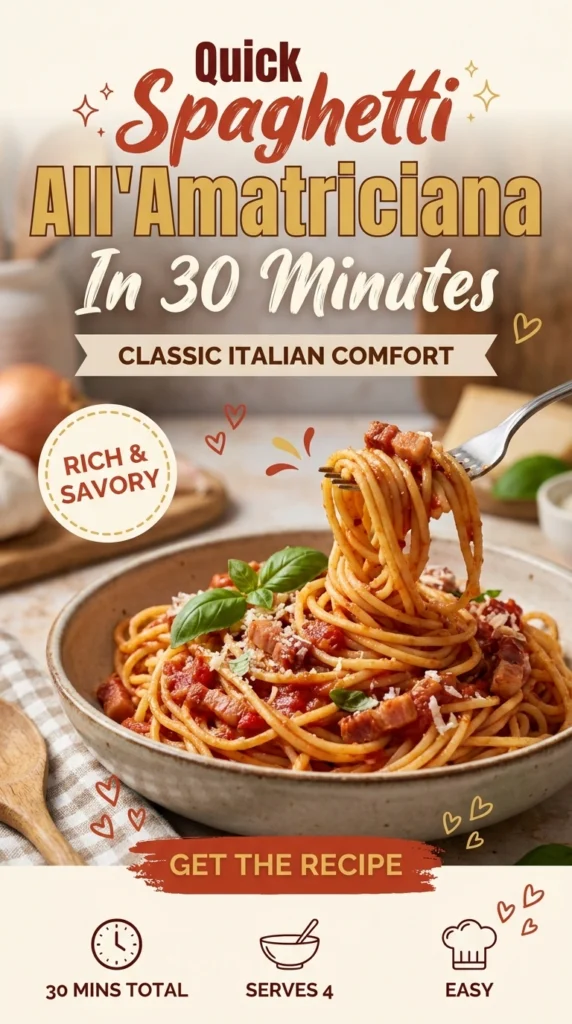
Salty, cured pork fat renders into a golden oil that carries the heat of crushed red pepper and the brightness of San Marzano tomatoes. The aroma is a heady mix of smoky meat and sharp sheep’s milk cheese.
Spaghetti All’Amatriciana is a Roman classic that balances rich, fatty pork with a zesty tomato sauce. It transforms a few pantry staples into a restaurant-quality meal.
Home cooks value this recipe for its efficiency and depth of flavor. It provides a sophisticated taste profile without requiring hours of simmering.
The secret lies in the combination of guanciale and Pecorino Romano, which creates a funky, salty backbone that differs significantly from standard marinara or bolognese.
Compared to store-bought sauces, this version is fresh and vibrant, avoiding the overly sweet notes often found in jarred alternatives.
Anyone craving a hearty, authentic Italian experience on a tight schedule will find this approach ideal. It fits perfectly alongside other fast meals like One Pan Pesto Chicken Tortellini The Ultimate 30 Minute Dinner
Follow these steps to bring a taste of Rome to your kitchen tonight.
- ●Why You’ll Love This Recipe
- ●A Brief Background / Why This Recipe Works
- ●Perfect For Busy Weeknights and Cozy Dates
- ●Main Ingredient Spotlight: Guanciale
- ●Secondary Ingredient Spotlight: Pecorino Romano
- ●Key Ingredients
- ●How to Make It
- ●Pro Tips
- ●Delicious Variations
- ●Best Ways to Serve
- ●Storage and Leftovers
- ●Frequently Asked Questions
- ●Why This Recipe Belongs in Your Weekly Rotation
- ●Final Thoughts
This pasta delivers an intense punch of flavor that satisfies cravings for something savory and spicy.
- ●Ready from start to finish in just 30 minutes.
- ●Requires very few ingredients for minimal shopping.
- ●Balances salt, acid, and heat perfectly.
- ●Uses one pot for pasta and one pan for sauce.
- ●Provides a professional texture with the addition of pasta water.
- ●Authentic flavor profiles that mimic traditional Roman trattorias.
- ●Versatile enough to accommodate various pasta shapes.
- ●High satiety due to the combination of protein and complex carbohydrates.
It is a reliable go-to for those who want a sophisticated meal without the stress of a long prep list.
A Brief Background / Why This Recipe Works |
The origin of Amatriciana traces back to the town of Amatrice, where shepherds combined local cured pork with tomatoes. The harmony of the dish comes from the contrast between the heavy, cured fat of the pork and the acidity of the tomatoes.
Using a high-fat cured meat allows the sauce to emulsify with the starch of the pasta water. This creates a glossy coating that clings to the spaghetti rather than pooling at the bottom of the bowl.
Pecorino Romano adds a salty, sharp finish that cuts through the richness. Together, these elements create a balanced flavor profile that feels substantial yet refined.
Perfect For Busy Weeknights and Cozy Dates |
Because the sauce cooks in the time it takes for the pasta to boil, this meal is ideal for those rushing home after a long workday. It eliminates the need for extensive chopping or simmering.
The bold flavors and elegant presentation also make it a great choice for a spontaneous date night. It feels more intentional than a basic pasta dish while remaining easy to execute.
For larger gatherings, this recipe scales easily. You can double the batch without increasing the active cooking time significantly, making it a stress-free option for dinner parties.
Main Ingredient Spotlight: Guanciale |
Guanciale is cured pork jowl, prized for its high fat content and deep, funky flavor. When rendered, the fat becomes the cooking medium for the tomatoes, infusing every bite with a smoky, salty essence.
Omitting guanciale in favor of bacon changes the flavor profile significantly, introducing a smoky, maple, or sugary note that deviates from the Roman tradition. Pancetta is a closer substitute, though it is leaner and less intense.
Secondary Ingredient Spotlight: Pecorino Romano |
Pecorino Romano is a hard, salty sheep’s milk cheese. It provides a pungent sharpness that anchors the sweetness of the tomatoes and the richness of the pork.
Using Parmesan instead will result in a milder, nuttier flavor. While delicious, it lacks the specific salty punch that defines a true Amatriciana.
The cheese is added at the end to thicken the sauce and create a creamy finish without the use of actual cream.
Key Ingredients |
Gather these essential components to ensure an authentic result.
- ●Guanciale — Provides the essential salty base and rendered fat.
- ●San Marzano Tomatoes — Offers a balanced acidity and natural sweetness.
- ●Pecorino Romano — Adds a sharp, salty finish and thickness.
- ●Spaghetti — The traditional vessel for carrying the rich sauce.
- ●Crushed Red Pepper — Introduces a subtle, warming heat.
- ●Pasta Water — Acts as the emulsifier to bind the sauce to the noodles.
How to Make It |
Follow these precise steps to achieve the perfect balance of texture and taste.
- Render the guanciale: Place diced guanciale in a cold pan and turn the heat to medium. Sauté until the fat has melted and the pork is crisp and golden brown; starting with a cold pan ensures the fat renders fully without burning the meat.
- Infuse the aromatics: Stir in the crushed red pepper and let it sizzle in the pork fat for 30 seconds. This toasts the pepper and distributes the heat evenly throughout the oil; avoid overcooking here or the pepper will turn bitter.
- Simmer the tomatoes: Add the crushed tomatoes to the pan and stir to combine with the rendered fat. Let the sauce bubble gently for about 10 to 12 minutes until it thickens slightly and the color deepens; a common mistake is boiling the sauce too vigorously, which can cause it to splatter and separate.
- Boil the pasta: Cook the spaghetti in a pot of heavily salted water until it is one minute shy of al dente. The pasta should still have a firm bite in the center, as it will finish cooking in the sauce.
- Emulsify the sauce: Reserve half a cup of starchy pasta water before draining the noodles. Toss the spaghetti into the tomato pan and add a splash of the reserved water, stirring constantly over medium heat to create a glossy, clinging glaze.
- Finish with cheese: Remove the pan from the heat and stir in the grated Pecorino Romano. Adding the cheese away from direct heat prevents it from clumping or becoming oily, ensuring a smooth, creamy integration.
1Small adjustments in technique can elevate this dish from good to exceptional.
- ●2Use high-quality canned tomatoes: San Marzano tomatoes are preferred for their lower acidity and superior sweetness.
- ●3Don’t oversalt the sauce: Both guanciale and Pecorino are very salty, so taste the sauce before adding any additional salt.
- ●4Under-cook the pasta: Pulling the pasta out early prevents it from becoming mushy during the final tossing phase.
- ●5Freshly grate the cheese: Pre-shredded cheeses contain cornstarch or anti-clumping agents that prevent a smooth melt.
- ●6Cold pan start: Always start the pork in a cold skillet to maximize the fat rendering process.
Delicious Variations |
While the classic is timeless, these twists can adapt the dish to your preferences.
- ●Vegetarian Version: Swap guanciale for smoked sun-dried tomatoes and use a vegan parmesan alternative for a plant-based take.
- ●Added Heat: Stir in a teaspoon of Calabrian chili paste for a deeper, more fermented spicy kick.
- ●Veggie Boost: Toss in a handful of fresh ba the very end until wilted for added color and nutrients.
- ●Creamy Twist: Add a tablespoon of mascarpone cheese at the finish to soften the sharp edges of the Pecorino.
- ●Pasta Swap: Use Rigatoni or Bucatini instead of spaghetti to capture more sauce inside the pasta tubes.
These adaptations allow you to shift the intensity of the dish depending on who you are serving.
Best Ways to Serve |
Presentation enhances the dining experience and allows the flavors to shine.
- ●Serve in warmed bowls to keep the pasta at the ideal temperature.
- ●Garnish with an extra sprinkle of Pecorino Romano and a pinch of fresh black pepper.
- ●Pair with a crisp arugula salad tossed in lemon vinaigrette to cut through the richness.
- ●Serve with toasted ciabatta or garlic bread for dipping into the remaining sauce.
A light, acidic side dish is essential here. The bitterness of arugula or the brightness of a citrus salad balances the heavy fats of the pork and cheese.
For a full meal, a glass of medium-bodied red wine, such as a Chianti, complements the acidity of the tomatoes and the saltiness of the guanciale.
Storage and Leftovers |
Refrigerating
Store leftovers in an airtight container in the refrigerator for up to 3 days. The pasta will absorb the sauce over time, making it thicker than when first served.
Reheating
Reheat in a pan over medium heat with a tablespoon of water or broth. This loosens the sauce and restores the glossy texture without overcooking the noodles.
Freezing
Freeze the sauce separately for up to 3 months, but avoid freezing the cooked pasta. Cook fresh pasta and toss it with the thawed sauce for the best quality.
Frequently Asked Questions |
- ●Q: Can I use bacon instead of guanciale?A: Yes, bacon is a common substitute, but it introduces a smoky flavor that differs from the funky, porky taste of guanciale. If using bacon, choose a thick-cut, unsmoked variety if possible to keep the flavor closer to the original Roman style.
- ●Q: Why is my sauce separating or looking oily?A: This usually happens if the heat is too high or if you skipped adding the pasta water. The starch in the water acts as a bridge between the fat and the tomato, creating a stable emulsion that binds the sauce together.
- ●Q: What is the best pasta to use for Amatriciana?A: While spaghetti is traditional, Bucatini is highly recommended because its hollow center traps the sauce. Rigatoni is also an excellent choice for those who prefer a heartier bite and more sauce per piece of pasta.
- ●Q: How do I stop the Pecorino from clumping?A: The most effective method is to remove the pan from the heat entirely before stirring in the cheese. High direct heat can cause the proteins in the cheese to tighten and clump rather than melting into the sauce.
- ●Q: Can I make this recipe gluten-free?A: Absolutely. Simply replace the spaghetti with your favorite gluten-free pasta alternative. Be mindful that some gluten-free pastas release less starch, so you may need a bit more pasta water or a pinch of cornstarch to thicken the sauce.
Why This Recipe Belongs in Your Weekly Rotation |
Having a reliable, high-impact meal that takes only 30 minutes reduces the temptation to order takeout. This recipe proves that minimal ingredients can produce a complex, satisfying result.
It occupies a unique space between a simple pasta and a gourmet dinner. Whether you are cooking for yourself or hosting guests, the bold flavors ensure a memorable meal every time.
Incorporating this into your routine brings a touch of Italian tradition to the table. It is a timeless combination that never fails to satisfy a craving for comfort food.
Final Thoughts |
This Spaghetti All’Amatriciana combines the saltiness of cured pork, the zest of Pecorino, and the sweetness of San Marzano tomatoes into a cohesive, 30-minute meal.
It offers a perfect balance of efficiency and authenticity, making it a superior alternative to basic tomato pasta. The depth of flavor is impressive given the short preparation time.
Bring the bold, rustic flavors of Rome into your kitchen and enjoy a dinner that feels like a celebration.
30-Minute Spaghetti All’Amatriciana
- Total Time: 30 minutes
- Yield: 4 servings 1x
Description
An authentic Roman pasta dish featuring rendered guanciale, San Marzano tomatoes, and sharp Pecorino Romano cheese for a bold and savory flavor.
Ingredients
- 1 lb spaghetti
- 5 oz guanciale, diced
- 28 oz can San Marzano crushed tomatoes
- 1 cup Pecorino Romano, freshly grated
- 1 tsp crushed red pepper flakes
- Salt for pasta water
- Fresh black pepper to taste
Instructions
- Place diced guanciale in a cold skillet and turn heat to medium, sautéing until the fat is rendered and meat is golden brown.
- Stir in crushed red pepper flakes and toast for 30 seconds in the rendered pork fat.
- Add crushed tomatoes and simmer gently for 10-12 minutes until the sauce thickens.
- Cook spaghetti in a pot of salted boiling water until one minute shy of al dente.
- Reserve 1/2 cup of pasta water, then drain the noodles.
- Toss spaghetti into the sauce pan with a splash of reserved pasta water, stirring over medium heat until glossy.
- Remove pan from heat and stir in grated Pecorino Romano until creamy.
- Prep Time: 10 minutes
- Cook Time: 20 minutes
- Category: Dinner
- Method: Stovetop
- Cuisine: Italian