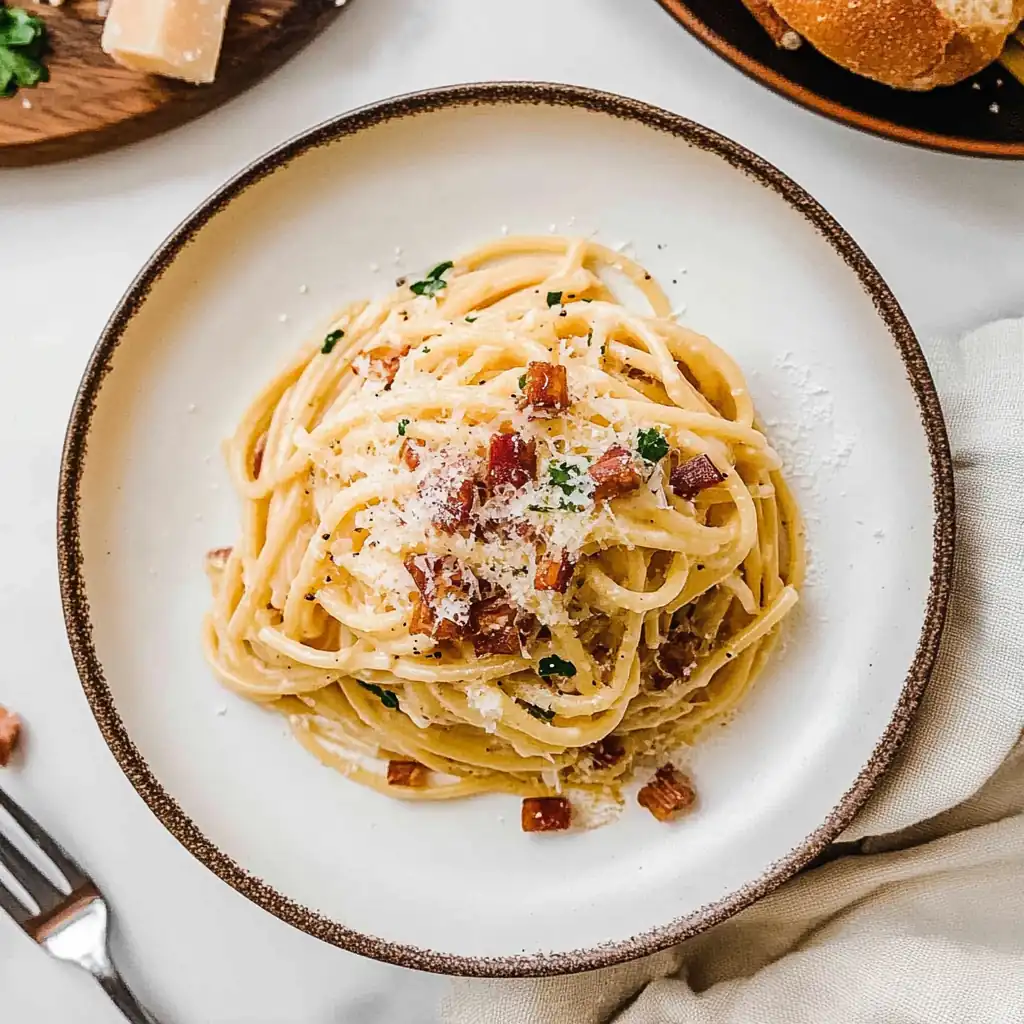
The Story Behind My Favorite Roman Classic |
I remember a rainy Tuesday last autumn when I was absolutely craving something that felt like a warm hug in a bowl. I had spent the whole afternoon scrolling through Italian food blogs, desperate to find a version of Carbonara that didn’t rely on heavy cream, which we all know is a total crime in Rome.
After a few failed attempts with curdled eggs, I finally nailed the temperature balance that creates that iconic, glossy emulsion. The magic really lies in the contrast between the crispy, salty bits of pork and the silky, luxurious sauce that clings to every single strand of pasta.
Who knew that just four basic ingredients could create something so sophisticated and deeply satisfying? Once you experience the richness of real Pecorino Romano melting into a whisked egg mixture, you’ll never go back to those jarred sauces again.
- ●The texture is a dream because you get the crunch of the rendered fat paired with a velvet-smooth sauce. It creates a sensory experience that keeps you coming back for more.
- ●Speed is on your side here since the sauce cooks in the time it takes to boil the noodles. You can have a gourmet dinner on the table in under twenty minutes.
- ●Budget-friendly ingredients make this a winner for any night of the week. You only need a few pantry staples to achieve a five-star restaurant quality meal.
- ●Authenticity shines through techniques instead of shortcuts. You’ll feel like a true Italian chef mastering the art of the emulsion.
- ●Customizability is easy once you master the base. Whether you prefer a heavier cheese profile or a bit more pepper, the foundation is rock solid.
Essential Ingredients |
Spaghetti, these long golden strands provide the perfect surface area for the sauce to grip, and you’ll want about 1 pound of high-quality dried pasta.
Guanciale, this cured pork jowl offers a deep, funky saltiness and a beautiful translucent fat that renders into gold; use 5 ounces of thinly sliced pieces.
Pecorino Romano, a sharp, salty sheep’s milk cheese that gives the dish its signature tang and snowy white color, finely grated (about 1 cup).
Large Eggs, these provide the creamy structure and rich yellow hue of the sauce; use 3 whole eggs plus 1 extra yolk for maximum richness.
Black Pepper, freshly cracked peppercorns add a woody heat and dark flecks that cut through the richness; use a generous tablespoon of coarse grind.
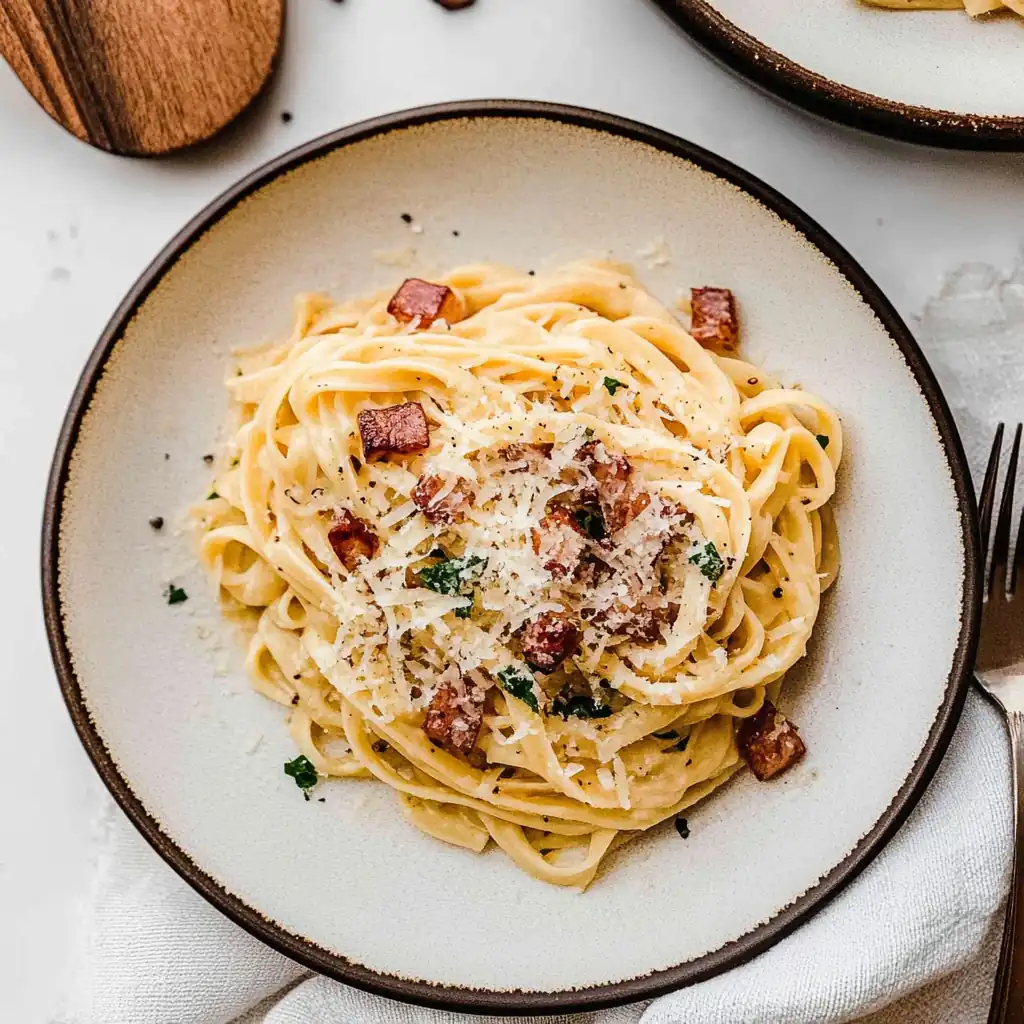 Let’s Make it Together |
- Bring a large pot of salted water to a rolling boil and drop in your pasta. Cook until it’s just shy of al dente, as it will finish cooking in the pan later. Avoid overcooking the noodles or they’ll turn mushy during the mixing phase.
- While the pasta boils, sauté the guanciale in a wide skillet over medium heat. Wait until the fat is translucent and the edges are crispy and brown. Don’t add oil; let the pork’s own fat do the work.
- Whisk your eggs and grated Pecorino Romano together in a medium bowl until a thick paste forms. Ensure there are no clumps of cheese so the sauce remains smooth. A common mistake is leaving the cheese in chunks, which prevents a creamy emulsion.
- Use tongs to move the pasta directly from the pot into the skillet with the rendered pork. Toss the noodles for a minute so they are fully coated in the flavored oil. Make sure the pan isn’t screaming hot, or the eggs will scramble instantly.
- Remove the skillet from the heat entirely and pour in the egg and cheese mixture. Stir vigorously and constantly, adding a splash of starchy pasta water to help the sauce emulsify. You’re looking for a creamy, glossy coating, not scrambled eggs.
- Plate the pasta immediately while it’s piping hot and finish with an extra sprinkle of cheese and pepper. The residual heat will thicken the sauce just enough to be perfect. Serve it right away before the sauce sets too firmly.
Never add heavy cream to this recipe if you want the authentic Roman flavor profile.
The pasta water is your secret weapon for adjusting the consistency of the sauce.
Room temperature eggs emulsify much more easily than ice-cold eggs from the fridge.
Ensure your Pecorino is finely grated so it melts instantly into the egg mixture.
Avoid using a high heat setting when adding the eggs to prevent curdling.
Perfecting the Cooking Process |
Timing is everything when it comes to the final emulsion. You want the pan to be hot enough to cook the eggs slightly but not so hot that they solidify. Removing the pan from the burner for sixty seconds before adding the egg mixture gives you the control needed to achieve that glossy, mirror-like finish.
Temperature management extends to the pasta water as well. Use a generous amount of salt so the pasta is seasoned from the inside out. This reduces the need for extra salt in the final dish, as the Guanciale and Pecorino are already incredibly salty on their own.
Add Your Touch |
If you can’t find guanciale, pancetta is a fantastic alternative that provides a similar salty punch. For a slightly different profile, you could even use thick-cut smoked bacon, though it adds a smokiness that isn’t present in the original Roman version.
Ever wonder if a bit of greenery would brighten things up? A handful of fresh parsley or a tiny squeeze of lemon juice at the very end can cut through the richness and add a fresh, aromatic top note to the dish.
Storing & Reheating |
Store leftovers in an airtight container in the fridge for up to three days. Be aware that the sauce will thicken significantly as it cools, turning from a cream into a denser paste.
Reheat the pasta in a skillet over low heat with a splash of water or milk. Gently toss the noodles to loosen the sauce, avoiding high heat which would separate the fats and eggs.
1Toast your black pepper in a dry pan for a minute to unlock the essential oils.
2Use a wide skillet to ensure there is enough room to toss the pasta freely.
3Sift your cheese through a fine grater to avoid any clumps in the final sauce.
4Save at least one cup of pasta water before draining the noodles.
5Warm your serving bowls slightly to keep the sauce creamy for longer.
FAQ |
- ●Q: Why did my Carbonara turn into scrambled eggs?A: This usually happens because the pan was too hot when the egg mixture was added. The proteins in the eggs coagulate quickly at high temperatures; to fix this, remove the pan from the heat and let it cool for a minute before stirring in the sauce.
- ●Q: Can I use Parmesan instead of Pecorino Romano?A: Yes, you can use Parmesan, but keep in mind that Pecorino is saltier and more pungent. If you switch to Parmesan, you might need to add a pinch more salt to the dish to maintain the bold flavor profile of the original.
- ●Q: What is the best pasta shape for this recipe?A: While Spaghetti is the gold standard, Rigatoni or Bucatini are excellent choices. These shapes have larger holes or ridges that trap the creamy sauce and bits of pork, ensuring every bite is packed with flavor.
- ●Q: How do I get the sauce extra creamy without cream?A: The secret is the combination of starchy pasta water and the fat from the guanciale. together with the eggs and cheese over low residual heat, you create a chemical emulsion that mimics the texture of cream.
Irresistible Pasta Carbonara: A Creamy Italian Delight
- Total Time: 20 minutes
- Yield: 4 servings 1x
Description
A traditional Roman pasta dish featuring a rich, creamy emulsion of eggs and Pecorino Romano, balanced with crispy guanciale and cracked black pepper.
Ingredients
- 1 lb Spaghetti
- 5 oz Guanciale, sliced
- 1 cup Pecorino Romano, finely grated
- 3 Large Eggs + 1 Egg Yolk
- 1 tbsp Freshly cracked black pepper
- Salt for pasta water
Instructions
- Boil spaghetti in salted water until slightly under al dente.
- Sauté guanciale in a skillet until crispy and fat is rendered.
- Whisk eggs, egg yolk, and Pecorino Romano into a smooth paste.
- Transfer pasta directly into the skillet with guanciale and toss.
- Remove pan from heat and quickly stir in the egg and cheese mixture.
- Add pasta water as needed to achieve a glossy, creamy consistency.
- Serve immediately with extra cheese and pepper.
- Prep Time: 5 minutes
- Cook Time: 15 minutes
- Category: Dinner
- Method: Stovetop
- Cuisine: Italian