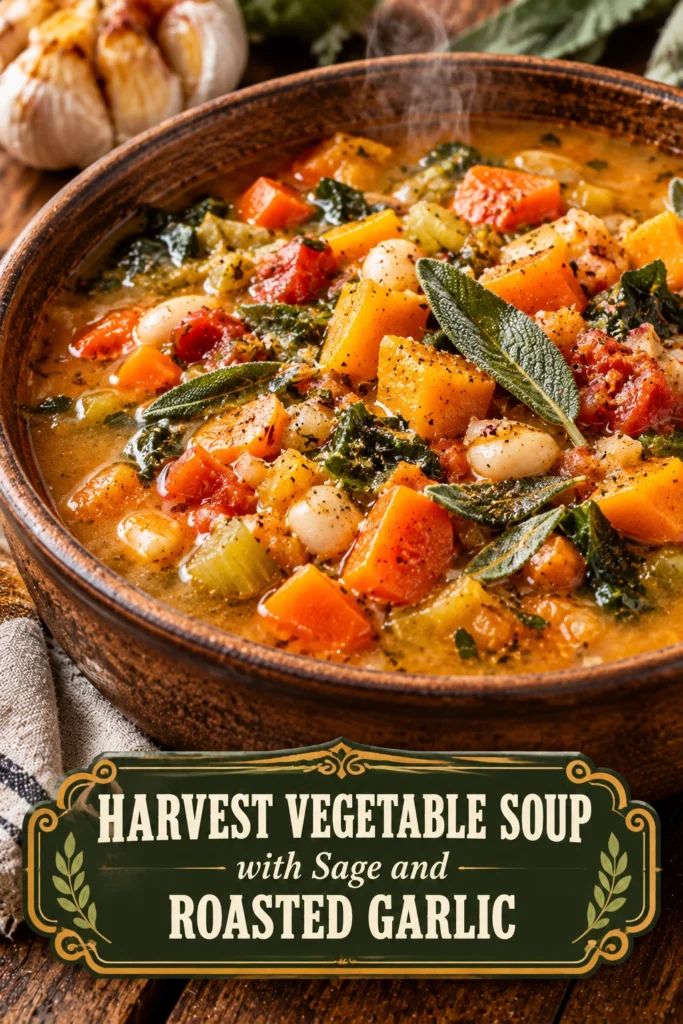
The aroma shifts the moment the garlic cloves soften in the oven, turning from sharp and pungent to a mellow, buttery sweetness. This transformation sets the foundation for a broth that feels rich without needing heavy creams.
This harvest vegetable soup combines root vegetables and hearty greens in a base flavored with earthy sage. It is a nutrient-dense meal that celebrates the transition into cooler weather.
Many people prefer this version over canned alternatives because it lacks the metallic aftertaste and excessive sodium found in processed soups.
The combination of roasting and simmering creates layers of flavor that a standard one-pot boil cannot achieve. The roasted elements provide a charred depth that balances the sweetness of the carrots and parsnips.
This recipe is a practical choice for a busy cook because the vegetable chopping can be done in advance, and the roasting happens independently of the stove.
It is an ideal dish for those seeking a warming, plant-forward meal that provides satiety and comfort during the autumn months.
The following guide details how to build these flavors step by step.
- ●Why You’ll Love This Recipe
- ●A Brief Background on the Flavor Profile
- ●Perfect For Cozy Autumn Dinners
- ●Main Ingredient Spotlight: Root Vegetables
- ●Secondary Ingredient Spotlight: Roasted Garlic and Sage
- ●Key Ingredients
- ●How to Make It
- ●Pro Tips
- ●Delicious Variations
- ●Best Ways to Serve
- ●Storage and Leftovers
- ●Frequently Asked Questions
- ●Why This Recipe Belongs in Your Weekly Rotation
- ●Final Thoughts
This soup offers a balance of rustic textures and refined flavors that make it feel like a restaurant-quality meal prepared at home.
- ●The roasted garlic provides a creamy, caramelized base.
- ●Fresh sage adds an aromatic, woody note that defines the season.
- ●It utilizes a variety of colorful, seasonal vegetables.
- ●The recipe is naturally hearty, making it a complete meal.
- ●It works well as a standalone dish or as a starter.
- ●The roasting process enhances the natural sugars in the vegetables.
- ●It is easily adaptable to different dietary needs.
- ●The flavors improve after a day in the refrigerator.
- ●It provides a warming effect during cold weather.
- ●The preparation is straightforward and requires common pantry staples.
Combining these elements results in a soup that is both sophisticated and deeply comforting.
A Brief Background on the Flavor Profile |
The success of this soup relies on the contrast between the sweetness of roasted vegetables and the savory depth of the herbs. Unlike a standard vegetable soup, which often tastes like boiled water and carrots, this version uses dry heat to concentrate flavors before adding the liquid.
Sage is a potent herb that can easily overpower a dish if used incorrectly. In this recipe, the sage is tempered of the roasted garlic and the earthiness of the parsnips, creating a harmonious profile.
The use of root vegetables provides a natural thickness to the broth. As the vegetables simmer, they release starches that give the soup a velvety mouthfeel without the need for flour or cornstarch.
This approach to vegetable soup turns a simple side dish into a centerpiece meal.
Perfect For Cozy Autumn Dinners |
This soup is an excellent fit for busy weeknights when you want a healthy meal but have limited active cooking time. Once the vegetables are in the oven and the pot is simmering, the kitchen does most of the work for you.
For those who practice meal prep, this recipe is highly efficient. The components can be prepped on a Sunday and stored, or the entire batch can be cooked and portioned out for the week.
It also serves as a refined addition to holiday gatherings or Thanksgiving dinner. It provides a lighter, vegetable-centric alternative to the heavier traditional sides, similar to how Roasted Brussels Sprouts With Rosemary And Garlic Easy Healthy Side Dish Recipe complements a festive table.
Main Ingredient Spotlight: Root Vegetables |
Carrots, parsnips, and potatoes form the structural heart of this soup. These vegetables are prized for their ability to hold their shape during simmering while contributing a subtle, earthy sweetness.
Parsnips, in particular, offer a spicy, nutty flavor that differentiates this from a standard garden soup. When combined with the potatoes, they create a creamy texture that makes the soup feel substantial.
Using a mix of root vegetables ensures a variety of nutrients and a visual appeal, with different colors and shapes adding to the rustic charm of the bowl.
Secondary Ingredient Spotlight: Roasted Garlic and Sage |
Roasted garlic is the secret to the soup’s depth. cloves slowly in oil, the harsh sulfuric compounds break down, leaving behind a sweet, spreadable paste that integrates seamlessly into the broth.
Sage provides the aromatic bridge between the garlic and the vegetables. Its piney, slightly peppery profile prevents the root vegetables from tasting too sweet, adding a layer of complexity that evokes the smell of an autumn forest.
Together, these two ingredients elevate the dish from a basic vegetable medley to a curated harvest soup.
Key Ingredients |
Each component is chosen to contribute a specific texture or flavor note to the final pot.
- ●Garlic — Provides a caramelized, mellow sweetness that acts as the primary flavor base.
- ●Fresh Sage — Adds an earthy, aromatic quality; omitting it results in a flatter, less seasonal taste.
- ●Parsnips — Contributes a nutty sweetness and helps thicken the broth naturally.
- ●Carrots — Adds color and a bright, sugary balance to the savory herbs.
- ●Potatoes — Provides starch for body and a soft, comforting texture.
- ●Celery — Introduces a salty, aromatic foundation essential for any savory soup.
- ●Onion — Creates a savory base layer that supports the other vegetable flavors.
- ●Vegetable Broth — The liquid medium that binds all the ingredients into a cohesive soup.
- ●Olive Oil — Used for roasting to carry the flavors of the garlic and sage.
How to Make It |
Follow these steps to ensure the flavors are layered correctly and the vegetables maintain the right texture.
- Roast the garlic: To achieve a buttery consistency, cut the top off a garlic head, drizzle with olive oil, wrap in foil, and roast at 400F for 40 minutes. This prevents the garlic from burning and ensures a sweet flavor.
- Prepare the root vegetables: Dice the carrots, parsnips, and potatoes into uniform pieces. Consistency in size ensures that all vegetables cook at the same rate and no single piece remains hard while others turn to mush.
- Sauté the aromatics: Heat olive oil in a large pot over medium heat. Add the onions and celery, cooking until they are translucent. This step builds the basic flavor profile before the heavier vegetables are added.
- Brown the root vegetables: Add the carrots and parsnips to the pot. Sauté them for 5-7 minutes until the edges start to brown. Browning the vegetables creates a deeper, nuttier flavor than simply boiling them.
- Infuse the sage: Stir in the chopped fresh sage and cook for one minute. Adding the herbs at this stage allows the heat to release the essential oils without burning the leaves.
- Deglaze and simmer: Pour in the vegetable broth, scraping the bottom of the pot to release any browned bits. Add the potatoes and bring the liquid to a boil, then reduce to a simmer for 20-25 minutes.
- Integrate the roasted garlic: Squeeze the softened garlic cloves out of their skins and whisk them into the soup. Stirring them in at the end preserves their unique roasted flavor and prevents them from disintegrating too early.
- Season and adjust: Taste the soup and add salt and black pepper. If the flavor feels too heavy, a small splash of lemon juice or apple cider vinegar can brighten the entire pot.
1Small adjustments in technique can significantly impact the final quality of the soup.
- ●2Use a heavy-bottomed pot: A Dutch oven distributes heat evenly, which prevents the vegetables from scorching during the sauté phase.
- ●3Don’t overcook the potatoes: Add the potatoes slightly after the other root vegetables if they are smaller in size to avoid them breaking down into a puree.
- ●4Squeeze the garlic carefully: Ensure no bits of the papery garlic skin end up in the pot, as they can be distracting in an otherwise smooth broth.
- ●5Fresh over dried sage: While dried sage works in a pinch, fresh leaves provide a bright, aromatic quality that dried herbs cannot replicate.
- ●6Skim the foam: If a grey foam rises to the top during simmering, skim it off with a spoon for a cleaner-looking broth.
Delicious Variations |
Depending on your pantry or dietary preferences, you can modify this recipe easily.
- ●Add Protein: Stir in cooked white beans or chickpeas for extra protein and fiber.
- ●Creamy Version: Blend one cup of the finished soup and stir it back in for a thicker, creamier consistency without adding dairy.
- ●Kale Addition: Stir in chopped kale or spinach during the last 5 minutes of cooking for a pop of green color.
- ●Autumn Twist: Incorporate diced butternut squash or pumpkin for a sweeter, more orange-hued soup, similar to the flavors in Roasted Honey Garlic Pumpkin Wedges Easy Healthy Autumn Side Dish Recipe
- ●Dairy-Free Creaminess: Stir in a tablespoon of cashew butter or coconut cream at the end for a rich, vegan-friendly finish.
These changes allow the soup to evolve with the seasons or fit specific nutritional goals.
Best Ways to Serve |
The rustic nature of this soup pairs well with textures that provide a crunch or a salty contrast.
- ●Crusty Sourdough: Toasted slices of sourdough rubbed with a raw garlic clove are the ideal accompaniment.
- ●Parmesan Crisps: Small baked cheese crisps add a salty punch that cuts through the sweetness of the parsnips.
- ●Fresh Parsley: A sprinkle of chopped parsley adds a burst of color and a fresh, grassy note.
- ●Quinoa Garnish: Stir in a scoop of cooked quinoa for a more filling, grain-based meal.
For a complete dinner, serve this soup alongside a light green salad with a lemon vinaigrette. The acidity of the salad balances the earthy richness of the roasted garlic.
If serving as an appetizer, pour the soup into small ramekins and top with a single fried sage leaf for a professional presentation.
Storage and Leftovers |
Refrigerating
Store the soup in an airtight container in the refrigerator for up to 5 days. The flavors often deepen and meld further during the first 24 hours, making the second day’s portion taste even better.
Reheating
Reheat on the stovetop over medium-low heat, stirring occasionally. If the soup has thickened too much in the fridge, add a splash of water or broth to return it to its original consistency.
Freezing
This soup freezes exceptionally well for up to 3 months. Cool the soup completely before transferring it to freezer-safe bags or containers, leaving an inch of space at the top for expansion.
Frequently Asked Questions |
- ●Q: Can I use dried sage if I don’t have fresh?A: Yes, you can use dried sage, but use significantly less. Since dried herbs are more concentrated, use about one teaspoon of dried sage for every tablespoon of fresh. Add the dried herbs earlier in the sauté process so they have time to rehydrate.
- ●Q: What is the best substitute for parsnips?A: If parsnips are unavailable, celery root (celeriac) or extra carrots can be used. Celery root provides a similar earthiness and texture, whereas extra carrots will make the soup slightly sweeter. Ensure you dice the substitute to the same size as the other vegetables.
- ●Q: How do I prevent the roasted garlic from burning?A: The key is to keep the garlic head tightly wrapped in aluminum foil. This traps the steam and protects the cloves from direct heat. If you notice a burnt smell, lower the oven temperature by 25 degrees and check the foil seal.
- ●Q: Can this soup be made in a slow cooker?A: Yes, you can adapt this for a slow cooker. Roast the garlic separately as described, then sauté the aromatics on the stove before adding everything to the crockpot. Cook on low for 6-8 hours or high for 3-4 hours before stirring in the garlic.
- ●Q: Why is my soup too thin?A: If the soup is too thin, it may be due to the type of potato used. Using a starchy potato like a Russet will thicken the broth more than a waxy potato. You can also blend a small portion of the soup and stir it back in.
- ●Q: Is this soup suitable for a vegan diet?A: Yes, this recipe is naturally vegan as long as you use a plant-based vegetable broth. It provides a hearty, satisfying meal without the need for animal products, similar to the approach in The Best Asiago Roasted Garlic Cauliflower Soup Recipe Creamy Vegan Friendly Soup
Why This Recipe Belongs in Your Weekly Rotation |
Integrating this soup into your weekly routine provides a reliable source of nutrients during the colder months. It utilizes common vegetables that are affordable and readily available, reducing the need for expensive specialty shopping.
The versatility of the recipe means it can be adjusted based on what is left in your crisper drawer. While the roasted garlic and sage provide the core identity, the other vegetables can be swapped for whatever is in season.
Ultimately, it is a dish that offers maximum comfort with minimal stress. It transforms simple pantry items into a sophisticated meal that feels intentionally crafted.
Final Thoughts |
This harvest vegetable soup is a study in layering flavors, combining the sweetness of roasted root vegetables with the aromatic depth of sage and garlic. It is a balanced, hearty dish that captures the essence of autumn in a single bowl.
Making this soup is a practical way to embrace seasonal eating while maintaining a simple cooking routine. It provides a healthy, warming alternative to heavier winter meals without sacrificing flavor or satisfaction.
Gather your autumn vegetables and let the scent of roasted garlic fill your kitchen today.
Harvest Vegetable Soup with Sage and Roasted Garlic
- Total Time: 1 hour 20 minutes
- Yield: 6 servings 1x
Description
A rustic autumn soup featuring caramelized roasted garlic, aromatic fresh sage, and a hearty blend of root vegetables for a comforting, nutrient-dense meal.
Ingredients
- 1 head of garlic
- 2 tablespoons olive oil
- 1 large onion, diced
- 2 carrots, diced
- 2 parsnips, diced
- 2 medium potatoes, peeled and diced
- 2 stalks celery, diced
- 1 tablespoon fresh sage, finely chopped
- 6 cups vegetable broth
- Salt and black pepper to taste
- 1 teaspoon lemon juice (optional)
Instructions
- Preheat oven to 400F. Cut the top off the garlic head, drizzle with oil, wrap in foil, and roast for 40 minutes.
- Heat 1 tablespoon of olive oil in a large pot over medium heat. Add onion and celery, cooking until translucent.
- Stir in diced carrots and parsnips. Sauté for 5-7 minutes until edges are lightly browned.
- Add chopped fresh sage to the pot and cook for 1 minute until fragrant.
- Pour in the vegetable broth and add the diced potatoes. Bring to a boil, then reduce heat and simmer for 20-25 minutes.
- Squeeze the roasted garlic cloves out of the head and whisk them into the simmering soup.
- Season with salt and black pepper. Stir in lemon juice if a brighter flavor is desired.
- Prep Time: 20 minutes
- Cook Time: 60 minutes
- Category: Soup
- Method: Roasting and Simmering
- Cuisine: American