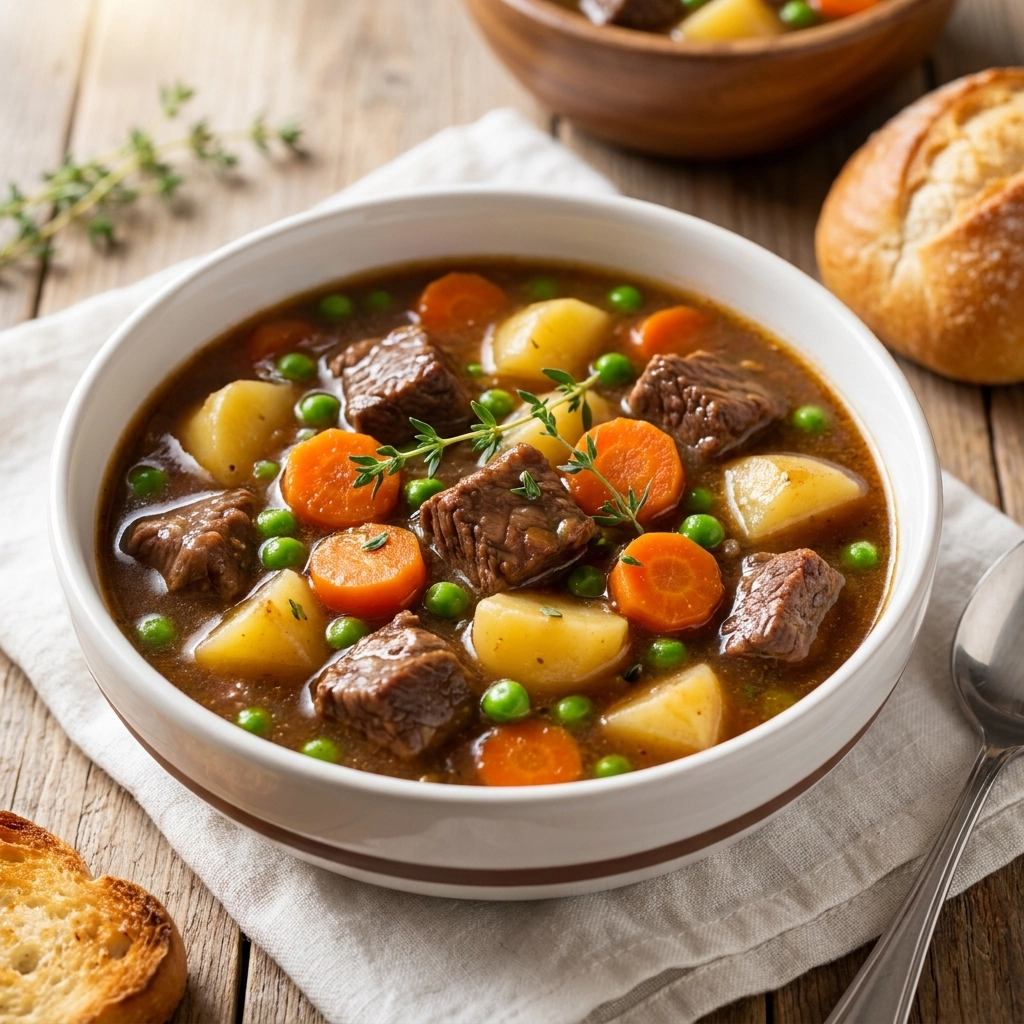
Pure comfort in a bowl.
Stop searching for the perfect winter meal because this is the only version of this timeless classic you will ever need. It balances technical precision with rustic charm to create a meal that tastes like a heritage heirloom.
Hearty chunks of beef simmer slowly until they surrender to the fork. Earthy root vegetables provide a natural sweetness that cuts through the richness of the savory broth.
Home cooks adore this approach because it transforms humble, inexpensive cuts of meat into a gourmet experience. It is a masterclass in slow-cooking and flavor extraction.
Unlike store-bought versions that rely on cornstarch thickeners and artificial salt, this recipe uses a natural reduction and a light dusting of flour for a silky, authentic texture.
Whether you are feeding a hungry family or hosting a cozy gathering, this meal provides a sense of security and warmth. Ultimate Guinness Beef Stew For Cozy Winter Nights
Follow along to learn the professional secrets to achieving deep color and profound depth of flavor.
- ●Why You’ll Love This Recipe
- ●A Brief Background / Why This Recipe Works
- ●Perfect For Family Dinners and Cold Nights
- ●Main Ingredient Spotlight: Beef Chuck
- ●Secondary Ingredient Spotlight: Root Vegetables
- ●Key Ingredients
- ●How to Make It
- ●Pro Tips
- ●Delicious Variations
- ●Best Ways to Serve
- ●Storage and Leftovers
- ●Frequently Asked Questions
- ●Why This Recipe Belongs in Your Weekly Rotation
- ●Final Thoughts
There are countless ways to prepare a stew, but this method emphasizes the technical milestones that guarantee a superior result every time.
- ●Deep, mahogany-colored gravy achieved through proper Maillard reaction.
- ●Beef that is fork-tender without being mushy.
- ●Naturally thickened sauce without using artificial additives.
- ●A balanced flavor profile of savory, salty, and slightly sweet.
- ●One-pot convenience that minimizes cleanup.
- ●Ingredients that are accessible at any local grocery store.
- ●A scent that fills the entire home with nostalgic warmth.
- ●High protein and vegetable content for a complete nutritional meal.
- ●Improved flavor when made in advance.
Once you experience the depth of this broth, you will wonder why you ever settled for thinner versions.
A Brief Background / Why This Recipe Works |
Traditional stews rely on the principle of braising, which is the process of searing meat at a high temperature and then simmering it in liquid at a low temperature. This dual-phase approach breaks down the tough connective tissues in the meat, turning collagen into gelatin.
The addition of aromatic vegetables and a touch of acidity ensures the heavy beef flavors remain bright. addition of the vegetables, we prevent the carrots and potatoes from disintegrating during the long simmer.
Have you ever wondered why a slow simmer beats a quick boil? A boil toughens the muscle fibers, whereas a gentle simmer allows the meat to relax and absorb the surrounding flavors.
This scientific approach ensures a cohesive, velvety sauce that clings to the ingredients rather than pooling at the bottom of the bowl.
Perfect For Family Dinners and Cold Nights |
Busy weeknights often demand meals that can be set and forgotten, and this stew fits that requirement perfectly. It can be prepped in the morning and allowed to develop its complexity while you focus on your day.
Family gatherings benefit from the scalable nature of this recipe. Simply double the portions to feed a crowd, as it is a dish that welcomes a large group and pairs beautifully with crusty bread.
During the holiday season, this serves as an excellent alternative to heavy roasts. It provides a rustic, grounding element to a festive table. Slow Cooker Bbq Beef Stew The Ultimate Comfort Meal
Main Ingredient Spotlight: Beef Chuck |
Beef chuck is the gold standard for stewing because of its high fat and collagen content. Unlike leaner cuts like sirloin, chuck doesn’t dry out over hours of cooking; instead, it becomes succulent and buttery. The marbled texture allows the meat to withstand the heat while absorbing the savory essence of the wine and broth.
Secondary Ingredient Spotlight: Root Vegetables |
Carrots and potatoes act as the structural backbone of the stew. The carrots contribute a subtle, earthy sweetness that balances the salt of the beef, while the starchy potatoes help thicken the sauce naturally as they release small amounts of starch during the cooking process.
Using waxy potatoes prevents the vegetables from turning into a puree, maintaining a distinct, pleasing bite. Fresh parsley adds a hit of herbal brightness at the end to awaken the palate.
Key Ingredients |
Every component here serves a specific purpose in building the final flavor architecture.
- ●Beef Chuck — Provides the rich, meaty base and essential gelatin for body.
- ●Flour — Acts as the primary thickening agent during the searing phase.
- ●Carrots — Adds sweetness and a vibrant orange hue.
- ●Potatoes — Brings heartiness and a creamy texture.
- ●Onion — Forms the aromatic foundation of the broth.
- ●Garlic — Contributes pungent, savory depth.
- ●Beef Broth — The liquid gold that hydrates the meat and carries the flavor.
- ●Tomato Paste — Adds umami and a deep red complexity.
- ●Worcestershire Sauce — Introduces a tangy, salty fermented note.
- ●Thyme and Bay Leaves — Provide the woodsy, herbal aroma characteristic of a classic stew.
 How to Make It |
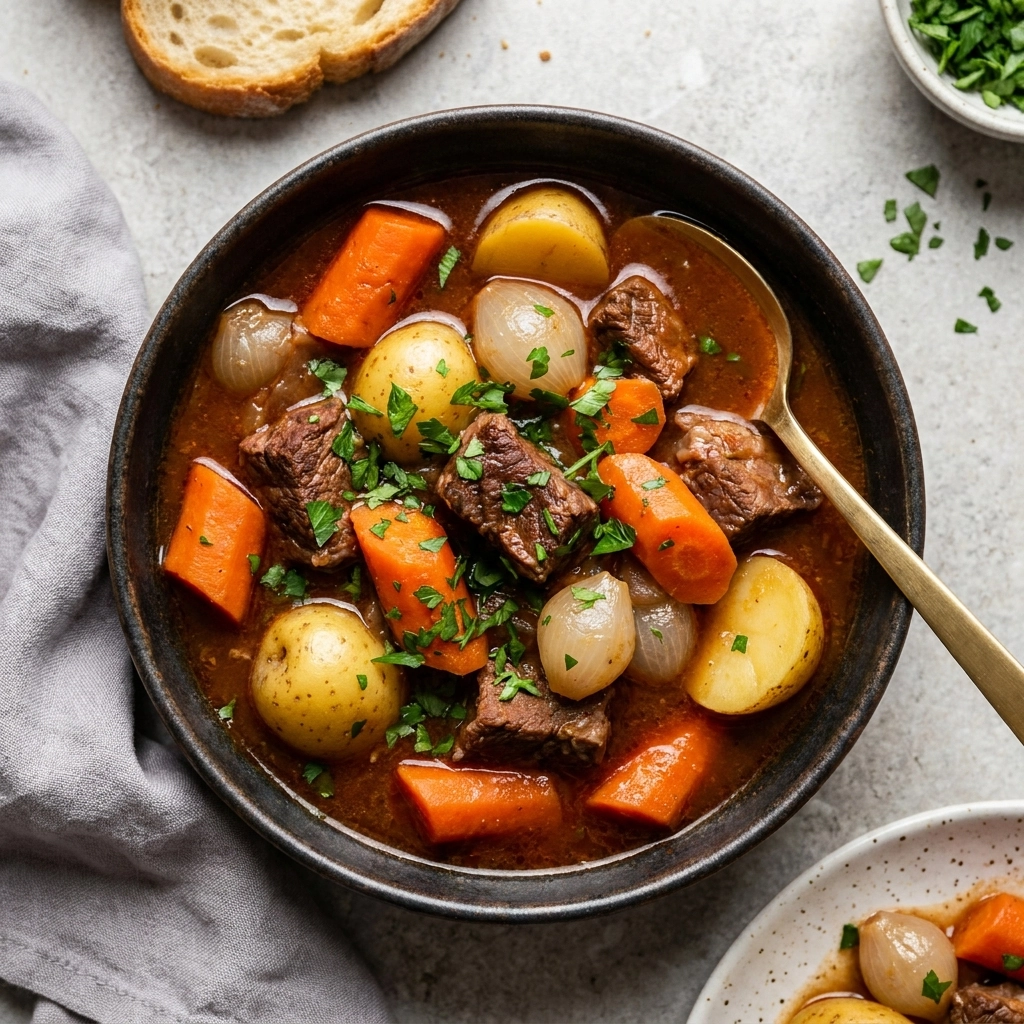
Precision in the early stages leads to perfection in the final bowl. Pay close attention to the visual cues mentioned below.
- The sear: Pat the beef dry with paper towels and toss in seasoned flour. Heat oil in a heavy pot over medium-high heat and brown the meat in batches. Avoid crowding the pan, as this drops the temperature and causes the meat to steam rather than sear, resulting in a grey exterior instead of a deep brown crust.
- The aromatics: Remove the beef and add the chopped onions and carrots to the same pot. Sauté until the onions are translucent and have picked up the brown bits (fond) from the bottom of the pot. This fond is concentrated flavor that must be incorporated into the sauce.
- The flavor base: Stir in the minced garlic and tomato paste. Cook for two minutes until the paste turns a darker brick red. This removes the raw metallic taste of the paste and enhances the overall umami profile.
- The deglaze: Pour in a small amount of broth or red wine and scrape the bottom of the pot with a wooden spoon. This process, known as deglazing, releases the caramelized proteins back into the liquid.
- The slow simmer: Return the browned beef to the pot and add the remaining broth, Worcestershire sauce, thyme, and bay leaves. Bring to a boil, then immediately reduce to a very low simmer. Cover tightly and cook for about 1.5 to 2 hours. Do you want the meat to practically melt? Keep the heat just at a whisper of a bubble.
- The vegetable finish: Add the cubed potatoes and remaining carrots. Simmer for another 30 to 45 minutes. Adding these later ensures they are tender but still hold their shape, preventing a mushy consistency.
- The final touch: Remove the bay leaves and stir in fresh parsley. Taste the sauce and adjust salt and pepper as needed. Let it rest for 10 minutes before serving to allow the flavors to settle. Luscious Slow Cooker Sweet Potato Beef Stew Recipe
1Elevate your cooking from home-style to professional with these specific technical adjustments.
- ●2Dry the meat: Always pat beef dry before flouring; moisture on the surface prevents a proper crust from forming.
- ●3Don’t rush the brown: Patience during the searing phase is the difference between a bland stew and a rich one.
- ●4Sift your flour: Use a light coating of flour on the beef to prevent clumps in the final sauce.
- ●5Cold water shock: If the stew is too salty, a small piece of peeled potato can absorb excess salt during the final simmer.
- ●6Acid balance: A teaspoon of balsamic vinegar added at the very end can brighten the heavy flavors and add a professional finish.
Delicious Variations |
While the classic version is peerless, these twists allow you to adapt the flavor profile to your current cravings.
- ●Red Wine Infusion: Swap one cup of beef broth for a dry Cabernet or Merlot for a more sophisticated, French-style flavor.
- ●Root Vegetable Medley: Replace some potatoes with parsnips or turnips for a more complex, earthy sweetness.
- ●Mushroom Depth: Add sautéed cremini mushrooms during the aromatic stage for an intensified umami hit.
- ●Spicy Kick: Stir in a pinch of red pepper flakes or a dash of hot sauce for a subtle, warming heat.
- ●Slow Cooker Transition: Follow the searing and aromatic steps on the stove, then transfer everything to a slow cooker for 8 hours on low.
Experimenting with these additions allows you to customize the meal while maintaining the core integrity of the dish.
Best Ways to Serve |
The presentation of a stew is just as important as the taste, as it sets the mood for the meal.
- ●Spoon into deep, warmed ceramic bowls to keep the stew hot.
- ●Serve with a side of buttered sourdough bread or a toasted baguette for dipping.
- ●Pair with a crisp green salad with a lemon vinaigrette to cut through the richness.
- ●Garnish with a sprinkle of fresh chives or a dollop of sour cream for visual contrast.
For a more filling meal, consider serving the stew over a bed of creamy mashed potatoes or buttered wide egg noodles.
The contrast between the thick gravy and a fluffy starch creates a luxurious dining experience. Luscious Slow Cooker Sweet Potato Beef Stew Main.Webp
Storage and Leftovers |
Refrigerating
Store the stew in an airtight glass container in the refrigerator. It remains fresh and safe for up to 4 days. In fact, the flavors often merge and improve after 24 hours of chilling.
Reheating
Avoid the microwave for best results; instead, reheat in a saucepan over medium-low heat. Add a splash of beef broth or water if the sauce has thickened too much during cooling. This ensures the beef remains tender and the sauce stays glossy.
Freezing
This stew freezes exceptionally well for up to 3 months. Cool completely before transferring to a freezer-safe bag or container. Thaw in the refrigerator overnight before reheating on the stove to maintain the texture of the vegetables.
Frequently Asked Questions |
- ●Q: Can I use a different cut of beef?A: While you can use stew meat or chuck roast, avoid lean cuts like sirloin or tenderloin. Lean meats will become tough and dry when simmered for several hours, whereas chuck has the necessary fats to remain tender.
- ●Q: Why is my stew too thin?A: If your sauce lacks body, you may not have seared the meat enough or failed to use enough flour. You can fix this a lid for the final 30 minutes to reduce the liquid and concentrate the flavors.
- ●Q: Which potatoes are the best for stew?A: Yukon Gold or Red potatoes are ideal because they hold their shape during long cooking times. Russet potatoes are too starchy and will likely break down, turning your stew into more of a thick mash.
- ●Q: Do I really need to brown the beef?A: Yes, browning is essential for the Maillard reaction, which creates deep, complex flavors. Skipping this step results in a bland, grey stew that lacks the characteristic richness of an old-fashioned recipe.
- ●Q: Can I make this in a pressure cooker?A: Absolutely. You can sear the meat in the pot, then pressure cook for 30-40 minutes. However, add the vegetables in a separate step at the end to prevent them from overcooking into a mush.
Why This Recipe Belongs in Your Weekly Rotation |
Integrating this meal into your routine provides a reliable anchor for your family’s dining schedule. It is a nutritious, filling, and cost-effective way to utilize budget-friendly cuts of meat while providing a high-end culinary result.
Beyond the nutrition, there is a psychological benefit to a slow-cooked meal. The aroma that permeates the home during the simmering process creates an environment of peace and stability that fast food simply cannot replicate.
Final Thoughts |
This Old-Fashioned Beef Stew combines technical precision with heartwarming simplicity. the sear and the slow simmer, you create a dish that is rich in both flavor and tradition.
You deserve a meal that rewards your patience with incredible taste and comfort. Whether it is a rainy Tuesday or a freezing Sunday, this stew is the ultimate culinary embrace.
Gather your ingredients and let your kitchen become a sanctuary of flavor today.
Old-Fashioned Beef Stew: The Definitive Guide to Comfort
- Total Time: 3 hours 20 minutes
- Yield: 6 servings 1x
Description
A timeless, hearty beef stew featuring tender chunks of beef chuck, root vegetables, and a rich, naturally thickened savory gravy.
Ingredients
- 2 lbs beef chuck, cut into 1-inch cubes
- 1/4 cup all-purpose flour
- 1 tsp salt
- 1/2 tsp black pepper
- 3 tbsp vegetable oil
- 1 large onion, chopped
- 3 large carrots, sliced into rounds
- 3 cloves garlic, minced
- 2 tbsp tomato paste
- 4 cups beef broth
- 1 tbsp Worcestershire sauce
- 2 bay leaves
- 1 tsp dried thyme
- 1.5 lbs Yukon Gold potatoes, cubed
- 2 tbsp fresh parsley, chopped
Instructions
- Toss beef cubes with flour, salt, and pepper until evenly coated.
- Heat oil in a large pot over medium-high heat; brown beef in batches until deeply caramelized, then remove and set aside.
- Sauté onions and carrots in the same pot until onions are translucent.
- Stir in garlic and tomato paste, cooking for 2 minutes until the paste darkens.
- Deglaze the pot with a splash of broth, scraping the bottom to release the brown bits.
- Return beef to the pot and add remaining broth, Worcestershire sauce, bay leaves, and thyme.
- Simmer covered on low heat for 1.5 to 2 hours until beef is tender.
- Add cubed potatoes and simmer for another 30-45 minutes until vegetables are soft.
- Remove bay leaves, stir in fresh parsley, and adjust seasoning before serving.
- Prep Time: 20 minutes
- Cook Time: 3 hours
- Category: Dinner
- Method: Braising
- Cuisine: American