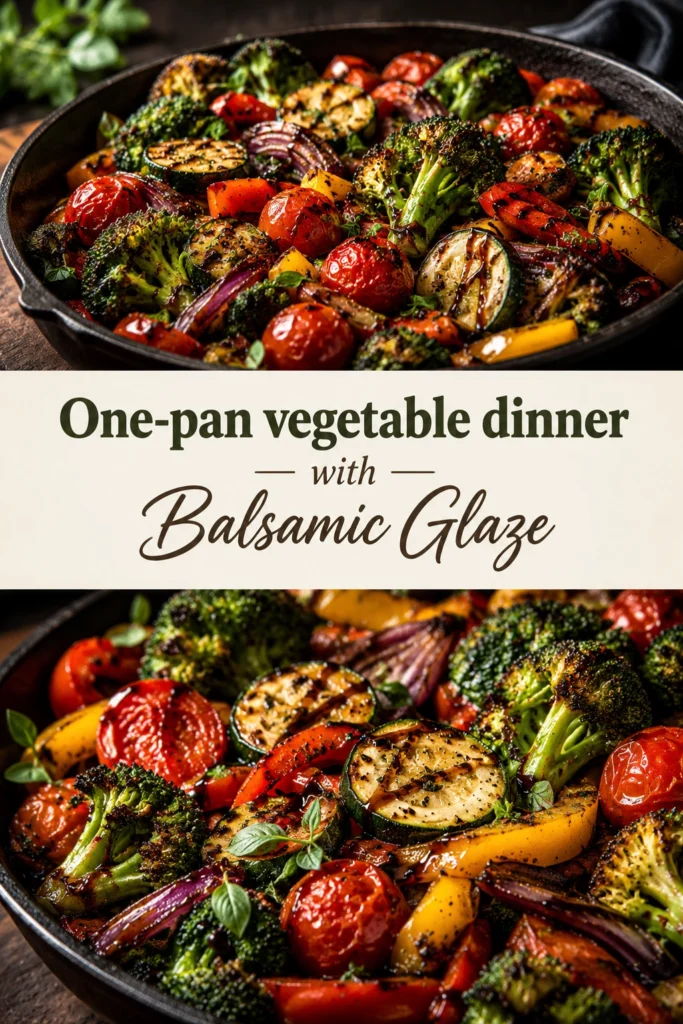
Deep caramelization transforms simple garden vegetables into a sophisticated meal that tastes far more complex than a standard roasted medley.
This one-pan dinner combines a variety of colorful produce roasted at high heat and finished with a thick, syrupy balsamic reduction.
Home cooks appreciate how the natural sugars in the vegetables intensify, creating a savory-sweet contrast that satisfies cravings for something rich.
Unlike steamed or boiled vegetables, this method uses dry heat to evoke a charred, nutty flavor profile throughout the pan.
Anyone seeking a nutrient-dense, plant-forward meal that requires minimal active effort will find this approach ideal.
The kitchen fills with the scent of toasted garlic and sweet vinegar as the glaze bubbles in the oven.
Follow the guide below to master the timing and temperature for perfectly tender vegetables.
- ●Why You’ll Love This Recipe
- ●A Brief Background on the Technique
- ●Perfect For Busy Weeknights and Meal Prep
- ●Main Ingredient Spotlight: Balsamic Vinegar
- ●Secondary Ingredient Spotlight: Root Vegetables
- ●Key Ingredients
- ●How to Make It
- ●Pro Tips
- ●Delicious Variations
- ●Best Ways to Serve
- ●Storage and Leftovers
- ●Frequently Asked Questions
- ●Why This Recipe Belongs in Your Weekly Rotation
- ●Final Thoughts
Choosing a one-pan method reduces the stress of dinner preparation while maximizing the depth of flavor through roasting.
- ●Single-pan cleanup means less time at the sink after dinner.
- ●High-heat roasting creates charred edges that provide a smoky contrast to the sweet glaze.
- ●The balsamic reduction adds a professional restaurant-style finish to humble vegetables.
- ●Versatile ingredient options allow you to use whatever is currently in your crisper drawer.
- ●Nutrient density remains high as the vegetables are roasted rather than boiled.
- ●The flavor profile balances acidity, sweetness, and earthiness in every bite.
- ●Prep time is minimal since most of the work happens inside the oven.
- ●It functions perfectly as a standalone vegan main or a side for One Pan Balsamic Chicken The Ultimate Weeknight Dinner Easy Chicken Dinner Ideas
This combination of ease and elegance makes it a reliable choice for any night of the week.
A Brief Background on the Technique |
Roasting vegetables at high temperatures triggers the Maillard reaction, where amino acids and reducing sugars react to create brown, flavorful crusts. By adding a balsamic glaze, you introduce an acidic component that cuts through the richness of the olive oil.
The glaze thickens as it heats, clinging to the vegetables rather than pooling at the bottom of the pan. This ensures a consistent coating of flavor on every piece of produce.
Selecting a mix of hard and soft vegetables ensures a varied texture, preventing the dish from becoming mushy or remaining too raw.
Using a large sheet pan allows for adequate airflow, which is essential for roasting rather than steaming the vegetables.
Perfect For Busy Weeknights and Meal Prep |
Tuesday nights often require speed, and this recipe allows you to chop and toss everything in ten minutes before letting the oven do the heavy lifting.
For those who meal prep on Sundays, these vegetables hold their structure well when stored in airtight containers, making them a great addition to grain bowls throughout the week.
Family dinners benefit from the colorful presentation, which often encourages pickier eaters to try a wider variety of vegetables.
During holiday gatherings, this pan serves as an effortless side dish that complements heavier proteins without requiring extra stovetop space.
Main Ingredient Spotlight: Balsamic Vinegar |
Balsamic vinegar provides the foundational acidity and sweetness that defines the dish. Unlike white vinegar, balsamic is aged, giving it a syrupy consistency and a complex, fruity undertone.
When roasted, the vinegar reduces, concentrating the sugars and creating a glaze that enhances the natural flavors of the carrots and onions. It acts as a flavor bridge, connecting the earthy notes of the root vegetables with the brightness of fresh herbs.
Secondary Ingredient Spotlight: Root Vegetables |
Carrots, parsnips, and sweet potatoes provide the bulk of the meal. Their dense structure allows them to withstand higher oven temperatures for longer periods without disintegrating.
These vegetables contain high amounts of natural sugar, which caramelize beautifully under the broiler. This process creates a chewy, sweet exterior and a tender, creamy interior.
Adding a variety of colors—from orange carrots to purple onions—ensures a visually appealing plate and a broader range of vitamins.
Key Ingredients |
Gather these staples to create a balanced and flavorful roast.
- ●Balsamic Vinegar — provides the tangy, sweet base for the reduction.
- ●Olive Oil — facilitates heat transfer and prevents the vegetables from sticking.
- ●Maple Syrup — enhances the sweetness and helps the glaze thicken.
- ●Garlic — adds a pungent, savory depth to the overall flavor.
- ●Carrots — offer a sweet, earthy base and a firm texture.
- ●Brussels Sprouts — contribute a nutty flavor and crisp edges, similar to Roasted Brussels Sprouts With Bacon And Balsamic Glaze Easy Side Dish Recipe
- ●Red Onion — adds a sharp contrast that mellows into sweetness when roasted.
- ●Fresh Thyme — brings a woody, herbal aroma to the finished dish.
How to Make It |
Follow these steps to achieve the ideal balance of tenderness and caramelization.
- Preheat the oven: Set your oven to 400°F (200°C) to ensure the pan is hot enough to sear the vegetables immediately upon entry. A cold oven leads to steaming rather than roasting.
- Prepare the vegetables: Chop carrots, onions, and sprouts into uniform sizes. Consistent sizing is critical so that the smaller pieces don’t burn while the larger ones remain raw.
- Whisk the glaze: Combine balsamic vinegar, olive oil, maple syrup, and minced garlic in a small bowl. Mixing these thoroughly ensures every vegetable is evenly coated in the flavor base.
- Toss and spread: Place all vegetables on a large rimmed baking sheet and pour the glaze over them. Use your hands or a spatula to toss them until fully coated, then spread them in a single layer to avoid overcrowding.
- Roast for tenderness: Bake for 20 to 25 minutes. Look for the edges of the onions to turn translucent and the carrots to soften slightly when pierced with a fork.
- Broil for caramelization: Switch the oven to the broiler setting for 3 to 5 minutes. Watch closely; the goal is to see the glaze bubble and turn a deep brown, which signals the sugars have fully caramelized.
- Finish with herbs: Remove the pan from the oven and sprinkle with fresh thyme and salt. Adding fresh herbs at the end preserves their bright color and volatile oils that would otherwise burn in the oven.
1Refine your technique with these practical adjustments for better results.
- ●2Use parchment paper: Lining the pan prevents the sugary glaze from sticking and makes cleanup nearly instantaneous.
- ●3Avoid overcrowding: Leave space between the vegetables to allow hot air to circulate, which ensures they roast rather than steam.
- ●4Dry the produce: Pat the vegetables dry after washing them; excess water creates steam, which prevents the vegetables from browning.
- ●5Adjust based on size: Cut denser vegetables like carrots smaller than softer vegetables like zucchini to ensure they finish cooking at the same time.
- ●6Use high-quality vinegar: A thicker, aged balsamic vinegar results in a richer glaze with less reduction time.
Delicious Variations |
Modify the ingredients to suit your dietary needs or the current season.
- ●Autumnal Twist: Replace carrots with cubed butternut squash and add dried cranberries for a tart pop.
- ●Mediterranean Style: Swap the balsamic for a lemon-oregano vinaigrette and add Kalamata olives after roasting.
- ●Protein Boost: Add chickpeas or cubed tofu to the pan for a complete plant-based protein meal.
- ●Winter Hearth: Use parsnips and rutabaga for a more robust, earthy flavor profile.
- ●Spicy Kick: Stir in a pinch of red pepper flakes or a teaspoon of Sriracha into the balsamic glaze.
These changes allow the recipe to evolve throughout the year while maintaining the same simple process.
Best Ways to Serve |
Depending on the occasion, this dish can serve as the star of the show or a supporting player.
- ●As a Main: Serve over a bed of fluffy quinoa or farro to absorb the extra glaze.
- ●With Protein: Pair with grilled salmon or a roast chicken for a balanced dinner.
- ●As a Bowl: Combine with massaged kale, avocado slices, and a dollop of hummus.
- ●With Cheese: Sprinkle crumbled goat cheese or feta over the hot vegetables for a creamy contrast.
For a light lunch, these vegetables pair well with a crisp apple slice or a simple side salad, much like a Fresh Watermelon Feta Salad Recipe With Mint And Balsamic Glaze Summer Salad Ideas
Serving the vegetables immediately while they are steaming ensures the glaze remains tacky and glossy rather than soaking into the produce.
Storage and Leftovers |
Refrigerating
Store leftovers in an airtight container for up to 5 days. Keep them in the coldest part of the refrigerator to maintain the integrity of the roasted vegetables.
Reheating
Reheat in an oven or air fryer at 350°F for 5 to 7 minutes. Avoid the microwave if possible, as it can make the vegetables soggy and lose the caramelized texture.
Freezing
Freezing is not recommended for this dish. The high water content in vegetables like zucchini or sprouts causes them to release moisture and become mushy upon thawing.
Frequently Asked Questions |
- ●Q: Can I use apple cider vinegar instead of balsamic?A: While you can use apple cider vinegar, the flavor will be significantly more tart and less sweet. To mimic the balsamic effect, you will need to increase the amount of maple syrup or honey to balance the higher acidity.
- ●Q: Why are my vegetables steaming instead of roasting?A: This usually happens because the pan is overcrowded or the oven temperature is too low. Ensure there is visible space between each piece of vegetable and avoid using a pan that is too small for the volume of food.
- ●Q: Do I need to peel the carrots before roasting?A: Peeling is optional and depends on personal preference. For organic carrots, a thorough scrub with a vegetable brush is sufficient, as the skin holds a lot of flavor and adds a rustic look to the dish.
- ●Q: Can I add softer vegetables like bell peppers or zucchini?A: Yes, but add them halfway through the roasting process. Softer vegetables cook much faster than root vegetables and will turn to mush if left in the oven for the full 25 minutes.
- ●Q: How do I stop the glaze from burning during the broil phase?A: The key is constant supervision. Broilers vary wildly in intensity; set a timer for two minutes and check the pan every 30 seconds after that to pull the vegetables out at the peak of caramelization.
Why This Recipe Belongs in Your Weekly Rotation |
Integrating this meal into your routine simplifies the struggle of eating more vegetables. The sweetness of the glaze makes the produce appealing to everyone, removing the friction often associated with healthy eating.
Because it relies on a few pantry staples and flexible produce, it reduces food waste to use up whatever vegetables are nearing their expiration date in your fridge.
The minimal cleanup means you can enjoy a gourmet-style dinner without the dreaded mountain of pots and pans. It is a sustainable, efficient way to bring high-impact flavor to the table.
Final Thoughts |
This one-pan vegetable dinner blends the earthy richness of root vegetables with the sharp, sweet punch of a balsamic reduction. It transforms basic produce into a caramelized feast with minimal effort.
Making this recipe allows you to reclaim your evening while still providing a nutritious, flavorful meal for yourself or your family. The versatility of the ingredients means you can adapt it to any season.
Gather your favorite vegetables and fire up the oven to experience this perfect balance of salt, sweet, and tang.
One-Pan Vegetable Dinner with Balsamic Glaze
- Total Time: 45 minutes
- Yield: 4 servings 1x
Description
A nutrient-dense sheet pan meal featuring a medley of roasted root vegetables coated in a sweet and tangy balsamic reduction.
Ingredients
- 1 lb carrots, peeled and sliced into 1-inch chunks
- 1 lb Brussels sprouts, halved
- 1 large red onion, cut into wedges
- 3 tbsp olive oil
- 3 tbsp balsamic vinegar
- 1 tbsp maple syrup
- 3 cloves garlic, minced
- 1 tsp fresh thyme leaves
- 1/2 tsp salt
- 1/4 tsp black pepper
Instructions
- Preheat your oven to 400°F (200°C) and line a large baking sheet with parchment paper.
- In a small bowl, whisk together the olive oil, balsamic vinegar, maple syrup, and minced garlic until well combined.
- Place the sliced carrots, halved Brussels sprouts, and red onion wedges onto the prepared baking sheet.
- Pour the balsamic mixture over the vegetables and toss with your hands or a spatula until every piece is evenly coated.
- Spread the vegetables into a single layer, ensuring they are not overcrowded.
- Roast in the oven for 20-25 minutes, or until the vegetables are tender and starting to brown.
- Switch the oven to the broiler setting and roast for an additional 3-5 minutes, watching closely until the glaze is bubbly and caramelized.
- Remove from the oven and garnish with fresh thyme, salt, and pepper before serving.
- Prep Time: 15 minutes
- Cook Time: 30 minutes
- Category: Dinner
- Method: Baking
- Cuisine: American