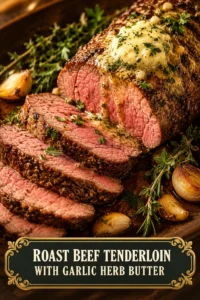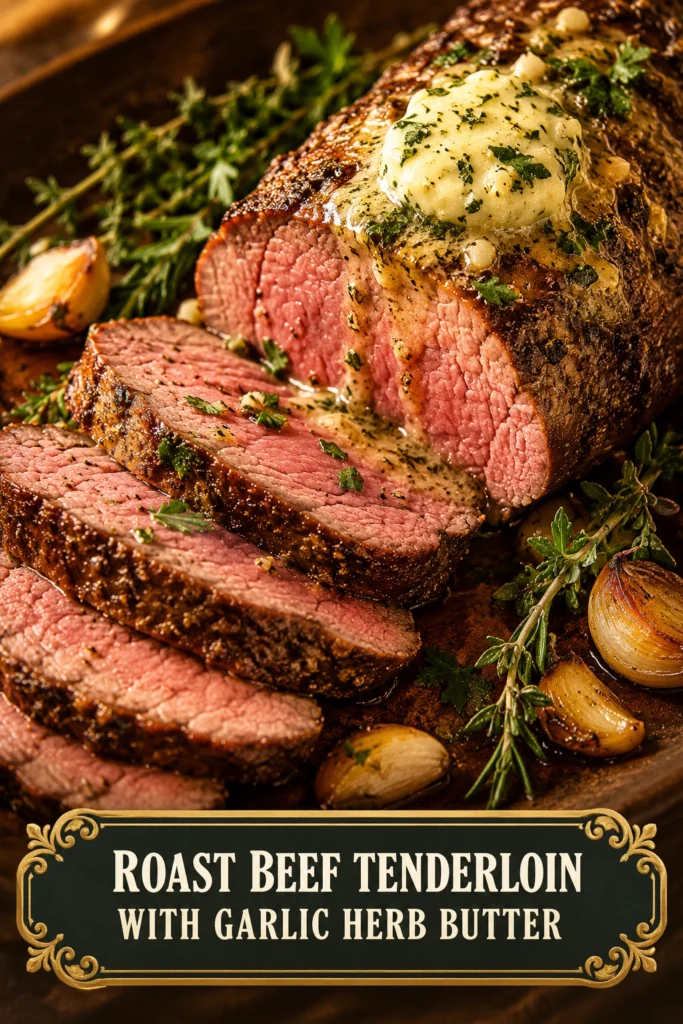
The combination of salted butter and fresh rosemary creates a fragrant, savory crust that cuts through the richness of the beef. This pairing works because the fats in the butter carry the herbal aromatics deep into the sear of the meat.
This recipe features a center-cut beef tenderloin roasted to a precise medium-rare and topped with a homemade compound butter.
Home cooks value this approach because it provides a high-end result without requiring complex culinary techniques.
The roast is unique for its balance of a hard, caramelized exterior and a buttery, melt-in-your-mouth interior.
Compared to store-bought pre-marinated roasts, this version allows for precise control over salt levels and the freshness of the herbs.
It is a suitable choice for those hosting formal dinner parties or seeking a high-protein centerpiece for holiday gatherings.
The following guide details every step from the initial sear to the final rest.
- ●Why You’ll Love This Recipe
- ●A Brief Background on Beef Tenderloin
- ●Perfect For Elegant Dinner Parties and Holidays
- ●Beef Tenderloin Spotlight
- ●Garlic and Herb Spotlight
- ●Key Ingredients
- ●How to Make It
- ●Pro Tips
- ●Flavor Variations
- ●Best Ways to Serve
- ●Storage and Leftovers
- ●Frequently Asked Questions
- ●Why This Recipe Belongs in Your Weekly Rotation
- ●Final Thoughts
Selecting a premium cut of meat requires a cooking method that respects the quality of the ingredient while enhancing its natural profile.
- ●Tenderloin is the most lean and tender muscle of the cow.
- ●Compound butter adds a layer of moisture that prevents the lean meat from drying.
- ●The searing process creates a deep mahogany crust.
- ●Fresh garlic provides a pungent contrast to the mild beef.
- ●Rosemary and thyme add earthy, piney notes.
- ●Internal temperature tracking removes the guesswork from the roasting process.
- ●The resting period allows juices to redistribute for a more consistent cook.
- ●It serves as a visually impressive centerpiece for any table.
- ●Preparation is streamlined butter ahead of time.
These elements combine to create a dish that feels sophisticated yet remains manageable for the home cook.
A Brief Background on Beef Tenderloin |
Beef tenderloin comes from the psoas major muscle, which does very little work during the animal’s life. This lack of movement results in a meat structure with very little connective tissue, meaning it does not require the long, slow braising times associated with chuck or brisket.
Because it is so lean, the primary challenge is avoiding overcooking. Applying a fat source, such as the garlic herb butter used here, helps protect the meat and adds a richness that the lean muscle naturally lacks.
When prepared with a high-heat sear followed by a controlled oven roast, the beef develops a contrast in textures that defines high-end steakhouse presentations.
Perfect For Elegant Dinner Parties and Holidays |
This dish is a natural fit for formal occasions where the presentation of the main course is as important as the taste. Because the meat can be roasted and rested while guests enjoy appetizers, it reduces the stress of timing the meal.
For holiday gatherings, it provides a substantial protein that pairs well with traditional sides like roasted root vegetables or creamed spinach. It offers a more refined alternative to the Herb Crusted Roast With Caramelized Onions Easy Sunday Roast Beef Recipe
While typically reserved for celebrations, it can be scaled down for a romantic dinner for two by using a smaller Chateaubriand cut.
Beef Tenderloin Spotlight |
Beef tenderloin is prized for its buttery texture and mild, clean flavor. Unlike ribeye, which has heavy marbling, tenderloin relies on its fine grain to provide a soft mouthfeel. It is the gold standard for those who prefer a lean cut of beef that still feels luxurious.
Garlic and Herb Spotlight |
Garlic provides a sharp, aromatic base that awakens the palate. When sautéed or melted into butter, it transforms from a raw bite to a mellow, nutty sweetness that complements the savory notes of the roast.
Fresh herbs like rosemary and thyme bring an outdoor, woody aroma to the dish. These herbs contain essential oils that release when exposed to heat, infusing the beef with a complex scent that signals a professional-grade meal.
Key Ingredients |
The success of this roast depends on the quality of a few primary components.
- ●Beef Tenderloin — The lean, tender center-cut of the beef.
- ●Unsalted Butter — The creamy base for the compound herb mixture.
- ●Garlic — Fresh cloves that provide a pungent, aromatic kick.
- ●Fresh Rosemary — A piney herb that adds earthy depth.
- ●Fresh Thyme — A subtle, lemony herb that balances the richness.
- ●Kosher Salt — Large grains that season the meat evenly.
- ●Black Pepper — Coarsely ground for a mild heat and floral aroma.
- ●Olive Oil — A high-smoke point fat used for the initial sear.
How to Make It |
Precision in temperature and timing is the only way to ensure the beef remains juicy throughout.
- Prepare the compound butter: Mash softened butter with minced garlic, chopped rosemary, and thyme. Setting this aside allows the flavors to meld before the meat is ready for the butter application.
- Temper the meat: Remove the beef from the refrigerator 60 minutes before cooking. Bringing the meat closer to room temperature ensures the center cooks evenly with the exterior, preventing a raw middle and overcooked edges.
- Season the exterior: Pat the beef completely dry with paper towels and rub with olive oil. Apply a generous layer of salt and pepper on all sides. Moisture on the surface prevents the Maillard reaction, so dryness is critical for a brown crust.
- Sear the beef: Heat a cast-iron skillet over high heat until the oil shimmer. Brown the beef for 2-3 minutes per side. Look for a deep brown color; avoid overcrowding the pan, which can drop the temperature and cause the meat to steam rather than sear.
- Roast in the oven: Transfer the skillet to a preheated oven at 425°F (218°C). Roast until a meat thermometer reads 125°F (52°C) for medium-rare. Avoid using a timer alone, as oven calibrations vary; rely solely on the internal temperature.
- Apply the butter: Immediately upon removing the roast from the oven, dollop the garlic herb butter over the top. The residual heat will melt the butter, allowing it to baste the meat while it rests.
- Rest the meat: Transfer the roast to a carving board and let it sit for 15-20 minutes. Cutting into the beef too early forces the juices to run out onto the board, leaving the meat dry.
1Small adjustments in technique can elevate the final result from good to exceptional.
- ●2Use a digital probe thermometer: This is the only way to know exactly when to pull the meat, as the temperature will continue to rise about 5 degrees during the rest.
- ●3Tie the roast: Use kitchen twine to tie the tenderloin into a uniform cylinder. This prevents the thinner end from overcooking while the thick center reaches the target temperature.
- ●4Avoid high-heat butter: Do not add the herb butter during the initial sear, as the milk solids in butter burn quickly and can create a bitter taste.
- ●5Pat dry twice: If the meat seems wet after the first pat, do it again. A dry surface is the difference between a grey roast and a mahogany roast.
- ●6Cold butter for topping: Keep the compound butter chilled until the moment the meat leaves the oven to create a slower, more controlled melt.
Flavor Variations |
While the garlic herb combination is classic, you can adapt the flavor profile based on the season or preference.
- ●Red Wine Reduction: Deglaze the roasting pan with Cabernet Sauvignon and simmer until thickened to serve as a sauce.
- ●Blue Cheese Butter: Fold crumbled gorgonzola into the compound butter for a pungent, salty twist.
- ●Citrus Infusion: Add lemon zest and a pinch of orange peel to the butter for a brighter, lighter flavor.
- ●Horseradish Twist: Mix prepared horseradish into the butter for a spicy kick that cuts through the fat.
- ●Truffle Addition: Stir in a teaspoon of truffle oil or minced black truffle for an ultra-luxurious aroma.
These changes allow the dish to pivot from a traditional roast to something more modern or bold.
Best Ways to Serve |
The richness of the beef requires side dishes that provide acidity or freshness to balance the plate.
- ●Roasted Root Vegetables: Carrots, parsnips, and fingerling potatoes roasted in the same oven.
- ●Creamed Spinach: A classic steakhouse pairing that adds a velvety texture.
- ●Garlic Mashed Potatoes: A hearty base that catches the runoff from the herb butter.
- ●Arugula Salad: A simple salad with lemon vinaigrette to cleanse the palate between bites.
For a more casual presentation, slice the beef into thick medallions and serve them atop a bed of sautéed mushrooms. For a formal setting, carve the roast at the table to showcase the medium-rare center.
If you are looking for other beef options, you might try High Protein Garlic Butter Beef Bites Recipe for a quicker meal.
Storage and Leftovers |
Refrigerating
Place leftover beef in an airtight container. It remains safe to eat for up to 3 to 4 days in the refrigerator.
Reheating
Avoid the microwave, which overcooks the meat quickly. Instead, warm slices in a 250°F (120°C) oven for 10 minutes or sear them briefly in a pan with a small amount of butter.
Freezing
Wrap the beef tightly in foil and then in a freezer bag. It can be stored for up to 2 months, though the texture may soften slightly upon thawing.
Frequently Asked Questions |
- ●Q: What is the best way to tell if the meat is done without a thermometer?A: While a thermometer is highly recommended, you can use the touch test. Press the center of the roast; it should feel similar to the firmness of the fleshy part of your palm just below the thumb when your hand is relaxed for medium-rare.
- ●Q: Can I use a different cut of beef for this recipe?A: You can use a sirloin roast or a tri-tip, but these cuts have different fat contents and muscle structures. They may require longer cooking times or a lower roasting temperature to avoid becoming tough compared to the tenderloin.
- ●Q: My roast came out grey instead of brown; what happened?A: This usually happens if the pan wasn’t hot enough or if the meat was too wet when it hit the oil. Ensure the oil is shimmering and the meat is patted dry to achieve a proper sear.
- ●Q: Do I really need to let the meat rest for 20 minutes?A: Yes, resting is essential. During roasting, the muscle fibers tighten and push juices toward the center. Resting allows those fibers to relax and reabsorb the liquid, so the juice stays in the meat instead of flooding the plate.
- ●Q: Can I make the compound butter a few days in advance?A: Absolutely. You can make the butter, roll it into a log using parchment paper, and store it in the fridge for up to a week. This actually allows the garlic and herbs to infuse the butter more deeply.
Why This Recipe Belongs in Your Weekly Rotation |
Integrating high-quality proteins into your diet provides essential amino acids and minerals. While tenderloin is a luxury, mastering the technique of roasting and basting creates a skill set that applies to many other meats.
The efficiency of the process—searing once and roasting until a specific temperature is hit—makes it a reliable choice for those who want a restaurant-quality meal without spending hours in the kitchen.
Whether it is a Sunday dinner or a celebratory event, this roast delivers a consistent result that satisfies guests and home cooks alike.
Final Thoughts |
This roast beef tenderloin combines a high-heat sear with the aromatic richness of garlic herb butter for a sophisticated main course. The focus on internal temperature and resting ensures a juicy, tender result every time.
Bringing this dish to the table shows a commitment to quality ingredients and precise technique. It transforms a simple piece of meat into a culinary centerpiece.
Gather your ingredients and prepare for a dining experience that feels truly special.
Roast Beef Tenderloin with Garlic Herb Butter
- Total Time: 55 minutes
- Yield: 6 servings 1x
Description
A luxurious center-cut beef tenderloin seared to a golden brown and roasted to a perfect medium-rare, topped with a fragrant compound butter of garlic, rosemary, and thyme.
Ingredients
- 3 lb beef tenderloin center-cut
- 1/2 cup unsalted butter, softened
- 4 cloves garlic, minced
- 1 tablespoon fresh rosemary, finely chopped
- 1 tablespoon fresh thyme, finely chopped
- 2 tablespoons olive oil
- 2 teaspoons kosher salt
- 1 teaspoon coarsely ground black pepper
Instructions
- In a small bowl, combine softened butter, minced garlic, chopped rosemary, and thyme. Mix until smooth and set aside.
- Remove beef from the fridge 60 minutes before cooking to bring it to room temperature.
- Pat the beef dry with paper towels. Rub with olive oil and season generously with salt and pepper on all sides.
- Heat a large cast-iron skillet over high heat. Add oil and sear the beef for 2-3 minutes per side until a deep brown crust forms.
- Transfer the skillet to a preheated oven at 425°F (218°C). Roast until a meat thermometer inserted into the thickest part reads 125°F (52°C) for medium-rare.
- Remove the roast from the oven and immediately place the garlic herb butter on top, allowing it to melt over the meat.
- Transfer the roast to a carving board and let it rest for 15-20 minutes before slicing.
- Prep Time: 20 minutes
- Cook Time: 35 minutes
- Category: Main Dish
- Method: Roasting
- Cuisine: American