The Heritage of Horiatiki |
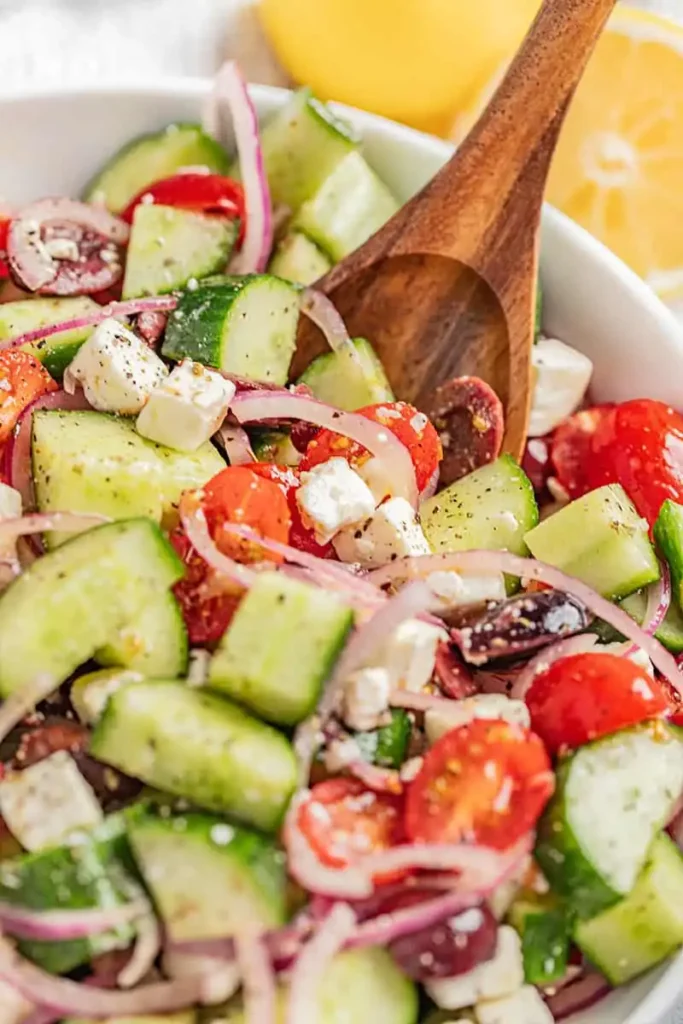
The traditional Greek salad, known as Horiatiki, originates from the rural landscapes of Greece where peasants relied on the land for sustenance. This dish represents the core of Mediterranean eating, prioritizing raw, high-quality produce over complex preparation to highlight the natural sweetness of sun-ripened vegetables.
I almost gave up on this recipe until I stopped adding lettuce to the mix. I realized that the authentic version relies on the structural integrity of cucumbers and tomatoes, which creates a far more robust and satisfying texture than any leafy green could provide.
- ●Focuses on high-nutrient, whole-food ingredients.
- ●Requires zero heat or cooking equipment.
- ●Provides a sharp contrast between salty cheese and acidic vinegar.
- ●Utilizes a minimal list of pantry staples.
- ●Offers a refreshing palate cleanser for heavy main courses.
Essential Ingredients |
English Cucumber provides the essential watery crunch and freshness. Swap for Persian cucumbers if English varieties are unavailable.
Vine-Ripened Tomatoes contribute a juicy, acidic sweetness that forms the base of the dressing. Use cherry tomatoes halved if large ones lack flavor.
Kalamata Olives deliver a briny, fermented depth and a rich texture. Substitute with Niçoise olives for a milder taste.
Feta Cheese adds a creamy, salty punch that ties the vegetables together. Try a sheep’s milk variety for a more pungent profile.
Extra Virgin Olive Oil acts as the luxurious binder that carries the herbs. Use avocado oil if a neutral flavor is preferred.
Red Wine Vinegar provides the necessary sharpness to cut through the fat of the cheese. Substitute with fresh lemon juice for a brighter note.
 Let’s Make it Together |
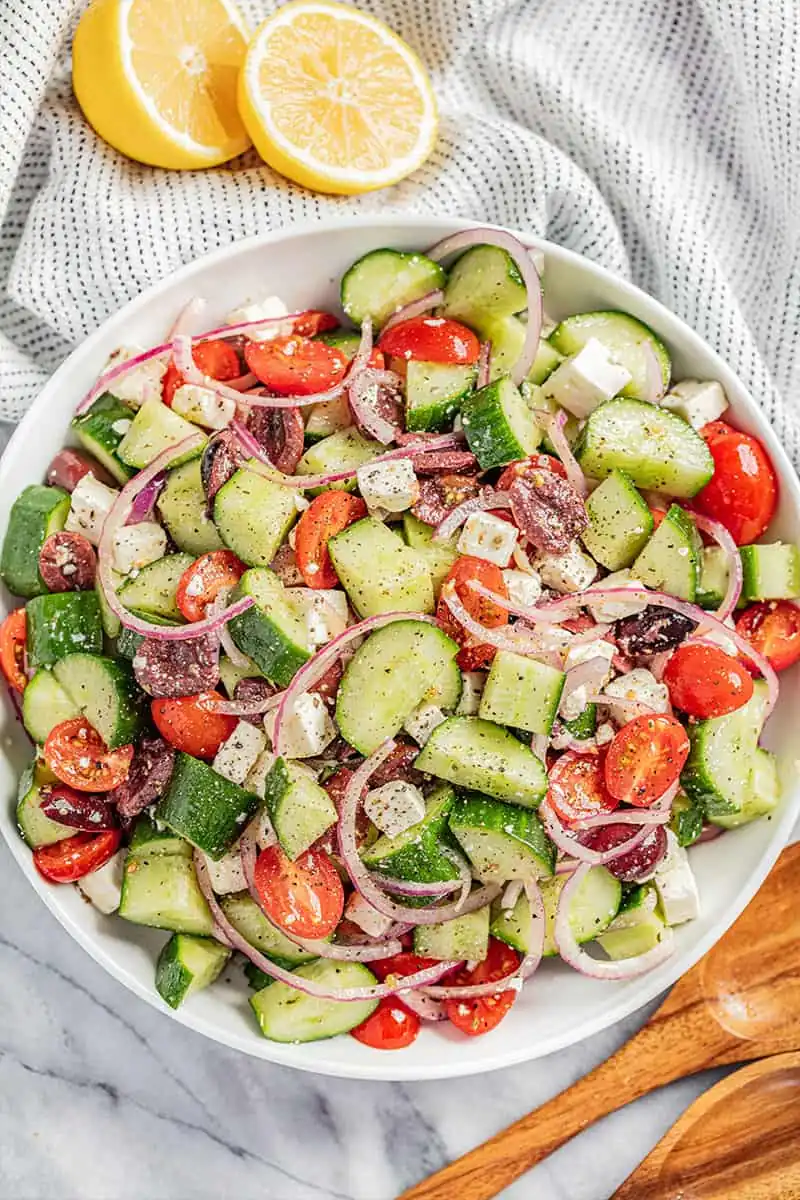
- Dice the cucumbers into thick, bite-sized chunks to ensure they maintain their crunch. Pro tip: Keep the skin on for extra nutrients and color.
- Quarter the tomatoes into irregular wedges to allow the juices to mingle with the dressing.
- Slice the red onions into very thin half-moons to avoid overpowering the other vegetables. Pro tip: Soak sliced onions in cold water for ten minutes to remove the harsh bite.
- Combine the cucumbers, tomatoes, and onions in a large mixing bowl.
- Whisk the olive oil and red wine vinegar together in a small carafe until emulsified. Pro tip: Add a pinch of salt to the vinaigrette before pouring it over the salad.
- Toss the vegetables gently with the dressing and olives until evenly coated.
- Place the block of feta on top or crumble it coarsely over the mixture.
Simplicity is the ultimate sophistication.
Avoid using pre-shredded cheese as it contains starch that prevents it from adhering to the vegetables.
Never refrigerate the tomatoes before cutting, as this ruins their cellular structure and flavor.
Use a wide bowl to prevent the vegetables from crushing under their own weight.
Ensure your olive oil is cold-pressed to maintain the distinct peppery finish.
Do not over-mix the salad, or the cucumbers will release too much water.
Perfecting the Cooking Process |
The key to this dish is the knife work. You want chunky, rustic cuts rather than uniform small cubes. This variety in size creates different textural experiences in every bite, mirroring the traditional village style of preparation.
Timing is critical. The salad should be dressed and served immediately. If it sits too long, the salt in the feta and olives will draw out the moisture from the tomatoes, turning the salad into a soup rather than a crisp arrangement of vegetables.
Add Your Touch |
To introduce a modern twist, incorporate sliced avocado for added creaminess or pomegranate seeds for a burst of sweetness. These additions maintain the spirit of the dish while adding contemporary nutritional profiles.
For a different aromatic profile, replace the red wine vinegar with a splash of balsamic glaze. This shifts the flavor from a sharp, acidic profile to a sweeter, deeper experience that pairs well with grilled meats.
Storing & Reheating |
Store leftover salad in an airtight glass container in the refrigerator for up to two days. Keep the feta separate if you are prepping the salad in advance to prevent the cheese from becoming soggy.
Do not reheat this dish. The heat will wilt the vegetables and melt the feta, destroying the intended refreshing quality and crisp texture of the Horiatiki.
1Use a salad spinner to ensure the cucumbers are completely dry before adding oil.
2Add dried oregano only at the very end to prevent the herb from becoming bitter.
3Season with flaky sea salt instead of table salt for a better textural pop.
4Choose the heaviest tomatoes you can find for maximum juice content.
5Allow the feta to reach room temperature before adding it to the bowl.
FAQ |
- ●Q: Can I use a different type of cheese?A: While feta is traditional, you can use goat cheese or halloumi. However, goat cheese is softer and less salty, meaning you may need to increase the salt in your dressing to achieve the same flavor balance found in authentic Greek salads.
- ●Q: Is this salad gluten-free and vegan?A: The base vegetables are naturally gluten-free, but the feta is a dairy product. To make this vegan, substitute the feta with a tofu-based almond feta or omit the cheese entirely and add toasted pine nuts for a similar richness.
- ●Q: Why is my salad too watery?A: This usually happens when salt is added too early or the vegetables are cut too small. Salt draws water out of cell walls through osmosis; large and dressing just before serving, you minimize this effect.
- ●Q: Which olive oil is best for this recipe?A: A high-quality, extra-virgin olive oil from Greece or Italy is the best choice. Look for a bottle that specifies the harvest date and region, as the flavor of the oil varies significantly based on the soil and climate.
- ●Q: Can I add lettuce to make it more filling?A: Adding lettuce moves the dish away from the traditional Horiatiki style and toward a standard garden salad. If you want more bulk, try adding chickpeas or sliced radishes, which provide substance without compromising the crisp nature of the dish.
- ●Q: How do I stop the onions from being too strong?A: Soak the sliced red onions in ice water for about 15 minutes before adding them to the bowl. This process removes the sulfurous compounds that cause the sharp sting, leaving you with a mild, sweet crunch.
Authentic Simple Greek Salad
- Total Time: 15 minutes
- Yield: 4 servings 1x
Description
A traditional Greek Horiatiki salad featuring chunky vegetables, salty feta, and a simple vinaigrette.
Ingredients
- 1 large English cucumber
- 4 large vine-ripened tomatoes
- 1/2 red onion, thinly sliced
- 1/2 cup Kalamata olives
- 7oz block of Greek Feta cheese
- 1/4 cup extra virgin olive oil
- 2 tbsp red wine vinegar
- 1 tsp dried oregano
- Salt and black pepper to taste
Instructions
- Dice cucumbers into thick chunks.
- Quarter the tomatoes into wedges.
- Thinly slice the red onion into half-moons.
- Combine cucumbers, tomatoes, and onions in a large bowl.
- Whisk olive oil and red wine vinegar together.
- Toss vegetables with the dressing and Kalamata olives.
- Top with a block of feta and sprinkle with dried oregano.
- Prep Time: 15 minutes
- Cook Time: 0 minutes
- Category: Salad
- Method: Raw assembly
- Cuisine: Greek