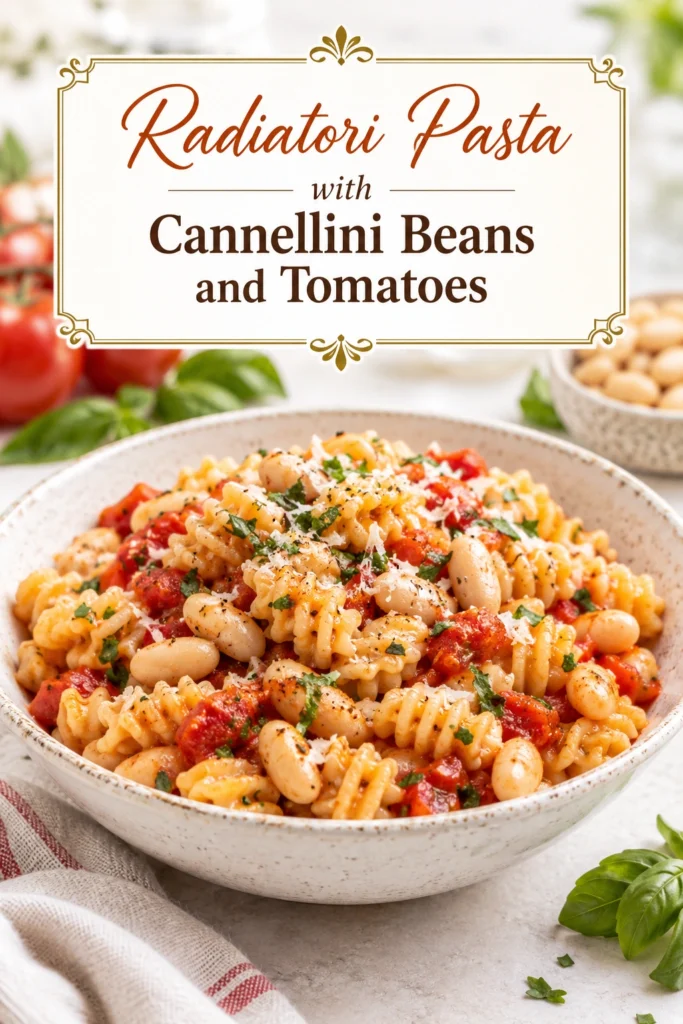
Finding a dinner that feels substantial but requires minimal effort is a common challenge on Tuesday or Wednesday nights. You want something that fills the stomach without requiring an hour of standing over the stove.
This Radiatori Pasta with Cannellini Beans and Tomatoes is a plant-forward meal designed for those exact moments. It combines protein-rich beans with a bright, garlic-infused tomato sauce.
Readers appreciate this dish because it balances the heartiness of a stew with the satisfaction of a pasta bowl. The combination of textures makes it feel more complex than a standard pasta toss.
The unique element here is the pasta shape. Radiatori are designed like little radiators, creating ridges and hollows that catch the sauce and beans more effectively than smooth penne or fusilli.
Unlike store-bought pasta sauces that often rely on excessive sugar or preservatives, this version uses fresh aromatics and the natural creaminess of cannellini beans to build depth.
This recipe is ideal for those managing a tight schedule or anyone looking to incorporate more legumes into their diet without sacrificing flavor.
The following guide covers everything you need to bring this comforting meal to your table.
- ●Why You’ll Love This Recipe
- ●A Brief Background / Why This Recipe Works
- ●Perfect For Busy Weeknights and Meal Prep
- ●Main Ingredient Spotlight: Radiatori Pasta
- ●Secondary Ingredient Spotlight: Cannellini Beans
- ●Key Ingredients
- ●How to Make It
- ●Pro Tips
- ●Delicious Variations
- ●Best Ways to Serve
- ●Storage and Leftovers
- ●Frequently Asked Questions
- ●Why This Recipe Belongs in Your Weekly Rotation
- ●Final Thoughts
This meal provides a satisfying blend of pantry staples and fresh produce, making it accessible for almost any kitchen.
- ●The radiatori shape maximizes sauce adhesion in every bite.
- ●Cannellini beans add a creamy texture and plant-based protein.
- ●Fresh tomatoes provide a bright, acidic balance to the earthy beans.
- ●Preparation is fast, with most of the work happening in one pan.
- ●It is naturally vegetarian and easily adaptable for vegans.
- ●The ingredients are budget-friendly and commonly found in local stores.
- ●It maintains its texture well, making it a reliable option for leftovers.
- ●The garlic and olive oil base creates a classic Mediterranean flavor profile.
- ●It requires very little chopping and active monitoring.
This combination of speed and nutrition makes it a dependable go-to for any home cook.
A Brief Background / Why This Recipe Works |
The success of this dish lies in the marriage of shapes and textures. Radiatori pasta is specifically engineered to increase surface area, which allows the thick, bean-based sauce to cling to the noodles rather than pooling at the bottom of the bowl.
Cannellini beans serve a dual purpose. They provide a hearty, meat-like substance to the meal while their starchy exterior slightly thickens the sauce as they simmer with the tomatoes. This creates a cohesive emulsion without needing heavy cream or butter.
The acidity of the tomatoes cuts through the density of the pasta and beans, preventing the dish from feeling too heavy. Similar to a Parmesan Tomato Cannellini Bean Soup Healthy White Bean Soup Recipe, this combination relies on the timeless pairing of white beans and vine-ripened tomatoes.
Perfect For Busy Weeknights and Meal Prep |
On nights when your energy is low but your hunger is high, this recipe offers a quick path to a complete meal. Because it uses canned beans and a fast-cooking pasta, you can move from the pantry to the plate in under 30 minutes.
For those who prefer meal prepping, this dish is a standout choice. Unlike thin spaghetti, which can become mushy when reheated, the sturdy structure of radiatori holds up well under a microwave or on a stovetop.
It also serves as an excellent family dinner. The mild flavors are generally well-received by children, while the addition of fresh herbs and parmesan makes it sophisticated enough for adults. It pairs well with a simple side salad or crusty bread.
Main Ingredient Spotlight: Radiatori Pasta |
Radiatori is the star of this dish due to its architectural design. The ridges and grooves are not just for aesthetics; they are functional tools that trap the small bits of garlic, tomato, and bean, ensuring that no bite is bland.
This pasta typically has a firmer bite than thinner noodles, providing a necessary contrast to the soft, creamy texture of the cannellini beans. Choosing a high-quality bronze-cut pasta can further improve the sauce’s ability to stick to the surface.
Secondary Ingredient Spotlight: Cannellini Beans |
Cannellini beans, also known as white kidney beans, are prized for their creamy interior and subtle, nutty flavor. They act as the protein anchor for the dish, making the meal filling and nutritious.
When simmered, a few of the beans naturally break down, releasing starches that bind the tomato juice and olive oil into a velvety sauce. This allows the dish to feel rich and indulgent without the use of dairy fats.
Using canned beans is a practical choice here, as they are pre-cooked and only require a quick rinse to remove excess sodium before they are ready to be integrated into the sauce.
Key Ingredients |
Each component in this recipe is chosen to build a layer of flavor and texture.
- ●Radiatori Pasta — used for its unique shape that captures the sauce and beans.
- ●Cannellini Beans — provides creaminess and a hearty source of plant-based protein.
- ●Cherry Tomatoes — adds sweetness and acidity as they burst during the cooking process.
- ●Garlic — creates a fragrant, savory base for the entire sauce.
- ●Olive Oil — used to sauté the aromatics and add a smooth finish to the pasta.
- ●Fresh Basil — brings a peppery, aromatic freshness that brightens the cooked flavors.
- ●Parmesan Cheese — adds a salty, umami depth to the final presentation.
- ●Red Pepper Flakes — introduces a subtle heat to balance the sweetness of the tomatoes.
How to Make It |
Follow these steps to ensure the pasta is cooked perfectly and the sauce is well-emulsified.
- Boil the pasta: Bring a large pot of salted water to a rolling boil. Add the radiatori and cook according to the package instructions, but stop one minute before the “al dente” time. The pasta will finish cooking in the sauce, and undercooking it slightly prevents it from becoming mushy. Drain the pasta, but reserve about half a cup of the starchy pasta water.
- Sauté the aromatics: While the pasta boils, heat olive oil in a large skillet over medium heat. Add the minced garlic and red pepper flakes. Sauté for about 60 to 90 seconds until the garlic is fragrant and translucent. Avoid letting the garlic turn dark brown, as this can introduce a bitter taste to the sauce.
- Blister the tomatoes: Add the cherry tomatoes to the skillet. Increase the heat slightly and cook for 5 to 7 minutes, stirring occasionally. You are looking for the skins to wrinkle and some of the tomatoes to burst, releasing their juices to create a natural sauce base.
- Simmer the beans: Stir in the rinsed and drained cannellini beans. Lower the heat to medium-low and cook for another 3 to 5 minutes. This allows the beans to heat through and absorb the garlic-infused oil and tomato juices. If the pan looks too dry, add a tablespoon of the reserved pasta water.
- Combine pasta and sauce: Toss the drained radiatori into the skillet with the beans and tomatoes. Stir gently to coat every piece of pasta. This is where the radiatori shape works its magic, trapping the sauce in its ridges.
- Emulsify and finish: Add a splash of the reserved pasta water and a handful of grated parmesan cheese. Stir vigorously over medium heat for 1 to 2 minutes. The starch in the water and the fat in the cheese will merge, creating a glossy coating that binds the ingredients together.
- Garnish and serve: Remove the pan from the heat and fold in the fresh torn basil leaves. Serving the basil at the very end preserves its bright green color and fresh scent. Divide into bowls and top with extra parmesan.
1These small adjustments can significantly improve the final quality of your dish.
- ●2Reserve the pasta water: Never dump all your cooking water. The starchy liquid is the secret to transforming a dry pasta toss into a cohesive, professional-style sauce.
- ●3Rinse your beans: Always rinse canned beans under cold water until the foam disappears. This removes the metallic taste from the canning liquid and reduces excess sodium.
- ●4Use high heat for tomatoes: Letting the cherry tomatoes sear slightly before they burst adds a caramelized flavor that raw tomatoes lack.
- ●5Tear the basil: Instead of chopping basil with a knife, tear the leaves by hand. This prevents the edges from bruising and turning black, keeping the garnish fresh.
- ●6Don’t overcook the pasta: Since radiatori have a thick shape, they can go from al dente to overcooked quickly. Always check them a minute early.
Delicious Variations |
You can easily adapt this recipe to suit your dietary needs or what you have in your fridge.
- ●Add leafy greens: Stir in two cups of fresh ba kale during the last two minutes of simmering for extra nutrients.
- ●Make it vegan: Omit the parmesan cheese or replace it with a nutritional yeast-based vegan parmesan.
- ●Boost the protein: Add sliced Italian sausage or grilled chicken for a non-vegetarian version.
- ●Swap the beans: Great Northern beans or chickpeas work well as substitutes for cannellini beans.
- ●Change the heat: Use a pinch of smoked paprika instead of red pepper flakes for a subtle, woody warmth.
These changes allow you to rotate the recipe throughout the seasons without it feeling repetitive.
Best Ways to Serve |
While the pasta is a complete meal on its own, a few additions can elevate the dining experience.
- ●Serve with a side of garlic bread or a toasted baguette to scoop up any remaining sauce.
- ●Pair with a crisp arugula salad dressed with lemon and olive oil to contrast the richness of the beans.
- ●Accompany the dish with a glass of chilled Pinot Grigio or a light sparkling water with lime.
For a more formal presentation, plate the pasta in wide bowls and finish with a drizzle of high-quality extra virgin olive oil and a crack of fresh black pepper.
If serving a crowd, you can transfer the finished pasta to a warmed platter, ensuring the meal stays hot as it moves from the kitchen to the table.
Storage and Leftovers |
Refrigerating
Store leftovers in an airtight container in the refrigerator for up to 4 days. The pasta may absorb some of the sauce over time, which is normal for bean-based dishes.
Reheating
Reheat the pasta on the stovetop over medium heat with a splash of water or vegetable broth. This loosens the sauce and restores the creamy consistency without drying out the noodles.
Freezing
This dish is not recommended for freezing. The radiatori pasta often loses its structural integrity and becomes grainy when thawed and reheated.
Frequently Asked Questions |
- ●Q: Can I use different pasta if I don’t have radiatori?A: Yes, you can use other short, ridged pastas like fusilli or rigatoni. While these will work, you may notice that the sauce does not cling as effectively as it does with the specific grooves of radiatori.
- ●Q: Do I have to use fresh cherry tomatoes?A: Fresh tomatoes are preferred for their burst of flavor, but a can of diced tomatoes can be used in a pinch. If using canned, simmer them for a few extra minutes to reduce the excess liquid.
- ●Q: Is this recipe suitable for a gluten-free diet?A: You can make this gluten-free radiatori with a gluten-free pasta alternative. Be careful with gluten-free noodles, as they often cook faster or slower than wheat pasta and can break easily.
- ●Q: How do I stop the pasta from sticking together after cooking?A: Immediately toss the cooked pasta with the sauce or a small amount of olive oil. The fat prevents the starches on the surface of the noodles from bonding and creating clumps.
- ●Q: Can I add other vegetables to this dish?A: Absolutely. Sliced zucchini, bell peppers, or frozen peas all pair well with the beans and tomatoes. Sauté them along with the garlic to ensure they are fully cooked before adding the pasta.
Why This Recipe Belongs in Your Weekly Rotation |
Integrating this dish into your routine simplifies the most stressful part of the day. It provides a balanced meal containing complex carbohydrates, plant protein, and fresh vegetables, eliminating the need for multiple side dishes.
The versatility of the ingredients means you can keep the base components in your pantry for weeks. Having a can of beans and a box of radiatori on hand means a healthy dinner is always just 20 minutes away.
Final Thoughts |
Radiatori Pasta with Cannellini Beans and Tomatoes is a practical solution for a healthy, fast dinner. It utilizes the unique architecture of the pasta to deliver a rich, bean-infused sauce in every single bite.
You should make this recipe when you need a meal that feels like a treat but requires minimal cleanup. It is a testament to how a few pantry staples can be transformed into a restaurant-quality vegetarian dinner.
Gather your ingredients and bring this comforting, hearty meal to your kitchen tonight.
Radiatori Pasta with Cannellini Beans and Tomatoes
- Total Time: 30 minutes
- Yield: 4 servings 1x
Description
A comforting and hearty vegetarian pasta using radiatori shapes to trap a creamy sauce of cannellini beans, burst cherry tomatoes, and aromatic garlic.
Ingredients
- 1 lb radiatori pasta
- 1 can (15 oz) cannellini beans, rinsed and drained
- 2 cups cherry tomatoes, halved
- 4 cloves garlic, minced
- 3 tbsp extra virgin olive oil
- 1/2 tsp red pepper flakes
- 1/2 cup grated Parmesan cheese
- 1/4 cup fresh basil leaves, torn
- Salt and black pepper to taste
Instructions
- Bring a large pot of salted water to a boil and cook radiatori pasta for 1 minute less than the package directions for al dente. Reserve 1/2 cup of pasta water before draining.
- Heat olive oil in a large skillet over medium heat. Sauté minced garlic and red pepper flakes for 60-90 seconds until fragrant but not brown.
- Add cherry tomatoes to the skillet and cook for 5-7 minutes until the skins wrinkle and they begin to burst.
- Stir in the rinsed cannellini beans and cook for 3-5 minutes on medium-low heat until heated through.
- Add the cooked pasta to the skillet and toss to combine with the beans and tomatoes.
- Pour in a splash of reserved pasta water and stir in the Parmesan cheese over medium heat for 1-2 minutes until a glossy sauce forms.
- Remove from heat, stir in fresh torn basil, and season with salt and pepper before serving.
- Prep Time: 10 minutes
- Cook Time: 20 minutes
- Category: Dinner
- Method: Stovetop
- Cuisine: Italian-inspired