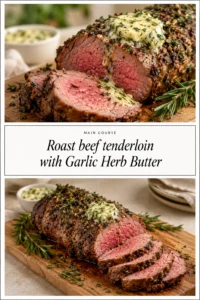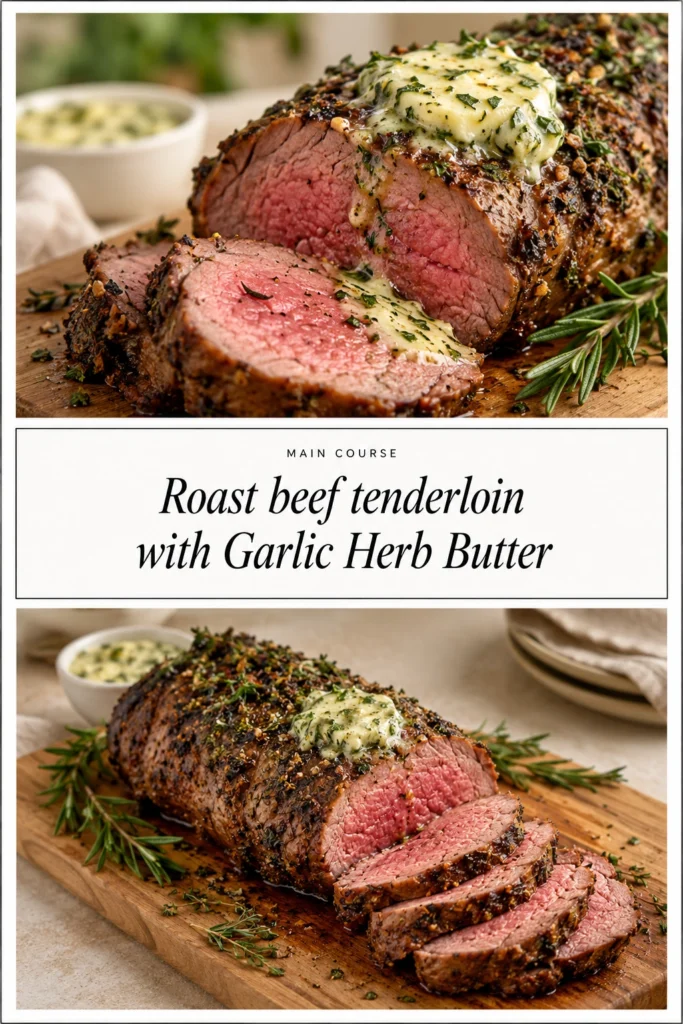
Few things in the kitchen are as satisfying as the sound of a heavy skillet searing a thick piece of beef. The immediate aroma of browning meat combined with melting butter and fresh herbs signals a high-quality meal.
This roast beef tenderloin is an elegant center-piece that relies on a high-heat sear and a gentle roast. It is a refined dish that prioritizes the natural quality of the beef while adding a layer of rich, aromatic fat.
Home cooks appreciate this recipe because it removes the guesswork from cooking a premium cut of meat. The garlic herb butter acts as both a basting agent and a finishing sauce.
Unlike store-bought pre-seasoned roasts, this version uses fresh herbs and real butter to create a crust that is fragrant rather than salty.
Anyone looking to impress guests or celebrate a milestone will find this preparation ideal. It delivers restaurant-level results with a straightforward process.
Follow these steps to achieve a perfectly medium-rare interior and a golden-brown exterior.
- ●Why You’ll Love This Recipe
- ●A Brief Background on why This Recipe Works
- ●Perfect For Special Occasions and Holiday Dinners
- ●Beef Tenderloin Spotlight
- ●Garlic and Herb Spotlight
- ●Key Ingredients
- ●How to Make It
- ●Pro Tips
- ●Delicious Variations
- ●Best Ways to Serve
- ●Storage and Leftovers
- ●Frequently Asked Questions
- ●Why This Recipe Belongs in Your Weekly Rotation
- ●Final Thoughts
This recipe focuses on enhancing the natural tenderness of the beef without masking it in heavy sauces.
- ●The garlic herb butter creates a deeply savory crust through continuous basting.
- ●Beef tenderloin is the most tender cut, meaning no tough spots or chewing through gristle.
- ●A high-heat sear locks in moisture, preventing the meat from drying out in the oven.
- ●Preparation is minimal, allowing you to spend more time with guests.
- ●The flavor profile is classic and universally appealing to meat lovers.
- ●Using a meat thermometer provides precise control over the final doneness.
- ●It pairs effortlessly with a wide range of side dishes, from root vegetables to greens.
- ●The butter basting method adds a professional sheen to the finished roast.
Combining these elements results in a meal that feels luxurious but remains manageable for any skilled home cook.
A Brief Background on why This Recipe Works |
Beef tenderloin is prized for its lack of connective tissue, which allows it to cook quickly and evenly. Because it is a lean cut, it requires a fat source to prevent the exterior from becoming tough during the roasting process.
Adding butter, garlic, and herbs during the final stages of cooking introduces aromatic fats that penetrate the surface. This technique, similar to how a steak is finished in a pan, creates a rich flavor profile that complements the mild taste of the beef.
Resting the meat is the final critical step. Allowing the muscle fibers to relax ensures that the juices redistribute throughout the roast rather than spilling onto the cutting board.
Perfect For Special Occasions and Holiday Dinners |
This roast is a natural fit for Christmas, Easter, or anniversary celebrations. Its presentation is inherently impressive, making it a focal point for a festive table.
While it is a premium dish, it also works for high-protein meal prep if you have a larger roast. Sliced cold or reheated gently, the beef remains tender and flavorful for several days.
For those who enjoy regular Sunday roasts, this is a sophisticated upgrade to the standard chuck or rib roast. It offers a lighter, more refined eating experience that pairs well with red wine.
Beef Tenderloin Spotlight |
Beef tenderloin is the leanest and most tender muscle in the cow. Its fine grain and lack of intramuscular fat mean it does not require long braising or slow cooking to become tender.
The texture is buttery and consistent, providing a melt-in-the-mouth feel. When handled correctly with a quick sear and a timed roast, it retains a juicy, pink center that is the hallmark of a great steakhouse meal.
Garlic and Herb Spotlight |
Fresh garlic provides a pungent, sharp contrast to the richness of the beef. When sautéed in butter, it mellows into a sweet, nutty flavor that coats the meat.
Herbs like rosemary and thyme add woody, earthy notes that cut through the fat. These aromatics are essential for creating a complex scent that fills the kitchen during the roasting process.
Together, these ingredients transform a simple piece of meat into a gourmet experience. If you enjoy these flavors in other dishes, you might also like High Protein Garlic Butter Beef Bites Recipe for a quicker weekday alternative.
Key Ingredients |
The success of this roast depends on using fresh, high-quality components.
- ●Beef Tenderloin — Provides the lean, tender base for the roast.
- ●Unsalted Butter — Carries the flavors of the herbs and adds moisture to the crust.
- ●Fresh Garlic — Adds a deep, aromatic punch to the butter baste.
- ●Fresh Rosemary — Introduces a piney, earthy scent.
- ●Fresh Thyme — Contributes a subtle, lemony herbal note.
- ●Kosher Salt — Enhances the natural beef flavor and helps create a sear.
- ●Black Pepper — Adds a mild heat and sharp contrast to the butter.
- ●Olive Oil — Used for the initial sear to prevent butter from burning at high heat.
How to Make It |
Precise temperature control and timing are the keys to a perfect tenderloin.
- Prepare the meat: Remove the beef from the refrigerator about an hour before cooking. Bringing the meat to room temperature ensures it cooks evenly from the edge to the center. Pat the surface completely dry with paper towels to allow for a better sear.
- Season generously: Rub the entire roast with olive oil, then coat it heavily with salt and black pepper. Press the seasoning into the meat so it adheres during the searing process.
- Sear the exterior: Heat a large oven-safe skillet over medium-high heat until the oil just begins to smoke. Place the beef in the pan and sear each side for 2-3 minutes until a deep brown crust forms. Avoid overcrowding the pan; work in batches if necessary.
- Compound the butter: While the beef rests briefly after searing, mash softened butter with minced garlic, chopped rosemary, and thyme. This mixture will be applied to the meat to keep it moist during the oven phase.
- Roast in the oven: Spread the garlic herb butter over the top and sides of the seared beef. Transfer the skillet directly into a preheated oven. Roast until a meat thermometer inserted into the thickest part reaches 125°F for medium-rare.
- Baste for flavor: During the last five minutes of roasting, spoon the melted butter from the bottom of the pan back over the beef. This adds a final layer of richness and ensures the crust remains glossy.
- Rest the roast: Remove the skillet from the oven and transfer the beef to a cutting board. Tent it loosely with foil and let it rest for 15-20 minutes. This prevents the juices from escaping when you slice the meat.
1Small adjustments in technique can make a significant difference in the final result.
- ●2Use a Digital Thermometer: Relying on time alone is risky because oven temperatures vary. Always pull the meat when it is 5 degrees below your target temperature.
- ●3Dry the Beef Thoroughly: Any moisture on the surface of the meat will steam rather than sear, preventing the formation of a brown crust.
- ●4Avoid Overcooking: Tenderloin has very little fat; once it passes medium, it can become dry very quickly.
- ●5Choose a Center-Cut: A center-cut piece of tenderloin is more uniform in shape, which leads to more consistent cooking throughout.
- ●6Use High-Smoke Point Oil: Start with olive oil or avocado oil for the sear, then add butter later. Butter burns quickly at the temperatures needed for a proper crust.
Delicious Variations |
While the garlic herb version is a classic, you can adapt the flavors to suit your preference.
- ●Red Wine Reduction: Deglaze the roasting pan with red wine and a splash of beef broth to create a rich gravy.
- ●Blue Cheese Crust: Top the roast with crumbled blue cheese during the last 5 minutes of roasting for a pungent twist.
- ●Lemon Garlic Version: Add lemon zest to the herb butter for a brighter, more acidic flavor profile.
- ●Spicy Garlic: Mix in a pinch of crushed red pepper flakes or a teaspoon of horseradish for a zesty kick.
- ●Mushroom Topping: Sauté mushrooms in the same pan after removing the beef to serve as a savory accompaniment.
These variations allow you to pivot the dish from a traditional holiday meal to a more modern dinner party option.
Best Ways to Serve |
The richness of the beef pairs best with sides that offer acidity or earthy textures.
- ●Creamy mashed potatoes or a roasted garlic puree.
- ●Honey-glazed carrots or roasted Brussels sprouts with balsamic reduction.
- ●A crisp arugula salad with lemon vinaigrette to cut through the butter.
- ●Sautéed spinach or steamed asparagus with a pinch of salt.
For a full feast, consider serving the beef alongside a crusty baguette to soak up the leftover garlic butter from the plate. This turns the meal into a more interactive dining experience.
If you are serving a larger crowd, slice the beef into thick medallions and arrange them on a platter, drizzling the pan juices over the top for a professional presentation.
Storage and Leftovers |
Refrigerating
Place leftover beef in an airtight container and store it in the refrigerator for up to 3 to 4 days. Keep the sliced pieces together to retain moisture.
Reheating
To avoid overcooking, reheat slices in a pan over low heat with a small knob of butter. Alternatively, use an oven at 250°F until just warmed through.
Freezing
Wrap the beef tightly in foil and then in plastic wrap, storing it in a freezer bag for up to 2 months. Thaw slowly in the refrigerator overnight before reheating.
Frequently Asked Questions |
- ●Q: How do I know when the beef is medium-rare?A: Use an instant-read meat thermometer to check the internal temperature of the thickest part of the roast. For medium-rare, remove the beef from the oven when it reaches 125°F, as the temperature will rise to about 130-135°F during the resting phase.
- ●Q: Can I use a different cut of beef instead of tenderloin?A: You can use a beef sirloin or a rib roast, but the cooking times and temperatures will change. Tenderloin is unique because of its extreme tenderness; other cuts may require a longer roast or a lower temperature to achieve the same texture.
- ●Q: Why did my roast shrink so much during cooking?A: Some shrinkage is normal as the muscle fibers contract and release moisture. However, overcooking is the primary cause of excessive shrinkage. Using a thermometer and resting the meat properly helps minimize this effect and keeps the roast plump.
- ●Q: What is the best way to slice the tenderloin?A: Always slice against the grain of the meat. Locate the direction the muscle fibers are running and cut perpendicular to them. This ensures each slice is as tender as possible and prevents the meat from feeling chewy.
- ●Q: Can I make the herb butter in advance?A: Yes, you can prepare the garlic herb butter up to a week in advance. Store it in the refrigerator in a sealed container or roll it into a log using parchment paper and freeze it for later use.
Why This Recipe Belongs in Your Weekly Rotation |
While beef tenderloin is a luxury, incorporating a high-quality roast into your rotation teaches you the fundamentals of heat management and meat preparation. The skills learned here apply to almost every other cut of steak or roast.
This dish provides a reliable way to serve a healthy, high-protein meal that feels celebratory. It simplifies the process of entertaining, as the oven does most of the work after the initial sear.
Final Thoughts |
This Roast Beef Tenderloin with Garlic Herb Butter combines a high-heat sear with a fragrant, buttery finish. It is a streamlined approach to a classic dish, focusing on quality ingredients and precise timing.
Making this recipe allows you to experience the luxury of a steakhouse meal in the comfort of your own kitchen. It is an excellent way to practice temperature control while delivering a meal that is guaranteed to impress.
Gather your ingredients and treat yourself to a dinner that defines elegance and flavor.
Roast Beef Tenderloin with Garlic Herb Butter
- Total Time: 1 hour
- Yield: 4-6 servings 1x
Description
A luxurious roast beef tenderloin seared in a skillet and finished in the oven with a rich garlic, rosemary, and thyme butter baste.
Ingredients
- 3 lb beef tenderloin roast
- 4 tbsp unsalted butter, softened
- 4 cloves garlic, minced
- 1 tbsp fresh rosemary, finely chopped
- 1 tbsp fresh thyme, finely chopped
- 2 tbsp olive oil
- 2 tsp kosher salt
- 1 tsp cracked black pepper
Instructions
- Bring the beef tenderloin to room temperature for 60 minutes, then pat dry with paper towels.
- Season the beef on all sides with olive oil, salt, and black pepper.
- Heat a large oven-safe skillet over medium-high heat. Sear the beef for 2-3 minutes per side until browned.
- In a small bowl, mix softened butter, minced garlic, rosemary, and thyme until combined.
- Spread the garlic herb butter evenly over the seared beef tenderloin.
- Place the skillet in a preheated oven at 400°F (200°C).
- Roast until a meat thermometer reaches 125°F (52°C) for medium-rare.
- Baste the beef with the melted butter from the pan during the final 5 minutes of roasting.
- Remove from the oven and let the meat rest on a cutting board for 15-20 minutes before slicing.
- Prep Time: 20 minutes
- Cook Time: 40 minutes
- Category: Dinner
- Method: Roasting
- Cuisine: American