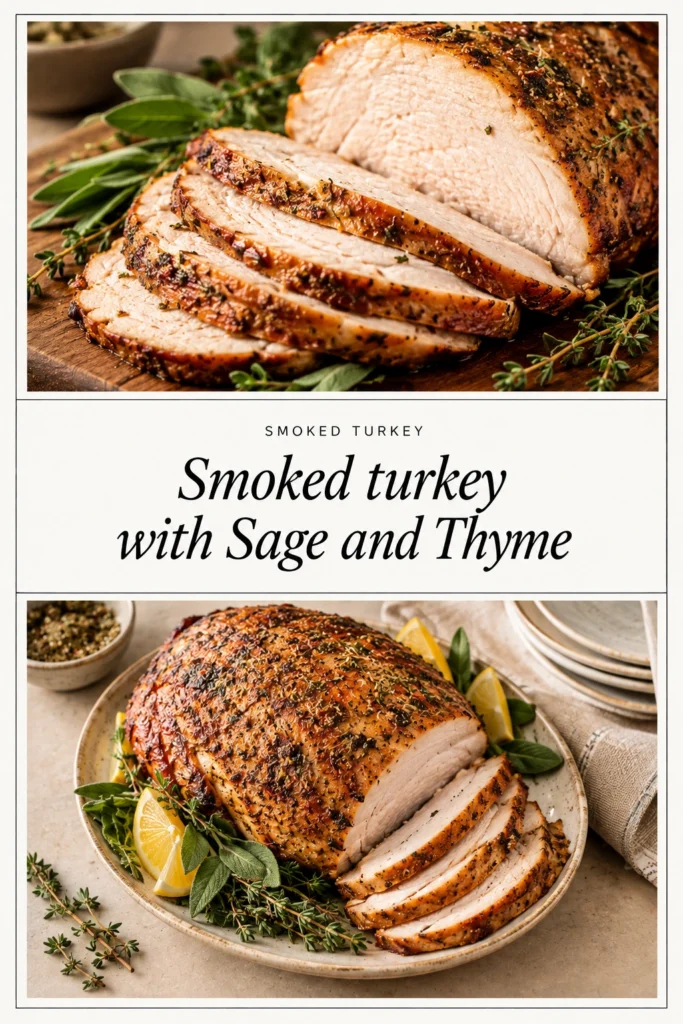
The moment the smoke penetrates the skin, the pale turkey transforms into a deep, mahogany gold. This change marks the transition from a simple roast to a complex, wood-fired masterpiece.
Smoked turkey with sage and thyme is a slow-cooked celebration of earthy flavors and aromatic woods. It replaces the dry, oven-baked texture often associated with turkey with a succulent, moist interior.
Home cooks appreciate this method because the smoker does the heavy lifting, allowing the meat to baste in its own juices while absorbing a rich, smoky essence.
The combination of sage and thyme creates a classic profile that cuts through the richness of the bird, balancing the heavy smoke with a bright, herbal lift.
Unlike store-bought smoked turkeys, which can be overly salty or processed, this homemade version allows for total control over the seasoning and smoke intensity.
It is an ideal choice for those who want a show-stopping center-piece for a gathering without spending the entire day tethered to an oven.
Following these steps will help you navigate the timing and temperature needed for a perfect result.
- ●Why You’ll Love This Recipe
- ●A Brief Background on Smoked Turkey
- ●Perfect For Holiday Feasts and Family Gatherings
- ●Turkey Spotlight
- ●The Role of Sage and Thyme
- ●Key Ingredients
- ●How to Make It
- ●Pro Tips
- ●Delicious Variations
- ●Best Ways to Serve
- ●Storage and Leftovers
- ●Frequently Asked Questions
- ●Why This Recipe Belongs in Your Weekly Rotation
- ●Final Thoughts
Moving the turkey from the oven to the smoker changes the entire dining experience of flavor that cannot be replicated with heat alone.
- ●Deep mahogany color that looks stunning on a platter.
- ●Juicy meat thanks to the low-and-slow cooking method.
- ●Fragrant herbal crust from the fresh sage and thyme.
- ●Reduced active kitchen time once the bird is in the smoker.
- ●A distinct contrast between the crisp, smoked skin and the tender meat.
- ●Versatile flavor profile that pairs with almost any side dish.
- ●Impressive results that taste like professional barbecue.
- ●Easily adaptable for different sizes of turkey.
- ●Minimal cleanup compared to traditional roasting pans.
This approach simplifies the process while elevating the taste, making it a reliable choice for any host.
A Brief Background on Smoked Turkey |
Smoking turkey is a tradition rooted in preserving meat and enhancing flavor through wood combustion. like hickory or apple, the meat takes on a sweetness and depth that complements the natural gaminess of the poultry.
The use of sage and thyme is a nod to traditional stuffing flavors, but applying them as a rub ensures the seasoning penetrates the meat rather than just sitting in a filling. This creates a cohesive flavor throughout every slice.
When compared to other smoked meats, turkey requires careful temperature management to avoid drying out the breast. A low temperature allows the connective tissues to break down slowly, resulting in a more tender product.
This technique turns a standard protein into a complex culinary experience through the slow marriage of smoke and herbs.
Perfect For Holiday Feasts and Family Gatherings |
The sheer scale of a smoked turkey makes it the natural choice for Thanksgiving, Christmas, or large family reunions. It provides a focal point for the table and a reason for guests to gather around the smoker during the day.
For those who enjoy meal prepping, a smoked turkey provides a massive amount of high-quality protein. The leftovers are far more flavorful than roasted turkey, making them a great base for Hearty Leftover Turkey Chili With Smoked Paprika Easy Post Thanksgiving Meal
It also serves as an excellent alternative for weekend hosting when you want a low-stress main course that allows you to spend time with your guests instead of hovering over a stove.
Turkey Spotlight |
Turkey is a lean protein that provides a neutral canvas for bold flavors. Because it has a mild taste, it readily absorbs the pungent notes of sage and the woody aroma of the smoker.
The texture of the turkey varies from the lean, firm breast to the rich, fatty thighs. Smoking helps distribute the moisture more evenly, ensuring that even the leaner parts remain palatable and juicy.
The Role of Sage and Thyme |
Sage contributes a strong, earthy, and slightly peppery aroma that is synonymous with autumn and winter cooking. Its bold profile stands up well to the intensity of the smoke without being overwhelmed.
Thyme adds a subtle, lemony brightness and a floral note that balances the heaviness of the smoke. Together, these herbs create a savory crust that enhances the natural flavor of the meat.
Using fresh herbs provides a more vibrant flavor than dried versions, as the volatile oils are more potent and provide a fresher scent as they heat up on the bird.
Key Ingredients |
Selecting high-quality ingredients is the first step in ensuring the smoke and herbs shine through.
- ●Turkey — the primary protein, providing a hearty and lean base.
- ●Sage — fresh leaves that offer an earthy, aromatic depth.
- ●Thyme — woody sprigs that add a bright, floral contrast.
- ●Unsalted Butter — used to bind the herbs to the skin and add richness.
- ●Kosher Salt — essential for drawing out moisture and seasoning the meat deeply.
- ●Black Pepper — provides a sharp, spicy bite to balance the herbs.
- ●Garlic Powder — adds a savory, toasted undertone to the rub.
- ●Apple Wood Chips — gives the turkey a mild, sweet smoke flavor.
How to Make It |
Preparation is key to ensuring the turkey smokes evenly and reaches the safe internal temperature without drying out.
- Prepare the turkey: Remove the giblets and pat the skin completely dry with paper towels. Any excess moisture on the skin will steam rather than crisp, preventing that desired mahogany finish.
- Create the herb butter: Mix softened butter with chopped sage, thyme, salt, pepper, and garlic powder. Ensure the herbs are finely minced so they adhere to the skin and distribute evenly across the bird.
- Season the bird: Carefully loosen the skin over the breast and thighs with your fingers. Rub a generous amount of the herb butter directly onto the meat under the skin, then coat the exterior of the turkey. This protects the meat from drying out and flavors it from the inside.
- Prepare the smoker: Preheat your smoker to 225°F using apple or cherry wood. Using a temperature that is too high can cause the outside to burn before the thickest part of the breast reaches a safe temperature.
- Smoke the turkey: Place the turkey breast-side up on the grill grates. Close the lid and maintain a steady temperature. Avoid opening the lid frequently, as this lets out heat and smoke, extending the cooking time.
- Monitor the internal temperature: Use a meat thermometer in the thickest part of the breast and the innermost part of the thigh. The turkey is done when the breast reaches 165°F and the thigh reaches 175°F.
- Rest the meat: Remove the turkey from the smoker and transfer it to a carving board. Let it rest for at least 30 to 45 minutes. Resting allows the juices to redistribute, ensuring the meat is moist when sliced.
1A few small adjustments can make a significant difference in the final texture and flavor of the bird.
- ●2Dry Brining: Salt the turkey 24 hours in advance and leave it uncovered in the fridge to dry out the skin for maximum crispiness.
- ●3Temperature Control: Use a digital probe thermometer to monitor the internal temperature in real-time without opening the smoker lid.
- ●4Wood Choice: Use fruitwoods like apple or cherry for a sweeter taste, or hickory for a more traditional, pungent BBQ flavor.
- ●5Basting: Brush the turkey with melted butter every two hours to keep the skin supple and enhance the golden color.
- ●6Avoid Overcrowding: Ensure there is plenty of airflow around the turkey in the smoker so the smoke can circulate evenly.
Delicious Variations |
While sage and thyme are classic, you can easily adapt the flavor profile to suit your preferences.
- ●Citrus Twist: Add lemon zest to the herb butter for a brighter, more acidic finish.
- ●Spicy Kick: Incorporate smoked paprika and a pinch of cayenne pepper into the rub for a warm heat.
- ●Maple Glaze: Brush the turkey with a mixture of maple syrup and butter during the last hour of smoking for a sweet skin.
- ●Rosemary Swap: Replace thyme with fresh rosemary for a more piney, robust herbal scent.
- ●Garlic Heavy: Use roasted garlic cloves mashed into the butter instead of garlic powder for a deeper, sweeter garlic flavor.
These variations allow you to tailor the bird to your specific holiday theme or personal taste.
Best Ways to Serve |
The rich, smoky flavor of the turkey pairs best with sides that provide acidity or creamy textures.
- ●Served alongside a tart cranberry sauce to cut through the smoke.
- ●Paired with garlic mashed potatoes or a savory stuffing.
- ●Accompanied vegetables like carrots and parsnips.
- ●Served with a side of steamed green beans and lemon butter.
For a more casual presentation, slice the turkey into thick medallions and serve them on a platter with a side of warm gravy.
If you have leftover meat, you can transform it into something entirely different, such as Delicious Fresh Turkey Meatballs With Savory Gravy, utilizing the remaining smoked flavor.
Storage and Leftovers |
Refrigerating
Place sliced or whole turkey in airtight containers. It will stay fresh in the refrigerator for 3 to 4 days. Keep the meat in its own juices to prevent it from drying out during storage.
Reheating
To keep the meat moist, reheat slices in a baking dish covered with foil. Add a splash of chicken broth and heat at 325°F for 15 to 20 minutes, or until warmed through.
Freezing
Wrap the turkey tightly in plastic wrap and then aluminum foil, or use vacuum-seal bags. It remains high quality in the freezer for up to 3 months. Thaw slowly in the refrigerator for 24 hours before reheating.
Frequently Asked Questions |
- ●Q: Can I smoke a frozen turkey?A: It is strongly recommended to thaw the turkey completely in the refrigerator before smoking. Smoking a frozen bird leads to uneven cooking, where the outside overcooks or burns before the center reaches a safe internal temperature.
- ●Q: What is the best wood for smoking turkey?A: Apple and cherry woods are the most popular because they provide a mild, sweet smoke that does not overpower the turkey. Hickory and oak are also options but are much stronger and should be used sparingly.
- ●Q: How do I stop the breast from drying out?A: The most effective method is applying herb butter under the skin to create a moisture barrier. Additionally, smoking at a low temperature and removing the bird as soon as it hits 165°F prevents overcooking.
- ●Q: Do I need to brine the turkey first?A: While not mandatory, a wet or dry brine helps the meat retain moisture and enhances the salt penetration. If you are using a heavy salt rub, a long brine may make the meat too salty.
- ●Q: Why is my turkey skin not getting crispy?A: This usually happens if the skin is too damp when it enters the smoker. Pat the skin dry and avoid basting too early in the process, as the skin needs a period of dry heat to crisp.
- ●Q: Can I use a pellet grill for this recipe?A: Yes, a pellet grill works perfectly. It maintains a very consistent temperature, which is ideal for the low-and-slow approach required for a juicy turkey breast and tender thighs. For consistent results, use the freshest possible ingredients, measure carefully, and follow the step-by-step instructions closely on your first attempt before making any modifications.
Why This Recipe Belongs in Your Weekly Rotation |
Adding a smoked protein to your routine encourages a slower, more intentional approach to cooking. The deep flavors created provide a level of satisfaction that quick-cook methods simply cannot match.
Because turkey is a versatile lean meat, this recipe provides a healthy foundation for multiple meals throughout the week. The combination of sage and thyme keeps the flavor profile sophisticated and timeless.
Investing a few hours in the smoker yields a result that feels like a special occasion, regardless of the day of the week. It is a rewarding process that brings professional-grade flavor into the home kitchen.
Final Thoughts |
Smoked turkey with sage and thyme combines the rustic appeal of wood-fire cooking with the refined taste of fresh herbs. It results in a bird that is mahogany on the outside and incredibly juicy on the inside.
Choosing this method over traditional roasting removes the stress of the oven while adding a complex smokiness that guests always remember. It is a reliable way to ensure the meat remains tender and flavorful.
Fire up your smoker and bring this aromatic, savory feast to your table this weekend.
Smoked Turkey with Sage and Thyme
- Total Time: 0 hours
- Yield: 12 servings 1x
Description
A succulent, low-and-slow smoked turkey seasoned with a rich butter rub of fresh sage and thyme. Perfect for holidays or a special weekend dinner.
Ingredients
- 12–14 lb whole turkey, thawed
- 1/2 cup unsalted butter, softened
- 2 tbsp fresh sage, finely chopped
- 2 tbsp fresh thyme, finely chopped
- 2 tbsp kosher salt
- 1 tbsp black pepper
- 1 tbsp garlic powder
- Apple or cherry wood chips
Instructions
- Remove giblets from the turkey and pat the skin completely dry with paper towels.
- In a small bowl, combine softened butter, chopped sage, thyme, salt, pepper, and garlic powder until smooth.
- Carefully separate the skin from the breast and thigh meat using your fingers. Rub half of the herb butter directly onto the meat under the skin, then coat the remaining exterior of the turkey with the rest of the butter.
- Preheat the smoker to 225°F using apple or cherry wood chips.
- Place the turkey breast-side up on the grates and close the lid.
- Smoke the turkey until the internal temperature of the breast reaches 165°F and the thigh reaches 175°F.
- Remove the turkey from the smoker and let it rest on a carving board for 30 to 45 minutes before slicing.
- Prep Time: 30 minutes
- Cook Time: 6-8 hours
- Category: Main Course
- Method: Smoking
- Cuisine: American