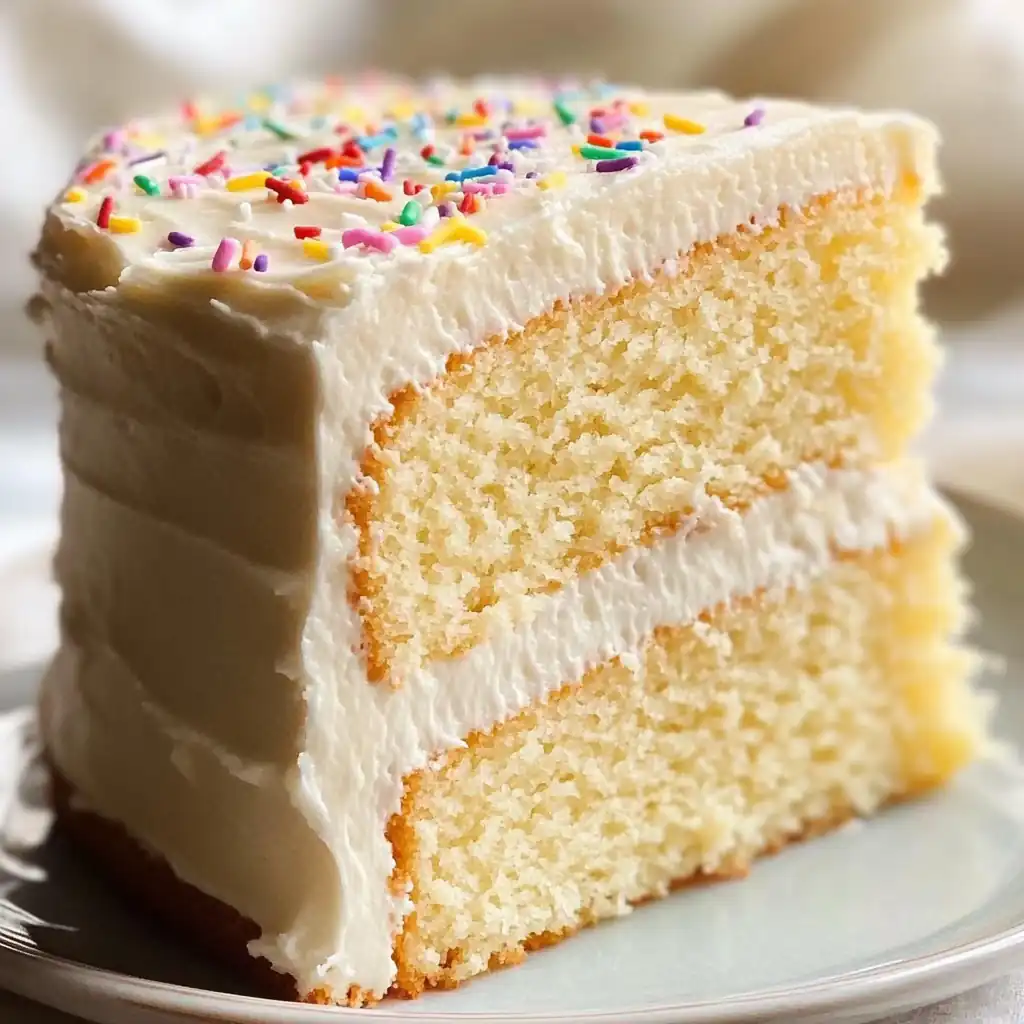
Introduction |
Imagine a rainy Tuesday afternoon in late October, where the air is crisp and the only cure for the chill is the scent of warming sugar wafting through the hallway. There is a specific, quiet magic in a kitchen when a vanilla cake is rising in the oven, turning the room into a sanctuary of golden light and sweet, comforting aromas.
For years, I struggled with a recurring tragedy: my cakes were either too dry or lacked that deep, soulful flavor found in old-fashioned bakery windows. I almost gave up on this recipe entirely until I discovered the critical importance of room-temperature fats and a touch of sour cream to stabilize the crumb structure.
- ●The texture is exceptionally velvety because the addition of sour cream prevents the flour from over-developing gluten.
- ●You get a sophisticated flavor profile since we use both pure extract and vanilla bean paste for a multi-layered aromatic experience.
- ●It remains moist for days due to the specific ratio of butter to sugar, ensuring no one ever eats a dry slice.
- ●The structural integrity is impressive, meaning you can stack this cake high for birthdays without worrying about it collapsing.
- ●Every ingredient is a pantry staple, removing the need for specialty trips to the store while delivering professional patisserie results.
Essential Ingredients |
Unsalted Butter provides the foundational richness and ensures the cake has a melt-in-your-mouth quality through the process of aeration.
Granulated Sugar acts as a tenderizer gluten formation and helps the cake retain moisture through hygroscopic properties.
Cake Flour contains less protein than all-purpose flour, which is the secret to achieving that delicate, tight-crumbed professional texture.
Large Eggs serve as the primary emulsifier and leavening agent, binding the fats and liquids together while providing necessary structure.
Pure Vanilla Extract delivers the classic aromatic punch that defines the nostalgic profile of a traditional white cake.
Sour Cream introduces a subtle acidity that reacts with the baking powder to create a lift and an incredibly moist interior.
Baking Powder creates the chemical reaction necessary for carbon dioxide bubbles to expand, lifting the batter into a fluffy sponge.
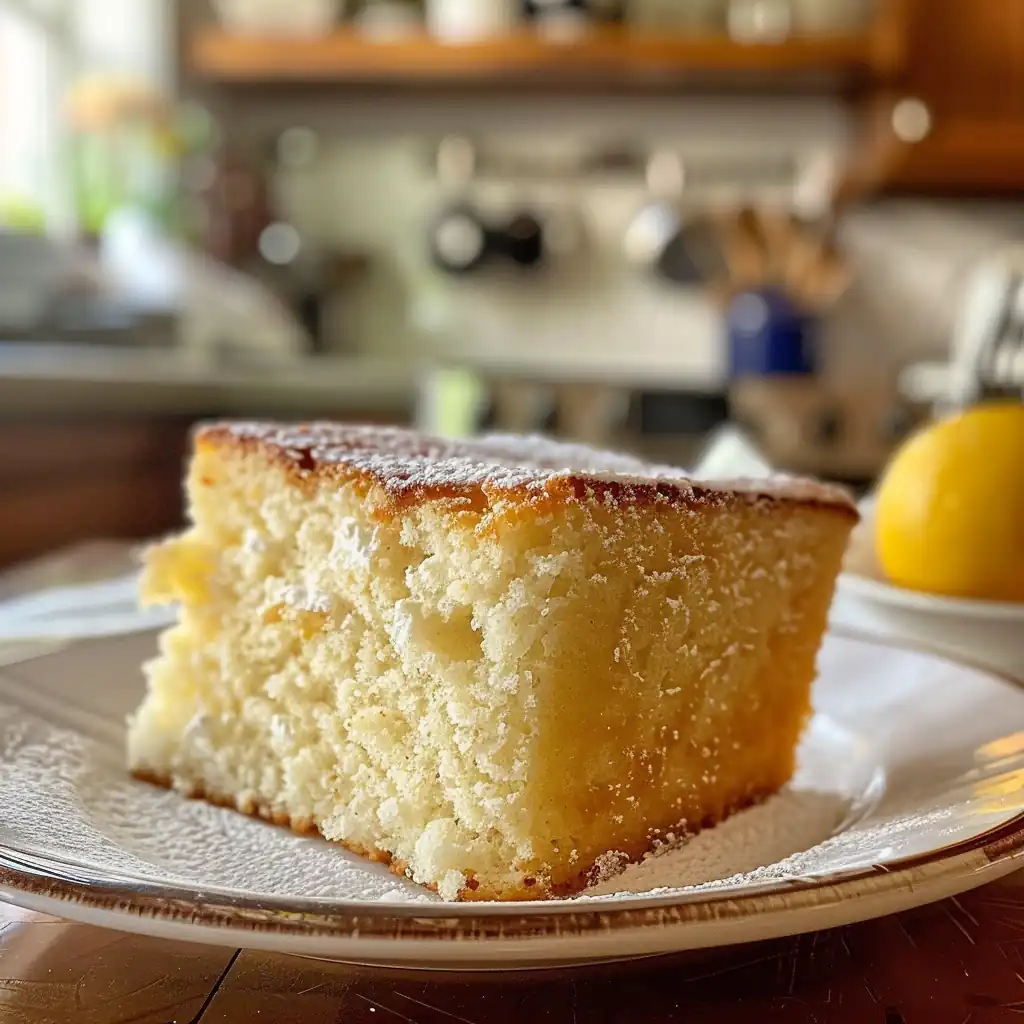 Let’s Make it Together |
- Preheat your oven to 350°F (175°C) and grease two 8-inch round cake pans with butter and a dusting of flour. Pro tip: Line the bottom with parchment paper to ensure a clean release every time.
- Cream the softened butter and granulated sugar in a stand mixer on medium-high speed for about five minutes. Pro tip: Do not rush this step; the air incorporated here determines the lightness of the cake.
- Whisk in the eggs one at a time, ensuring each is fully incorporated before adding the next to prevent the batter from breaking.
- Fold in the vanilla extract and sour cream using a rubber spatula to keep the aerated butter mixture intact.
- Sift the cake flour and baking powder together over the wet ingredients in three separate additions. Pro tip: Sifting removes lumps and prevents the flour from clumping during the final mix.
- Mix the batter on the lowest speed just until the flour streaks disappear to avoid overworking the gluten.
- Divide the batter evenly between the two prepared pans and smooth the tops with an offset spatula.
- Bake for 30 to 35 minutes or until a wooden skewer inserted into the center comes out clean.
Never use cold eggs as they will cause the creamed butter to seize and curdle.
Avoid over-mixing the batter once the flour is added to prevent a tough, bready texture.
Always measure your flour the spoon-and-level method to avoid adding too much.
Ensure your oven is fully preheated for at least twenty minutes for a consistent rise.
Check the cake early if you are using a convection oven to prevent the edges from burning.
Perfecting the Cooking Process |
Precision in temperature is the difference between a cake and a masterpiece. Use an oven thermometer to verify that your appliance is actually hitting 350°F, as many home ovens fluctuate , which can lead to uneven domes or sunken centers.
Timing is equally critical, and you should rely more on a toothpick test than a clock. Start checking for doneness five minutes before the timer goes off, looking for a crumb that is slightly moist but not wet.
Add Your Touch |
Transform this classic base vanilla for almond extract or a splash of lemon juice for a bright, zesty variation. You can also fold in a handful of mini chocolate chips or rainbow sprinkles for a celebratory confetti style.
For the frosting, experiment with a cream cheese swirl or a salted caramel drizzle to add a modern contrast to the traditional sweetness. Adding a layer of fresh raspberries between the sponges provides a tart, fresh element that cuts through the richness.
Storing & Reheating |
Keep the cake in an airtight container at room temperature for up to three days, provided the frosting is a stable buttercream. If you live in a humid climate, refrigeration is recommended to keep the frosting from sliding.
To reheat a chilled slice, let it sit at room temperature for thirty minutes to naturally soften. If you prefer it warm, microwave it for only ten seconds to avoid melting the frosting entirely.
1Use a room-temperature egg in warm water for five minutes.
2Tap the cake pans firmly on the counter to release large air bubbles.
3Cool the cakes completely on a wire rack before applying any frosting.
4Use an offset spatula for a smooth, professional finish on the sides.
5Sift your powdered sugar for the frosting to eliminate any stubborn clumps.
FAQ |
- ●Q: Why is my cake sinking in the middle?A: This usually happens due to underbaking or opening the oven door too frequently, which lets out the heat and causes the air bubbles to collapse before the structure is set. Ensure you only check the cake during the last five minutes of baking.
- ●Q: Can I substitute all-purpose flour for cake flour?A: While possible, all-purpose flour has more protein which results in a denser cake. To mimic cake flour, remove two tablespoons of all-purpose flour from one cup and replace them with two tablespoons of cornstarch, then sift them together thoroughly.
- ●Q: How do I stop my cake from sticking to the pan?A: The most reliable method is to grease the pan with butter, dust it with flour, and then place a circle of parchment paper at the bottom. This creates a physical barrier that prevents the cake from clinging to the metal.
- ●Q: What is the best way to get a flat top on my cake?A: Even if you bake them perfectly, most cakes dome slightly. Use a serrated knife to carefully slice off the rounded top of the cooled cake, which allows you to stack layers evenly and use the scraps for cake pops.
Irresistible Vanilla Cake Recipe: A Slice of Nostalgia
- Total Time: 55 minutes
- Yield: 12 servings 1x
Description
A timeless, buttery vanilla cake with a tender crumb and rich aroma. Perfect for birthdays, tea time, or any celebration.
Ingredients
- 1 cup unsalted butter, softened
- 1 3/4 cups granulated sugar
- 3 large eggs, room temperature
- 1 tbsp vanilla extract
- 1/2 cup sour cream
- 2 1/2 cups cake flour
- 1 tbsp baking powder
- 1/2 tsp salt
Instructions
- Preheat oven to 350F and prep two 8-inch pans.
- Cream butter and sugar for 5 minutes until fluffy.
- Add eggs one by one, beating well after each.
- Stir in vanilla extract and sour cream.
- Sift in cake flour and baking powder in three parts.
- Mix on low speed until just combined.
- Divide batter into pans and bake for 30-35 minutes.
- Cool in pans for 10 minutes, then transfer to wire racks.
- Prep Time: 20 minutes
- Cook Time: 35 minutes
- Category: Dessert
- Method: Baking
- Cuisine: American