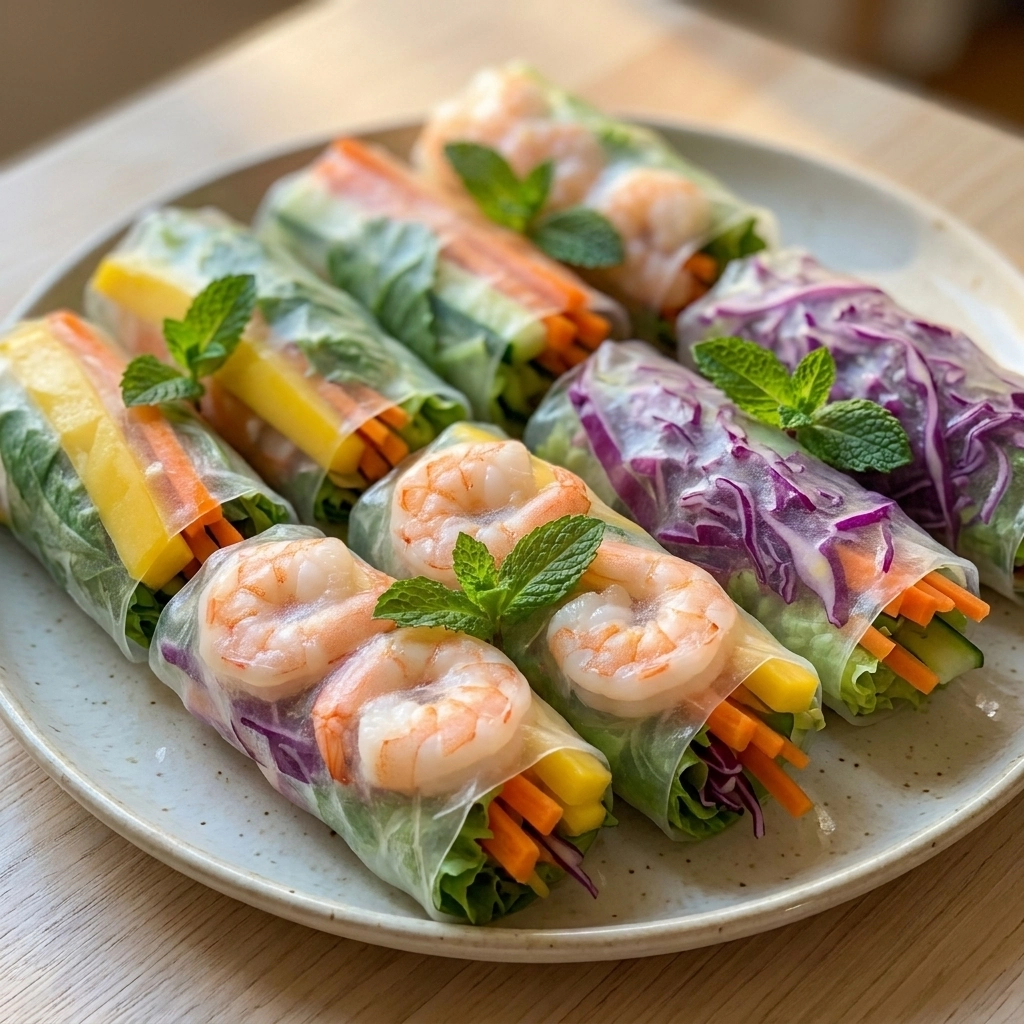
The Art of the Summer Roll |
Imagine a late Tuesday afternoon in July, where the humidity clings to the skin and the golden hour light filters through linen curtains. The air feels heavy, making the thought of a hot stove unbearable, which is exactly when a chilled, crisp platter of fresh wraps becomes the only logical choice for sustenance.
My obsession with these vibrant rolls began years ago at a bustling street market in Ho Chi Minh City, where I watched a vendor assemble these translucent parcels with a speed that bordered on choreography. The contrast of the deep violet cabbage against the neon yellow mango was a visual revelation that changed how I viewed the balance of sweetness and acidity in a meal.
- ●The striking visual contrast of purple and gold makes any table look professional.
- ●It requires zero cooking, keeping your kitchen cool during heatwaves.
- ●The combination of creamy mango and crunchy cabbage creates a complex mouthfeel.
- ●It serves as a nutrient-dense meal that doesn’t leave you feeling sluggish.
- ●The customization potential allows you to swap proteins based on your dietary needs.
Essential Ingredients |
Rice Paper Wrappers provide a chewy, translucent shell that holds everything together; use 12 to 15 circles depending on your desired thickness.
Ripe Mango adds a lush, tropical sweetness and a bright yellow hue; use one large fruit, sliced into long, thin batons.
Purple Cabbage contributes a sharp, peppery crunch and vivid violet veins; use 2 cups of very finely shredded leaves.
Fresh Mint Leaves offer a cooling, aromatic punch that cuts through the richness of the fruit; use about one tight bunch.
Carrots provide an earthy sweetness and a contrasting orange color; use 2 medium carrots, julienned into thin strips.
Cucumber adds necessary hydration and a clean, crisp snap; use one English cucumber, deseeded and sliced into matchsticks.
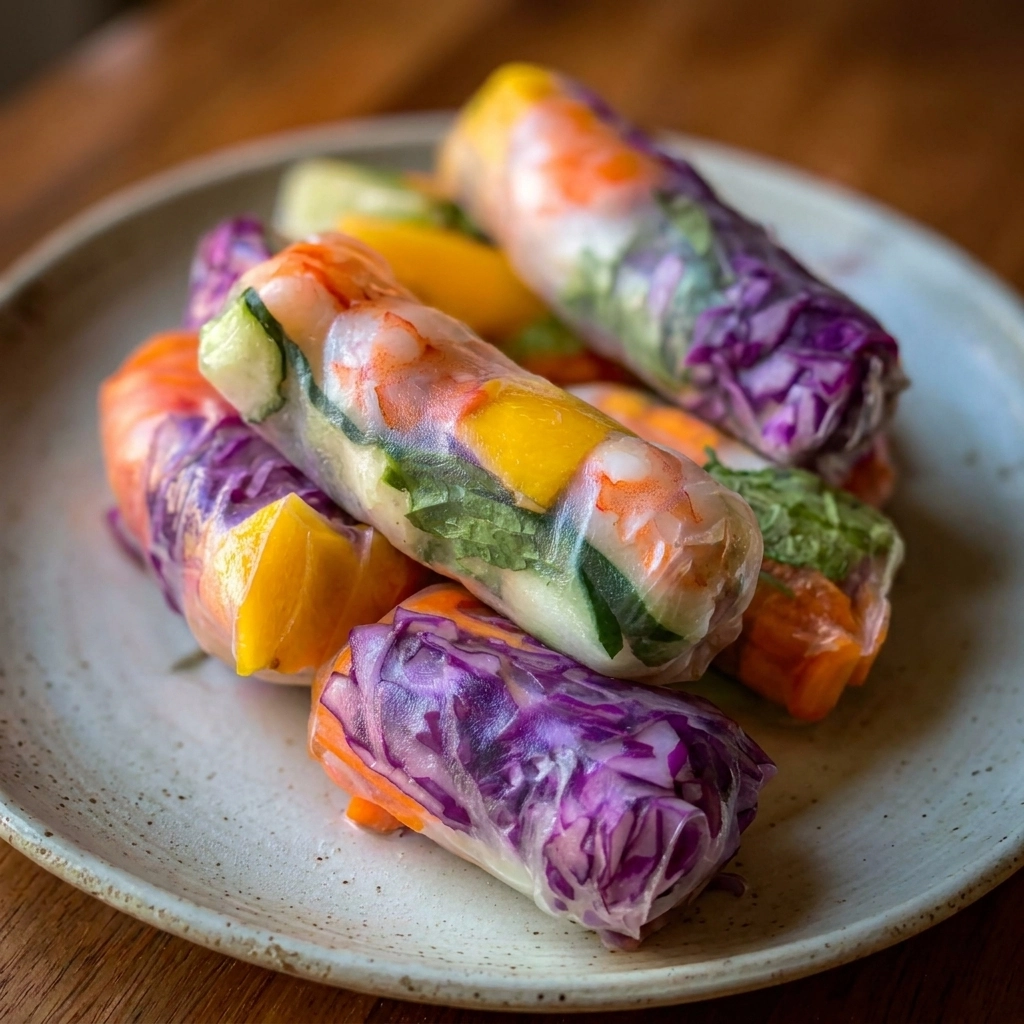 Let’s Make it Together |
- Prepare all your vegetable and fruit components into uniform, thin strips to ensure an even roll.
- Fill a wide shallow bowl with lukewarm water and a small squeeze of lime juice. Pro tip: The acidity in the lime prevents the rice paper from becoming overly slimy.
- Submerge one rice paper sheet for exactly five seconds until it begins to soften but still feels slightly firm. Pro tip: Over-soaking leads to tears in the wrapper.
- Lay the damp wrapper flat on a clean wooden cutting board or damp cloth to prevent sticking.
- Place a small handful of purple cabbage and carrots in the lower center of the circle.
- Layer the mango batons and cucumber matchsticks on top of the vegetables, followed by a few mint leaves.
- Fold the bottom edge of the wrapper over the filling and tuck it tightly.
- Fold the left and right sides inward, then roll the cylinder upward with firm pressure. Pro tip: Keep the tension consistent to avoid air pockets inside the roll.
Avoid over-filling the rolls or the rice paper will rupture during the folding process.
Always pat your vegetables dry after washing to prevent the filling from leaking moisture into the wrapper.
Use a plastic wrap or damp towel to cover rolls that are waiting to be served.
Ensure the mango is ripe but firm; overripe fruit will turn into mush when rolled.
Dip the rolls in a peanut or soy-ginger sauce to balance the natural sweetness of the fruit.
Perfecting the Cooking Process |
The science of the rice paper depends entirely on the hydration level. When the starch granules in the rice paper absorb water, they undergo gelatinization, turning from a rigid disc into a flexible, adhesive film. If the water is too hot, the starch breaks down too quickly, leading to a fragile wrap that shreds. Maintaining water at approximately 100°F (38°C) ensures the optimal balance of elasticity and strength.
Timing is equally critical during the assembly phase. Because the wrappers are hydrophilic, they continue to absorb moisture from the vegetables once rolled. If you leave them for more than two hours, the cabbage releases water via osmosis, which can make the wrapper soggy. To mitigate this, slice the cabbage and carrots into ice water for ten minutes and spin-dry them in a salad spinner before assembly.
Add Your Touch |
For those seeking a protein boost, consider adding strips of grilled lemongrass shrimp or marinated tofu. The savory, charred notes of the protein create a sophisticated counterpoint to the sugary mango and fresh mint.
Alternatively, substitute the purple cabbage with shredded red radicchio for a more bitter edge, or swap the mango for fresh papaya to lean further into the tropical flavor profile.
Storing & Reheating |
These rolls do not require reheating; in fact, they are intended to be eaten cold. Store them in a single layer in an airtight container lined with a damp paper towel to maintain the humidity of the wrappers.
Consume the rolls within 24 hours for the best texture. After a day, the rice paper tends to harden or become too soft, and the vegetables lose their signature snap.
1Use a mandoline slicer for the cabbage to get those ultra-thin veins that roll more easily.
2Squeeze a bit of lime juice over the mango slices to prevent oxidation and brighten the flavor.
3Tuck the mint leaves under the vegetables so they stay visible through the translucent skin.
4Avoid using a metal bowl for the water as it can transfer heat too quickly and overcook the rice paper.
5If a wrapper rips, simply patch it with a small piece of another wrapper pressed firmly onto the hole.
FAQ |
- ●Q: Can I make these rolls a day in advance?
A: While you can prep the ingredients a day early, rolling them in advance can lead to a soggy texture. If you must, wrap each roll individually in cling film to prevent them from sticking together and drying out in the fridge. - ●Q: What is the best way to slice the mango for these rolls?
A: Slice the mango into long, thin wedges that match the length of the other vegetables. This ensures that every bite contains all the ingredients and that the roll maintains a consistent cylindrical shape without bulging. - ●Q: My rice paper is too sticky to handle; what happened?
A: You likely soaked the paper for too long or used water that was too hot. The solution is to reduce the soaking time to 3-5 seconds and ensure the water is lukewarm rather than boiling. - ●Q: What are the best dipping sauces for mango summer rolls?
A: A spicy peanut sauce provides a salty contrast, while a lime-soy-ginger glaze complements the tropical fruit. A sweet chili sauce is also a classic choice that enhances the natural sugars in the mango.
Summer Rolls Recipe With Mango And Purple Cabbage Veins
- Total Time: 30 minutes
- Yield: 12 rolls 1x
Description
Vibrant, fresh rice paper rolls filled with tropical mango, crunchy purple cabbage, and aromatic mint for a refreshing summer appetizer.
Ingredients
- 12–15 Rice paper wrappers
- 1 ripe mango, julienned
- 2 cups purple cabbage, finely shredded
- 2 carrots, julienned
- 1 English cucumber, matchsticks
- 1 bunch fresh mint leaves
Instructions
- Prepare all vegetables and fruit into thin strips.
- Fill a shallow bowl with lukewarm water and a dash of lime juice.
- Dip rice paper for 5 seconds until softened.
- Lay wrapper flat on a clean surface.
- Place cabbage and carrots in the center.
- Add mango, cucumber, and mint on top.
- Fold bottom edge over filling and tuck.
- Fold sides inward and roll tightly upward.
- Prep Time: 30 minutes
- Cook Time: 0 minutes
- Category: Appetizer
- Method: Fresh Assembly
- Cuisine: Vietnamese-Inspired