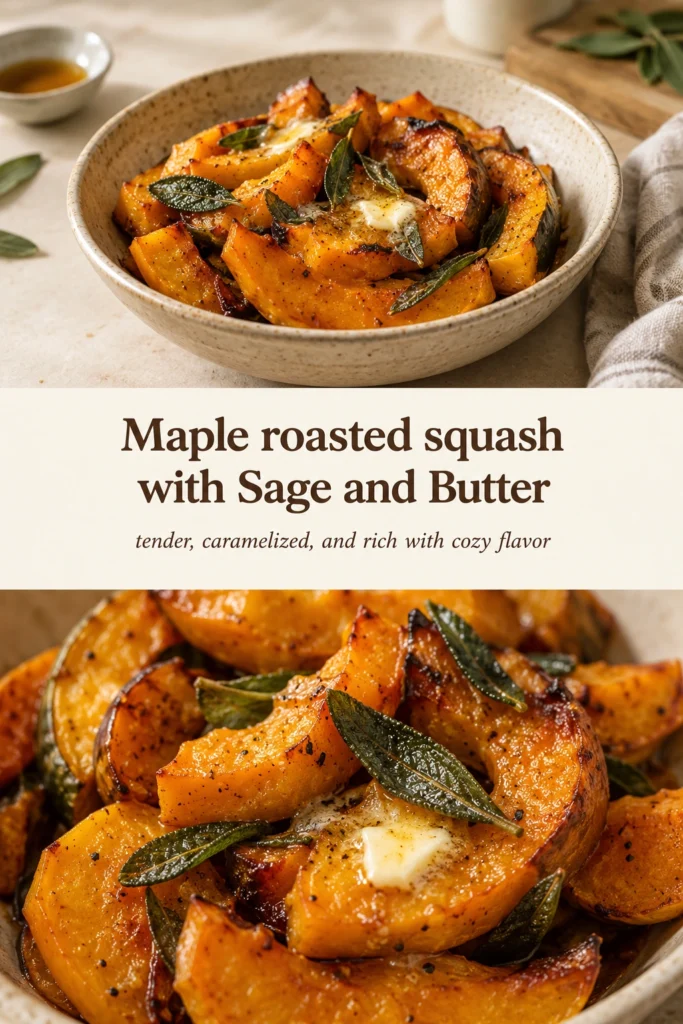
The combination of earthy sage and sweet maple syrup creates a sophisticated balance that transforms a simple vegetable into a centerpiece side dish.
This recipe features tender cubes of winter squash roasted until the edges caramelize and the centers become creamy.
Home cooks appreciate this dish because it requires minimal active preparation while delivering complex, layered flavors.
What makes this version unique is the addition of browned butter toward the end, which adds a nutty depth that plain oil cannot provide.
Unlike store-bought glazed vegetables that often taste overly sugary, this preparation emphasizes the natural sweetness of the squash.
It is a versatile choice for anyone hosting a holiday gathering or looking for a nutrient-dense addition to a weekday meal.
Following these steps will help you achieve the perfect texture and glaze every time.
- ●Why You’ll Love This Recipe
- ●A Brief Background / Why This Recipe Works
- ●Perfect For Holiday Dinners and Autumn Gatherings
- ●Winter Squash Spotlight
- ●The Role of Fresh Sage
- ●Key Ingredients
- ●How to Make It
- ●Pro Tips
- ●Delicious Variations
- ●Best Ways to Serve
- ●Storage and Leftovers
- ●Frequently Asked Questions
- ●Why This Recipe Belongs in Your Weekly Rotation
- ●Final Thoughts
This dish offers a satisfying blend of textures and tastes that appeal to both adventurous eaters and picky diners.
- ●The maple syrup creates a glossy, professional-looking glaze.
- ●Fresh sage provides an aromatic contrast to the sweetness.
- ●Roasted squash retains its shape while becoming tender inside.
- ●Brown butter adds a rich, toasted flavor profile.
- ●Preparation involves only a few basic pantry staples.
- ●The roasting process concentrates the natural sugars of the vegetable.
- ●It pairs seamlessly with poultry, pork, or vegetarian main courses.
- ●Cleanup is minimal when using a single large sheet pan.
- ●The cooking time allows you to focus on other parts of the meal.
These elements combine to make the recipe a reliable staple for any fall menu.
A Brief Background / Why This Recipe Works |
Winter squashes are naturally rich in starches that react beautifully to high heat. When roasted, these starches break down into simple sugars, a process that enhances the vegetable’s inherent sweetness.
Maple syrup acts as a catalyst for caramelization, allowing the squash to develop deep brown edges without overcooking the interior. This creates a textural contrast between the slightly crisp exterior and the soft middle.
Sage contains camphor-like notes that cut through the richness of the butter and the sugar of the maple. This prevents the dish from tasting like a dessert and keeps it firmly in the savory category.
The addition of butter provides a luxurious mouthfeel and carries the fat-soluble flavors of the herbs across the palate.
Perfect For Holiday Dinners and Autumn Gatherings |
During the holidays, this dish serves as a colorful and aromatic accompaniment to roast turkey or ham. Its vibrant orange hue adds visual appeal to a crowded dining table.
For meal prep, the squash holds its structure well when stored in the refrigerator, making it an easy addition to lunch bowls throughout the week.
Busy weeknights benefit from the hands-off nature of roasting, as the oven does most of the work while you prepare a protein or salad.
Family dinners are improved flavor of the squash, which is generally well-received adults alike.
Winter Squash Spotlight |
Butternut squash is the ideal choice for this recipe due to its dense flesh and nutty flavor. Unlike summer squashes, winter varieties have a lower water content, which allows them to roast rather than steam.
This density ensures the cubes maintain their integrity during the tossing and roasting process. The natural beta-carotene provides a rich color that intensifies as the maple glaze reduces in the oven.
The Role of Fresh Sage |
Fresh sage is indispensable here because its potent, piney aroma evolves during the cooking process. When fried in butter or roasted with oil, the leaves become crisp and their flavor mellows into something savory and warm.
Using dried sage is a possible alternative, but it lacks the textural element of crisp leaves and can sometimes taste overly medicinal if not bloomed in fat first.
Key Ingredients |
Each component plays a specific role in balancing the final taste of the dish.
- ●Butternut Squash — Provides the hearty base and natural sweetness; omitting it would require a substitute like pumpkin or acorn squash.
- ●Maple Syrup — Creates the glaze and adds a woody sweetness; honey or agave can be used but will change the specific flavor profile.
- ●Unsalted Butter — Adds richness and creates the nutty browned butter finish; oil can be used for a dairy-free version but the taste will be less complex.
- ●Fresh Sage — Delivers the essential earthy, aromatic note; without it, the dish remains sweet but loses its savory depth.
- ●Olive Oil — Helps the squash roast evenly and prevents sticking to the pan.
- ●Salt and Black Pepper — Enhances all other flavors and balances the sweetness of the maple syrup.
How to Make It |
Achieving the right balance of caramelization and tenderness requires attention to heat and timing.
- Prepare the squash: Peel the butternut squash and cut it into uniform 1-inch cubes. Keeping the size consistent ensures that every piece cooks at the same rate, preventing some from burning while others remain raw.
- Toss with oil and seasoning: In a large bowl or directly on a rimmed baking sheet, combine the squash with olive oil, salt, and pepper. Stir well until every cube is thinly coated to avoid dry spots that won’t caramelize.
- First roast: Spread the squash in a single layer on the pan, ensuring the pieces are not crowded. Roast at 400°F (200°C) for about 20 minutes. Overcrowding the pan creates steam, which results in mushy squash rather than roasted edges.
- Prepare the maple-butter glaze: While the squash is in its first roast, melt the butter in a small saucepan over medium heat. Stir in the maple syrup and chopped sage, simmering for 2-3 minutes until the butter begins to smell nutty and turn golden brown.
- Apply the glaze: Remove the pan from the oven and drizzle the maple-butter mixture over the squash. Use a spatula to toss the cubes gently, coating them in the syrup. Be careful not to mash the softened squash.
- Final roast: Return the pan to the oven for another 10-15 minutes. Watch for the glaze to bubble and thicken into a sticky coating and for the edges of the squash to turn deep brown.
- Garnish and serve: Remove from the oven and sprinkle with a few fresh sage leaves or a pinch of flaky salt. Allow the dish to rest for 5 minutes so the glaze sets slightly before transferring to a platter.
1Small adjustments in technique can lead to a significantly better result.
- ●2Use parchment paper: Lining your baking sheet prevents the maple syrup from sticking and makes cleanup much easier.
- ●3Avoid frozen squash: Fresh squash has a superior texture; frozen varieties often release too much moisture, preventing the glaze from sticking.
- ●4Don’t skip the first roast: Roasting the squash before adding the maple syrup prevents the sugar from burning before the vegetable is tender.
- ●5Check for doneness: Use a fork to pierce a cube; it should slide in with zero resistance but the cube should still hold its shape.
- ●6Balance the salt: Add a pinch more salt than you think is necessary to counteract the sweetness of the maple syrup.
Delicious Variations |
You can adapt this recipe to suit different dietary needs or flavor preferences.
- ●Add Autumn Fruit: Toss in cubed apples or pears during the final roast for extra tartness.
- ●Vegan Version: Replace the butter with a high-quality vegan butter alternative or a neutral oil like avocado oil.
- ●Spicy Twist: Add a pinch of cayenne pepper or red pepper flakes to the glaze for a sweet-and-spicy contrast.
- ●Cheese Addition: Crumble goat cheese or feta over the squash just before serving for a tangy creaminess.
- ●Nutty Crunch: Toss in toasted pecans or walnuts during the last 5 minutes of roasting.
These changes allow the recipe to fit into various seasonal themes and taste preferences.
Best Ways to Serve |
This squash is versatile enough to function as a side or a component of a larger meal.
- ●As a side for Sage Cornbread Stuffing With Herb Butter Easy Thanksgiving Side Dish Recipe
- ●Over a bed of fresh arugula or ba balance the richness with bitterness.
- ●Alongside Roasted Brussels Sprouts With Rosemary And Garlic Easy Healthy Side Dish Recipe for a full autumn vegetable platter.
- ●As a topping for quinoa or wild rice bowls.
For a formal presentation, arrange the cubes in a shallow bowl and drizzle with any remaining glaze from the pan.
The dish also pairs well with a crisp white wine or a sparkling cider to cut through the buttery glaze.
Storage and Leftovers |
Refrigerating
Place the cooled squash in an airtight container and store it in the refrigerator for up to 4 days. Ensure the squash is completely cool before sealing to prevent moisture buildup.
Reheating
Reheat in an oven or air fryer at 350°F (175°C) for 5-8 minutes. This method restores the caramelized edges better than a microwave, which can make the squash soggy.
Freezing
While possible, freezing is not recommended as the texture becomes mushy upon thawing. If necessary, freeze for up to 2 months, but use the result in a mash or soup.
Frequently Asked Questions |
- ●Q: Can I use a different type of squash?A: Yes, acorn squash or honeynut squash work very well. Acorn squash provides a slightly nuttier taste, while honeynut is more concentrated in sweetness. Just ensure you remove the seeds and peel where necessary before cubing.
- ●Q: Why did my squash turn out mushy instead of caramelized?A: This usually happens if the pan is overcrowded or if the oven temperature is too low. When cubes touch, they steam instead of roast. Use a larger pan to ensure air circulates around every piece of squash.
- ●Q: Can I use honey instead of maple syrup?A: Honey is a suitable substitute, though it has a different flavor profile and a higher sugar concentration. Because honey burns faster than maple syrup, keep a closer eye on the squash during the final roasting stage.
- ●Q: Do I have to peel the butternut squash?A: Yes, the skin of the butternut squash is too tough to be pleasant when roasted in cubes. While some other squashes have edible skins, butternut requires peeling for the best texture and mouthfeel.
- ●Q: How do I prevent the sage from burning?A: Add the sage to the butter just before it finishes browning. If you add it too early, the thin leaves can overcook and become bitter. Adding them toward the end keeps them fragrant.
Why This Recipe Belongs in Your Weekly Rotation |
Incorporating roasted squash into your diet provides a nutrient-dense option that satisfies cravings for something sweet and savory. It is an efficient way to use seasonal produce while keeping preparation simple.
The ability to transition this dish from a casual Tuesday night dinner to a formal holiday feast makes it an invaluable tool in any cook’s repertoire.
Final Thoughts |
This Maple Roasted Squash with Sage and Butter balances the natural earthiness of winter vegetables with a rich, caramelized glaze. It is a practical, high-impact side dish that relies on a few quality ingredients and a simple two-stage roasting process.
Making this recipe allows you to bring the warmth and aroma of autumn into your kitchen without spending hours on complex preparations. It is the ideal choice for anyone wanting a polished, restaurant-style side dish at home.
Gather your favorite winter squash and bring this comforting, fragrant dish to your next family table.
Maple Roasted Squash with Sage and Butter
- Total Time: 50 minutes
- Yield: 4 servings 1x
Description
Tender roasted butternut squash glazed with maple syrup, browned butter, and aromatic fresh sage for a perfect balance of sweet and savory.
Ingredients
- 2 lbs butternut squash, peeled and cut into 1-inch cubes
- 2 tablespoons olive oil
- 3 tablespoons unsalted butter
- 3 tablespoons pure maple syrup
- 1 tablespoon fresh sage, finely chopped
- 1/2 teaspoon salt
- 1/4 teaspoon black pepper
Instructions
- Preheat your oven to 400°F (200°C) and line a large baking sheet with parchment paper.
- In a bowl or on the pan, toss the squash cubes with olive oil, salt, and black pepper until evenly coated.
- Spread the squash in a single layer on the baking sheet and roast for 20 minutes.
- While the squash roasts, melt butter in a small saucepan over medium heat until it begins to brown and smell nutty.
- Stir the maple syrup and chopped sage into the browned butter, simmer for 2 minutes, and remove from heat.
- Remove the squash from the oven, drizzle with the maple-butter glaze, and toss gently to coat.
- Return the pan to the oven and roast for an additional 10-15 minutes until the glaze is bubbly and edges are caramelized.
- Prep Time: 15 minutes
- Cook Time: 35 minutes
- Category: Side Dish
- Method: Roasting
- Cuisine: American