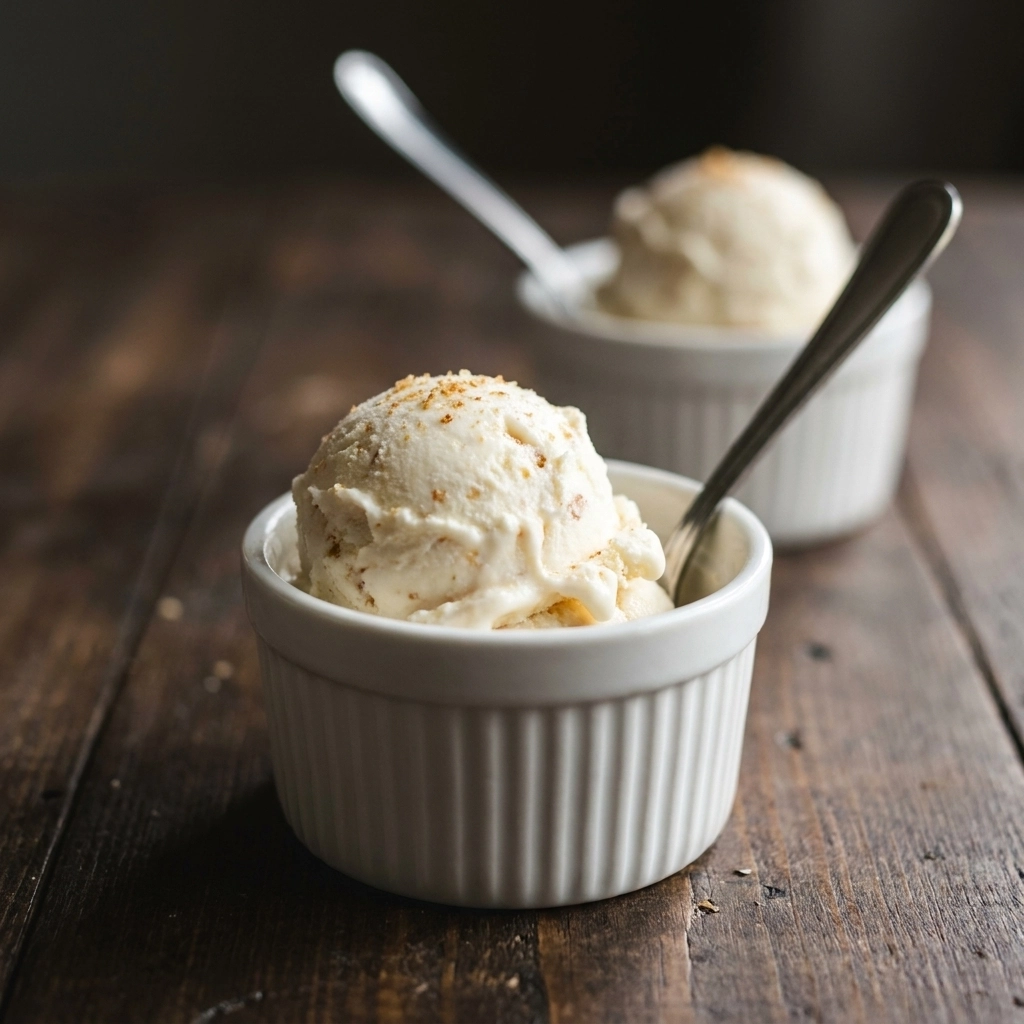
Do you really believe that a decadent, creamy ice cream requires an expensive machine and hours of churning? It is a common misconception that high-protein ingredients can’t mimic the luscious texture of a traditional custard, but this recipe is here to prove exactly the opposite for every home cook.
My fascination with this unique combination began years ago while browsing a specialty creamery in a small village market in Vermont. The way they toasted butter to a deep nuttiness and paired it with a creamy base inspired me to find a way to bring that sophisticated profile into a modern, health-conscious kitchen.
- ●Surprisingly high in protein thanks to the cottage cheese base.
- ●The brown butter adds a sophisticated, nutty depth that elevates the vanilla.
- ●No ice cream maker is required, making it accessible for everyone.
- ●A velvety smooth texture that rivals traditional premium gelato.
- ●Easily customizable with your favorite mix-ins or sweeteners.
Essential Ingredients |
Cottage Cheese: I highly recommend using a full-fat, small-curd variety for the creamiest result. If you skip this, you lose the structural base and the protein punch of the dessert.
Unsalted Butter: High-quality European-style butter provides a richer flavor profile when browned. Without this, the ice cream will lack that signature toasted, caramel-like aroma.
Maple Syrup: Grade A Dark maple syrup adds a complex sweetness that white sugar cannot match. Skipping this or using a low-quality substitute may result in a flatter, less dimensional taste.
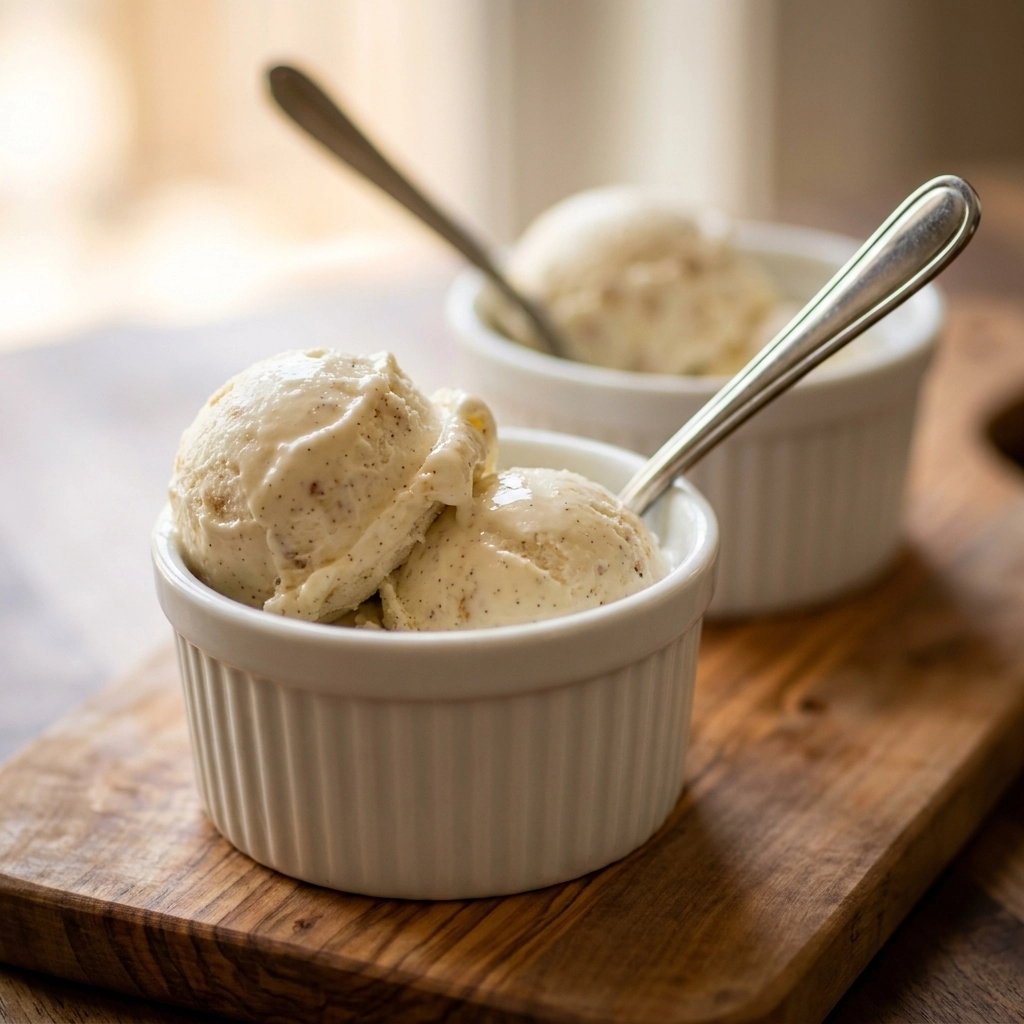
Vanilla Bean Paste: I prefer paste over extract because the little black seeds look professional and taste more intense. If you omit this, the flavor will be too plain and lack that comforting aromatic warmth.
Pinch of Sea Salt: A flaky Maldon salt is my go-to for balancing the sweetness. Skipping the salt will make the dessert taste one-dimensional and overly sugary.
 Let’s Make it Together |
- Melt the butter in a small saucepan over medium heat, stirring constantly until it begins to foam and brown. Pro tip: Watch for the brown bits at the bottom to ensure a deep, nutty flavor without burning.
- Cool the brown butter for about ten minutes so it doesn’t cook the other ingredients.
- Place the cottage cheese, cooled brown butter, maple syrup, and vanilla bean paste into a high-speed blender.
- Blend on high for 2 to 3 minutes until the mixture is completely smooth and no curds remain. Pro tip: Use a tamper to push the ingredients down into the blades for a faster, smoother emulsion.
- Pour the blended mixture into a shallow, freezer-safe container.
- Freeze the mixture for 3 to 4 hours, stirring every 45 minutes to break up ice crystals. Pro tip: A fork is the perfect tool for stirring to keep the aeration consistent.
Ensure your blender is powerful enough to completely emulsify the cottage cheese curds.
Do not let the brown butter reach a smoke point, or it will taste bitter.
Always use a shallow container for freezing to ensure an even chill throughout the batch.
Avoid using fat-free cottage cheese as it will create a grainy, icy texture.
Let the ice cream soften for ten minutes on the counter before serving.
Perfecting the Cooking Process |
You’ll notice that the secret to this dessert lies in the temperature of your butter. If you add boiling hot butter to the cold cottage cheese, you risk breaking the emulsion, which can lead to a separated texture. Let the butter cool just enough to be liquid but not hot, ensuring a seamless blend that stays creamy during the freezing process.
Trust your nose here when browning the butter; it should smell like toasted hazelnuts and brown sugar. The timing is critical because the transition from ‘perfectly browned’ to ‘burnt’ happens in a matter of seconds. Once those golden-brown specks appear and the aroma hits you, remove the pan from the heat immediately.
Add Your Touch |
Your pan should be the starting point, but don’t be afraid to experiment with the base. You can fold in crushed toasted pecans or a swirl of salted caramel after the blending process to add a delightful crunch and extra sweetness to each scoop.
For those seeking a different flavor profile, try replacing the vanilla with a teaspoon of cinnamon or a pinch of cardamom. You can also swap the maple syrup for honey or agave if you prefer a different type of natural sweetener, though the flavor will lean more floral.
Storing & Reheating |
Store your ice cream in an airtight container in the back of the freezer, where the temperature is most stable. This prevents the edges from developing freezer burn and keeps the texture creamy for up to one week.
Since this is a frozen dessert, you should never reheat it in a microwave or oven. Simply move the container to the refrigerator for 20 minutes before serving to allow it to soften naturally.
1Use a room-temperature cottage cheese for a smoother blend.
2Sift your salt into the butter to ensure no clumps of salt hit the tongue.
3Freeze the container on a sheet tray to maintain a level surface.
4Add a splash of almond milk if the mixture is too thick for your blender.
5Cover the surface with parchment paper to prevent ice crystals from forming.
FAQ |
- ●Q: Can I use a food processor instead of a blender?
A: While a food processor can work, a high-speed blender is significantly better for this recipe. The blender’s vortex action ensures that every single cottage cheese curd is obliterated, resulting in a professional, silky-smooth texture that a food processor often misses. - ●Q: Why is my ice cream too icy?
A: This usually happens if the mixture isn’t stirred during the freezing process. Because this isn’t a churned ice cream, you must manually break up the ice crystals every hour to incorporate air and maintain that creamy, scoopable consistency. - ●Q: Can I make this vegan?
A: You can attempt a vegan version by using a tofu-based ricotta and vegan butter, but the results will differ. The specific proteins in cottage cheese provide a unique structure that is difficult to replicate perfectly with plant-based alternatives. - ●Q: Is it possible to use a different sweetener?
A: Yes, you can use honey or agave, but be aware that these change the flavor profile. Maple syrup is recommended because its woody notes complement the brown butter perfectly, creating a balanced and sophisticated dessert. - ●Q: Does the cottage cheese taste linger in the final product?
A: Not at all, provided you blend it thoroughly and use brown butter. The nuttiness of the butter and the strength of the vanilla mask the tanginess of the cheese, leaving you with a flavor reminiscent of a rich cheesecake ice cream. - ●Q: How do I prevent the ice cream from getting too hard?
A: Adding a tablespoon of vodka or vegetable glycerin to the mix can lower the freezing point. This prevents the ice cream from turning into a solid block of ice, making it much easier to scoop directly from the freezer.

Creamy Cottage Cheese Ice Cream with Brown Butter and Vanilla
- Total Time: 25 minutes
- Yield: 4 servings 1x
Description
A creamy, high-protein alternative to traditional ice cream, blending the tang of cottage cheese with the nutty richness of brown butter and aromatic vanilla.
Ingredients
- 2 cups full-fat cottage cheese
- 4 tbsp unsalted butter
- 1/3 cup maple syrup
- 1 tbsp vanilla bean paste
- 1/4 tsp sea salt
Instructions
- Brown the butter in a saucepan over medium heat until nutty and golden.
- Allow the brown butter to cool for 10 minutes.
- Combine cottage cheese, cooled brown butter, maple syrup, vanilla bean paste, and salt in a blender.
- Blend on high until completely smooth (about 2-3 minutes).
- Pour mixture into a shallow freezer-safe container.
- Freeze for 3-4 hours, stirring every 45 minutes to break up ice crystals.
- Prep Time: 15 minutes
- Cook Time: 10 minutes
- Category: Dessert
- Method: Blending/Freezing
- Cuisine: American