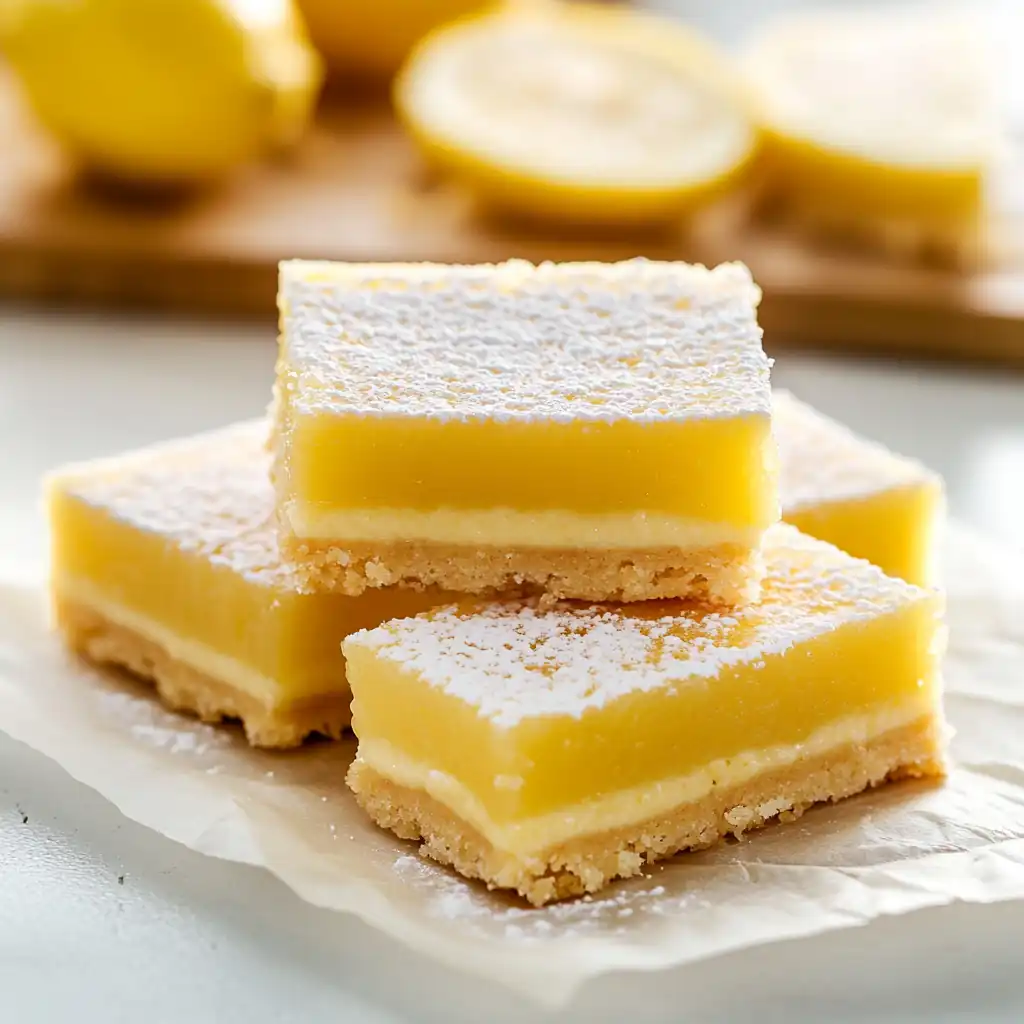
The Art of the Perfect Lemon Bar |
The lemon bar is a sophisticated evolution of the traditional lemon tart, rooted in the European tradition of custard-filled pastries but refined into a portable, sliceable treat. This heritage is important because it emphasizes the balance between a sturdy, buttery base and a delicate, acidic topping, mirroring the classic contrast found in French patisseries.
Imagine someone like Eleanor, a meticulous host who prides herself on serving desserts that feel both nostalgic and upscale; she would find these bars indispensable for her afternoon tea gatherings. The vibrant yellow hue and the sharp aroma of fresh citrus create an immediate sensory connection to springtime and renewal, making every bite feel like a celebration of brightness.
- ●The contrast between the salty, crumbly shortbread and the tart curd is professionally balanced.
- ●Minimal cleanup is required since the crust and filling are handled in one pan.
- ●The texture is silky smooth without being overly gooey or underbaked.
- ●They provide a refreshing palate cleanser after a heavy meal.
- ●These bars freeze exceptionally well, allowing for easy portioning over several weeks.
Essential Ingredients |
All-purpose flour provides the structural integrity for the shortbread crust, ensuring it doesn’t crumble too easily. For a nuttier profile, substitute with almond flour.
Unsalted butter adds a rich, milky depth and creates that signature melt-in-your-mouth texture. Use coconut oil for a dairy-free alternative.
Granulated sugar acts as the primary sweetener and helps stabilize the lemon curd. Coconut sugar can be used for a deeper, caramel-like undertone.
Fresh lemons supply the essential acidity and aromatic oils that define the dish. Lime juice can be used for a slightly more tropical twist.
Large eggs serve as the emulsifier, binding the fat and acid to create a creamy, custard-like consistency. Flax eggs can work for a vegan adaptation, though the texture will vary.
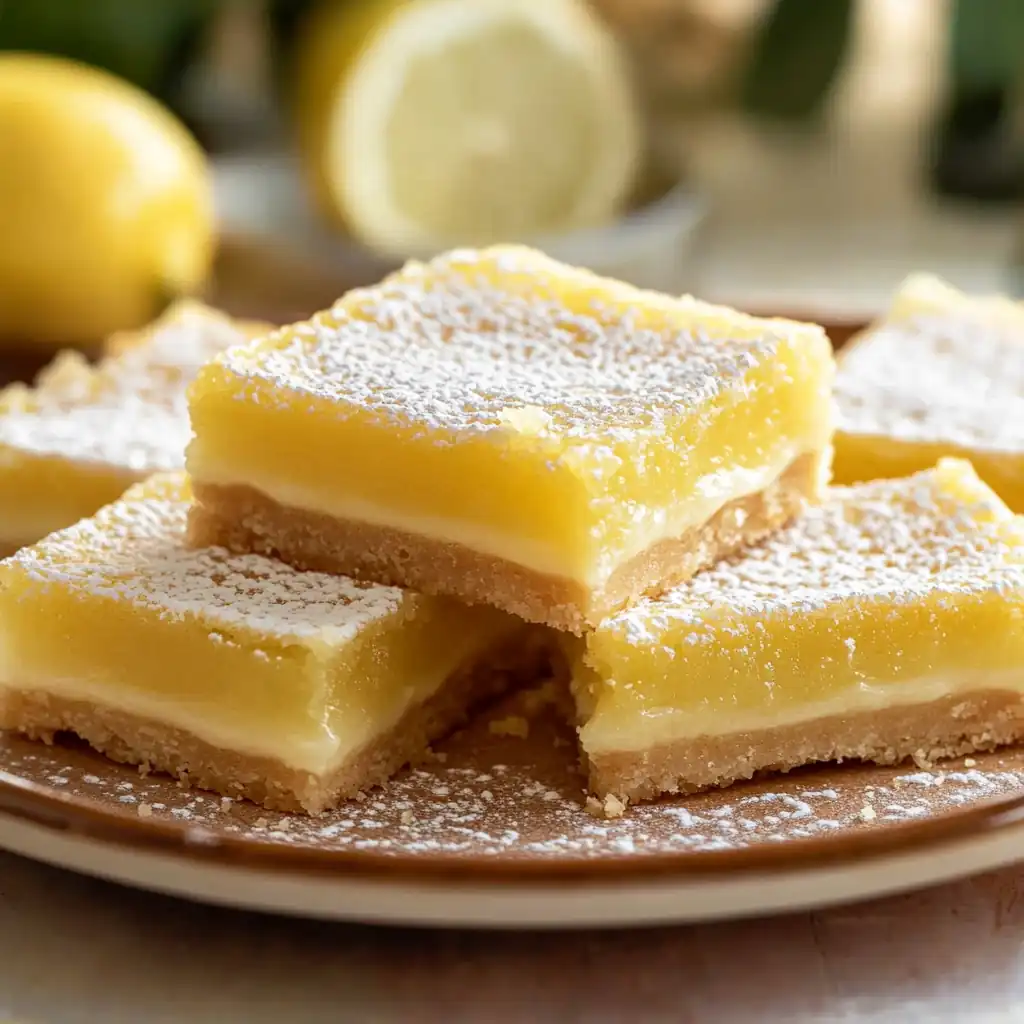 Let’s Make it Together |
- First, go ahead and preheat your oven to 350°F while you line an 8×8 inch pan with parchment paper, leaving a little overhang for easy removal later.
- Now, cream together your softened butter and sugar until it’s light and fluffy, then stir in the flour just until a soft dough forms.
- Press that dough firmly and evenly into the bottom of your prepared pan—use the bottom of a measuring cup to get a perfectly flat surface.
- Pop the crust into the oven for about 20 minutes until it’s just barely golden; keep an eye on it so it doesn’t brown too much.
- While the crust bakes, whisk your eggs and sugar together in a bowl, then slowly beat in the lemon juice and zest until the mixture is completely smooth.
- Pour the lemon filling carefully over the hot crust and smooth it out with a spatula.
- Slide the pan back into the oven for another 20 to 25 minutes, or until the center is set and doesn’t jiggle too much when you shake the pan.
- Let the bars cool completely in the pan before lifting them out paper and slicing them into neat squares.
Patience is the secret ingredient here.
Always use fresh lemon juice rather than bottled versions to avoid a metallic aftertaste.
Ensure your eggs are at room temperature so the filling emulsifies without breaking.
Avoid overmixing the crust dough or it will become tough rather than tender.
Sifting the powdered sugar on top prevents clumps and creates a professional finish.
Do not overbake the filling, as it can crack or develop a rubbery texture.
Perfecting the Cooking Process |
Temperature control is paramount when working with citrus curds. The filling should be baked just until the edges are set but the center still has a very slight wobble; this ensures a creamy mouthfeel rather than a dry, cake-like consistency. If the oven is too hot, the top may brown prematurely, masking the vibrant yellow color.
Timing the removal of the bars is just as critical as the bake itself. Allowing the bars to cool to room temperature before refrigerating them for two hours allows the fats to solidify and the acidity to mellow, resulting in a cleaner cut and a more cohesive flavor profile.
Add Your Touch |
To elevate these bars, consider incorporating a layer of raspberry jam between the crust and the lemon filling for a tart-sweet contrast. You can also swap the lemon for lime or orange for a different citrus profile, or add a pinch of cream of tartar to the crust for a more traditional shortbread snap.
For those seeking dietary adjustments, try a gluten-free blend of flour and cornstarch for the base. For a seasonal twist, fold in a tablespoon of poppy seeds to the filling or garnish with fresh blueberries to create a summer berry-lemon fusion that looks stunning on a platter.
Storing & Reheating |
Store these bars in an airtight container in the refrigerator for up to five days. It is vital to keep them chilled, as the custard filling is perishable and needs a cool environment to maintain its structural integrity.
While these are best served cold, you can bring them to room temperature for 30 minutes before serving to enhance the buttery flavor of the crust. Do not microwave them, as this will cause the filling to collapse and lose its creamy texture.
1Zest your lemons before juicing them to make the process much easier.
2Use a sharp knife dipped in hot water for the cleanest possible cuts.
3Rub the lemon zest into the sugar using your fingertips to release the essential oils.
4Line your pan with parchment that hangs over the sides for a seamless lift.
5Avoid using a mixer for the final stage of the filling to prevent adding too much air.
FAQ |
- ●Q: Why did my lemon bars crack on top?A: Cracking usually happens due to overbaking or a sudden change in temperature. To prevent this, remove the pan from the oven when the center still has a slight jiggle and let them cool gradually.
- ●Q: Can I make these without a food processor?A: Absolutely, a simple hand mixer or even a fork and bowl will work perfectly for the crust. The key is to avoid overworking the flour to ensure the shortbread remains tender.
- ●Q: How do I get the perfect square cuts?A: The secret is to chill the bars completely in the fridge for at least two hours. Use a sharp knife and wipe it clean with a damp cloth between every single slice for a professional look.
- ●Q: My crust is too soft, what happened?A: This typically occurs if the butter was too melted or if the crust wasn’t pressed firmly enough into the pan. Ensure your butter is softened but still cool to the touch before mixing.

Easy and Delicious Lemon Bars Recipe
- Total Time: 1 hour 5 minutes
- Yield: 16 bars 1x
Description
Classic, zesty lemon bars featuring a buttery shortbread crust and a tart, creamy lemon curd topping.
Ingredients
- 1 cup all-purpose flour
- 1/2 cup unsalted butter, softened
- 1/2 cup granulated sugar (for crust)
- 2 cups granulated sugar (for filling)
- 4 large eggs
- 1/2 cup fresh lemon juice
- 2 tablespoons lemon zest
- Powdered sugar for dusting
Instructions
- Preheat oven to 350°F and line an 8×8 pan with parchment paper.
- Cream butter and 1/2 cup sugar, stir in flour, and press into the pan.
- Bake crust for 20 minutes until lightly golden.
- Whisk eggs and 2 cups sugar, then stir in lemon juice and zest.
- Pour filling over the hot crust and bake for 20-25 minutes until set.
- Cool completely, dust with powdered sugar, and slice into squares.
- Prep Time: 20 minutes
- Cook Time: 45 minutes
- Category: Dessert
- Method: Baking
- Cuisine: American